The Two Misérables
As it happened, I watched two versions of Les Misérables for each of my film classes. The first was by choice, as I wanted to watch some leftist poetic realists films in order to provide context for the later resistance films. The latter was for religion in film, to show how symbols were used to convey religious meanings. The candles were the objects that we focused on the most, as they represented his second chance, and tied him toward his messianic destiny.
Les Misérables, 1934

Raymond Bernard, who was Jewish and would have to cease filmmaking and flee during the war, produced some popular early films that established class as a major theme. The work he is most remembered for is his adaptation of Les Misérables. At a running time of over 5 hours, it was the most detailed adaptation of Victor Hugo’s 1862 novel. Bernard uses Hugo’s characters from the early 19th century to highlight the class struggles of the 1930s. With Jean Valjean’s arc from criminal to the aristocracy, he does not lose sight and empathy for those less fortunate, hence his adoption of Cosette after feeling somewhat responsible for her mother’s death. Bernard’s film develops Marius Pontmercy whose rebellious spirit is contrasted with his father’s loyalism to the royalty. The events culminate in the 1832 June Rebellion, but Bernard’s classist portrayal is reminiscent of the post-Bolshevik political reality in Europe.
Bernard’s version is undoubtedly the most accomplished of the two. While the major brush strokes of Valjean’s character are the same, Bernard is able to highlight the subtleties through performance. The conflict with Javert, portrayed as strict good versus evil in the musical, is more complicated in Bernard’s version. Javert has a code, and both versions are obsessed with their pursuit of Valjean. It is with the resolution where the characters divert. Since Russell Crowe’s Javert is the absolute face of evil, there is a catharsis in his suicide. He was getting his just desserts. The french Javert was eventually able to see the morality within Valjean, and his departure from the screen is far more effective as a character destination. Again, the focus was on subtle actions rather than grandiose theatrics.
Les Misérables, 2012

Tom Hooper can now call himself an Oscar winner for The King’s Speech, but he has yet to remind me that he is even an adequate director. His best film in my opinion was The Damned United, although I think that is mostly thanks to some interesting source material and characters. I noticed his poor direction in The King’s Speech. It’s mostly lazy. Rather than set the scene and let the characters breathe, he smothers them with the camera. Close-ups are fine if they serve a purpose. Sergio Leone, Jean-Pierre Melville, Francois Truffault have iconic close-ups that reveal deep emotion. Hooper reveals nothing. He was bailed out by some stellar acting in King’s Speech, but was completely exposed when directing the musical.
Hooper hammers you over the head with everything. As a musical, you have to expect bombast, but there are limits. Let’s also not forget that poor casting can ruin a movie. Everyone who saw Russell Crowe here, or Richard Gere in Chicago understands. Even Pontmercy seems to sing in the incorrect key for his role, but he at least has chops.
Raymond Bernard’s tale is 5 hours, while Tom Hooper’s is 2:30. Because of all the excessive music, the actual narrative and character content is more like under two hours. Bernard had the luxury of a large canvas, something that wouldn’t be possibly today, but he also had a firm understanding and appreciation of the source material that shows on the screen. He could have made an excellent 2:30 movie if that were hi limit.
If you haven’t seen it, I highly recommend checking out the Raymond Bernard version. There is a Criterion Eclipse version for relatively cheap, and it can be streamed on Hulu Plus. I hear there is a new restoration making the rounds, which hopefully will find its way to DVD soon.
Unless you’re a musical and broadway enthusiast, avoid the Tom Hooper version. Even if you loved the stage production, don’t expect to love the film.
Top 21 of 1964

1964 was a spectacular year for film. So many new film movements were beginning, ending, and converging. The American New Wave was about to give birth, the Japanese New Wave was in full-swing, as were Spaghetti Westerns, the French New Wave, and there were still remnants of Italian neo-realism, all of which are represented on this year’s list.
My list has two films with the brilliant Peter Sellers, with inarguably his best role and perhaps one of the best comedic roles of all time, at the top. At the end of the list is his slapstick version of the Pink Panther, easily the best of what was often a mediocre series despite the talent of Mr. Sellers.
There are four Japanese films, including three in the top six. If this list had gone to 30, there would have been at least two more — Suzuki’s Gate of Flesh and Shinoda’s Pale Flower. It was a phenomenal year for Japanese film, although not quite at the level of the next list, 1954.
1. Dr. Strangelove
2. Woman in the Dunes
3. Charulata
4. I Am Cuba
5. Onibaba
6. Yearning
7. Séance in the Afternoon
8. The Gospel According to St. Matthew
9. Red Desert
10. The Soft Skin
11. Marnie
12. Seduced and Abandoned
13. Fail-Safe
14. The Train
15. A Hard Day’s Night
16. The Pawnbroker
17. A Fistful of Dollars
18. Becket
19. Kwaidan
20. Scorpio Rising
21. A Shot in the Dark
1974 List
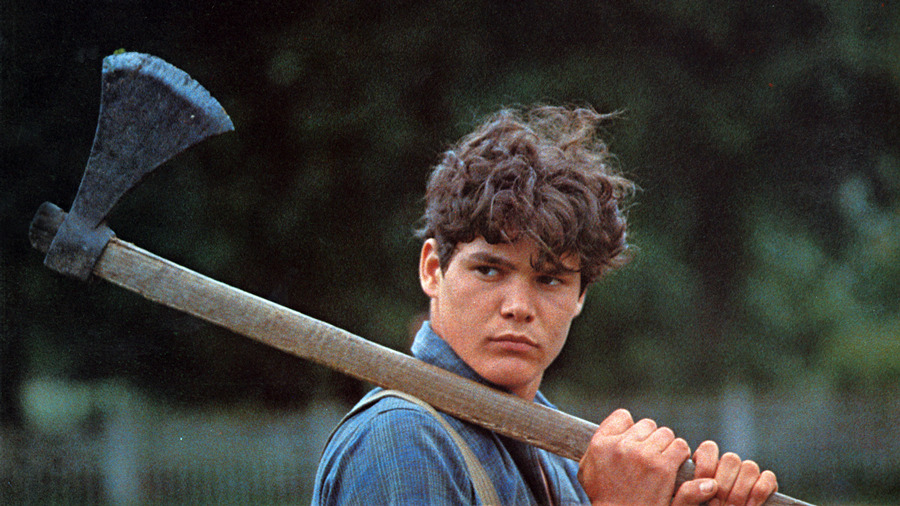
1974 was an especially strong year in film. Many would call classics like Chinatown and Godfather 2 among the greatest films of that decade. The fact that those two were not at the top of my list says less about them about films, and more about the other greats that came out that year. Lacombe, Luciene by Louis Malle is one of the films that inspired my topic study this semester. Ali: Fear Eats the Soul works on a number of different cultural and even linguistic levels, plus it is simply a well told and produced story.
What was striking about this year were the films I left off my list. There were some good ones, such as Young Frankenstein, Blazing Saddles, The Texas Chainsaw Massacre, Murder on the Orient Express, The Taking of Pelham One Two Three, The Longest Yard, and many more.
1. Lacombe, Lucien
2. Ali: Fear Eats the Soul
3. The Conversation
4. Godfather 2
5. Alice in the Cities
6. Lancelot du Lac
7. The Enigma of Kaspar Hauser
8. Chinatown
9. The Castle of Sand
10. Hearts and Minds
11. The Parallax View
12. Alice Doesn’t Live Here Anymore
13. Going Places
14. Harry and Tonto
15. Bring Me the Head of Alfredo Garcia
16. The Phantom of Liberty
17. Black Christmas
18. The Gambler
19. A Woman Under the Influence
20. Lenny
Malle + Melville = Resistance
“This film has no pretension of solving the problem of Franco-German relations, for they cannot be solved while the barbarous Nazi crimes, committed with the complicity of the German people, remain fresh in men’s minds.”
These are the opening lines of Jean-Pierre Melville’s Le Silence de la Mer. Of the La Résistance filmmakers, his message is the most aggressive, the most caustic. Part of this can be attributed to the time and political situation when he directed his films, which also include Leon Morin, Priest and Army of Shadows.
Louis Malle, on the other hand, has a different style entirely. His methodology is almost lamentation, even nostalgia and pride towards actions taken during the resistance. He throws a wrench in everything by portraying a French collaborator in Lacombe, Lucien, making his protagonist an unquestionable traitor to his country.
Malle made his resistance films later than Melville, and had the benefit of his own maturity and the sentiment that time heals all wounds. Politically, the two filmmakers were not too indifferent, and they both had some participation with the resistance.
My project for this semester has been narrowed down to just these two auteurs. There are countless others who expressed their feelings towards the occupation through film, specifically Clouzot, Bresson, Chabrol, Truffault, and others. Due to space, they are being snipped from this project. I don’t blame my professor from doing so, since this could blow up to become a 100-page opus. Even with extra free time on my hands, that would be too much for me.
While I’m working on the project, I will look at many of these other films. I’ll probably talk about those films here, while leaving my core work for my professor. I’m feeling good about this project, and if turns out how I hope, it’s possible I could explore publication or perhaps a larger work.
Here are the films that I’ll be focusing on:
Jean-Pierre Melville
La Silence de la Mer
Leon Morin, Priest
Army of Shadows
Louis Malle
Lacombe, Lucien
Au Revoir Les Enfants
Murmur of the Heart
The latter Malle film has less to do with the resistance, and more towards post-war France, but that might be worthwhile as a postscript to this project.
1984 List
This was arguably one of the weaker years in the 80s. A lot of the American films were dominated by low quality crowd-pleasing flicks. Once Upon a Time in America is an example of how difficult it was to get a challenging film made from within Hollywood. They cut the film to shreds and made it a piece of unwatchable trash. Of course my ranking is for the director’s cut and not the theatrical version. The opposite is true for Amadeus. The theatrical version was shorter and flowed better, whereas the director’s cut is bloated and even boring.
Another interesting tidbit is that my #1 film, Paris, Texas is very similar to Wenders’ Alice in the Cities. My #2 film, The Home and the World is tied to Ray’s Charulata. In fact, even though the movies are 20 years apart, they have the same actor playing the role of the interloper.
1. Paris, Texas
2. The Home and the World
3. This is Spinal Tap
4. Amadeus
5. Once Upon a Time in America
6. The Killing Fields
7. The Times of Harvey Milk
8. Ghostbusters
9. Broadway Danny Rose
10. Under the Volcano
11. 1984
12. A Passage to India
13. Sixteen Candles
14. Repo Man
15. Moscow on the Hudson
16. Stranger than Paradise
17. Secret Honor
18. The River
19. Top Secret
20. Indiana Jones and the Temple of Doom
La Résistance et La Religion
In 5-days, I’ll be going under the knife for hip arthroscopy. That will be followed by a lengthy recovery period with no weight bearing. The couch will become my best friend.
With three classes remaining until my degree, I had to make arrangements to continue taking classes. With a 4-6 week period of no weight bearing, the last thing I want to do is spend two evenings a week hobbling from class to class on crutches. Even with a handicapped sticker, you cannot avoid a lot of walking on campus.
I reached out to a few professors to seek alternatives. One of them volunteered to independent study this semester. This was tremendous. This has always an option, but since it takes a lot of time for the overworked faculty, it is difficult to find someone to agree to it. I cannot thank this instructor enough.
The best part is he left it up to me to choose a topic. He’s an expert on warfare, specifically WWI and WWII, plus he is a film buff. I gave him a few options, including some I thought would be easier on him. One of those options was to do something related to film during WWII, which was what I was hoping for. He agreed to that one. It may be a little more work on his end, but it sounds like it’ll be a little more interesting than what he usually encounters.
We worked to fine tune the topic. With WWII film, it is too easy to cast your net too wide. My first proposal was far too ambitious. He had me narrow it down to a single nationality and an aspect of one war. And he ruled out American films, simply because there are far too many WWII films, during and after. I chose post-war French cinema regarding the German Occupation of France.
I’ve already narrowed down a dozen or so films, which is probably the upper limit of what I’ll cover. It is heavy on Melville and Malle, with some other big names littered in. I’ve cracked a book on the Resistance, and once I make headway with that, I’ll start delving into the movies and working out a thesis. This blog should be a good way to vocalize my thoughts as I digest film to film. The first three selections are Army of Shadows, The Sorrow and the Pity, and Leon Morin, Priest.
The other class is also film related. It is an online religion through film class. The focus is on religion, and rather than focusing on deeper, classical films, the professor has chosen more recent, mainstream selections. The theme of the class is to look through these films to find religious ideas. Some will be more overt (O’ Brother Where Art Thou, Tree of Life), while others will be subtle (The Social Network). The films will not all be necessarily good. The universally reviled Jack and Jill, for instance, is on the syllabus to explore Judaism. And there are some that I would’t ordinarily see, like P.S. I Love You.
1994 List
We’re back to the weekly list. 1994 was a watershed year for film. The most obvious example is Pulp Fiction, which is arguably among the most influential films of the decade. Hoop Dreams was also highly influential on documentaries, and Chungking Express put Wong Kar Wai on the map and began a new aesthetic with Asian film.
1. Trois Couleurs: Rouge
2. Hoop Dreams
3. Pulp Fiction
4. Ed Wood
5. Chungking Express
6. To Live
7. Before the Rain
8. Wyatt Earp
9. Exotica
10. Shawshank Redemption
11. Trois Couleurs: Blanc
12. The Lion King
13. Shallow Grave
14. Secret of Roan Inish
15. Quiz Show
16. Fresh
17. Heavenly Creatures
18. Crumb
19. Dumb and Dumber
19. The Last Seduction
2004 Film List
The yearly lists continue. We just finished 2004, then will be going backwards a decade at a time. 1994 should be fun.
2004 was one of the better years for film in the aughts. I found myself removing many movies that could make my top 10 in other years like Shaun of the Dead, Sky Captain, The Sea Inside, and even my favorite of the Harry Potter series, The Prisoner of Azkaban.
There were some documentaries, 5 Asian films, and various other indies. Eternal Sunshine was one that I initially was lukewarm about even though I loved the premise and script. With time, I have come to appreciate it a lot more.
1. Eternal Sunshine of the Spotless Mind
2. Kings and Queen
3. Before Sunset
4. Nobody Knows
5. Sideways
6. The Incredibles
7. DiG!
8. Motorcycle Diaries
9. Downfall
10. Born into Brothels
11. Primer
12. Maria Full of Grace
13. Tony Takitani
14. Mysterious Skin
15. The World
16. House of Flying Daggers
17. Team America: World Police
18. The Lost Skeleton of Cadavra
19. Friday Night Lights
20. 3-Iron
Favorite TV Shows of 2013
Of all years, 2013 is when I finally had the opportunity to embrace the so-called “Golden Age” of television. I revisited (or binged on) many recent classics that I had missed, and kept up with the best of the new shows as they aired. While I would hardly call myself a TV critic, I can safely say that the medium has clearly had a revolution and now rivals the artistry within film.
TOP 10 SHOWS
10. South Park
A season can only go so long without wearing out its welcome (I’m looking at you, Simpsons), and I was afraid that’s where South Park was headed. The beginning of season 17 (!) was rough and I was wondering if they were perhaps past the freshness date. That changed with the Black Friday series of episodes, which were some of the best social and culture satire I’ve seen all year. This show went from the bottom to near the top of the list in just a span of three weeks. From now on, I’ll keep an open mind.
9. Shameless
This was a binge that got me hooked. The series gets better as it goes, and season three was the unquestionable highpoint. At first the humor got me, especially how it involved William Macy’s character. As it has continued, it has struck a terrific balance between humor and high drama. I only worry that this last season could have been the peak and that it’ll go downhill from here.
8. House of Cards
Netflix kicked off its TV production lineup with a bang. House of Cards may be yet another political drama, but it has it’s own style and some of the best performances on TV. Kevin Spacey is especially brilliant playing the machinations of a power-hungry senator. Robin Wright is also terrific even if she doesn’t have nearly as compelling a storyline. The only real weak point is Kate Mara.
7. Arrested Development
The buzz could not have been stronger, and the backlash could not have been louder. This is not your mother’s Arrested Development season. At first I was in the backlash column, but I watched with curiosity and a little bit of true to see what they unveiled. On their own, not every episode hits the mark. Using characters as the focus make for an uneven series, as some of the characters are a lot better and more interesting (Gob) than others (George). As a whole, they created a new way of watching TV in this new binge-watching culture. I was more than satisfied at the end, although I wouldn’t complain if they return to the original format.
6. Orphan Black
This wasn’t on my radar in slightest until I gave in after hearing the rave reviews. They were deserved, especially for Masliany, the lead actress. I cannot say that I’ve seen someone play so many parts. While it’s easy to be impressed by having her playing multiple characters in the same scene, what is more impressive is that usually you forget that it’s the same person. Each has their own persona. On top of the performance, the series is well written and flows faster than most shows on TV.
5. Key & Peele
I’ll have what their having. No wonder they are such YouTube sensations, as their skits are easily the best produced and funniest on TV. Few Comedy Central shows have inspired the same level of out loud laughs, and none are as consistent in quality.
4. Eastbound & Down
Based on the first three seasons, I expected vulgarity and a lot of laughter, but I didn’t expect much serious drama. In between the laughs, there were some sincere underdog moments. Whether you dislike or pity Kenny Powers, it became tough not to get on his side. Even though the first twenty minutes of the finale was the weak point, the very end was vintage Eastbound and was a fitting finale. I’ll miss Kenny and Steve.
3. Orange is the New Black
Another surprise. If you told me a year ago that I’d be into a female prison drama by the creator of Weeds, I would have called you crazy. This show caught me off guard by being excellent in the first few episodes, and it got better as it went on, with a terrific finale.
2. Breaking Bad
This was nearly a tie for first. The final season of Breaking Bad was phenomenal, ranking up there as one of the best seasons of TV I’ve ever seen. It’s influence on modern day TV may be limitless, as it brought a theatrical sensibility to mainstream TV, and more importantly, it finally found a large audience at the end. Ozymandias is my second favorite hour of television, but is at the top in terms of filmmaking.
1. Game of Thrones

Even though this is my first year writing this blog, Game of Thrones would have topped my list the last three years. It has the best production, art direction, cinematography, special effects, makeup .. and on and on. Like Breaking Bad, it has set the bar high for what you can do with television and been rewarded with popularity. The source material is not the easiest to adapt, with dozens of primary characters to keep up with, all with their own developing storylines. It is thanks to George RR Martin’s source material that this ranks above Breaking Bad. He has balls, brass ones, and where he dares to go with his characters made Game of Thrones a cultural event. No spoilers here, but if you’ve seen the show, you know what I talk about.
Favorite Albums of 2013
For some reason 2013 was not a very adventurous year for me. Of the albums that I ended up clinging to, most were from artists that I had already established tastes. I tend to be late to the parade, so I’ll probably make a few discoveries in 2014.
TOP FIVE
5. Neko Case, The Worse Things Get, the Harder I Fight…
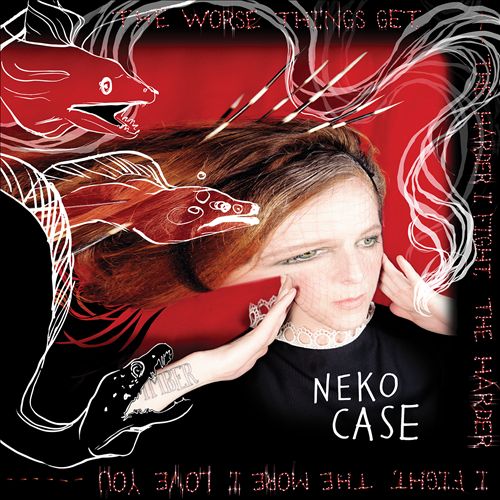
Neko has been pretty reliable over the years. You know you are going to get deep, heartfelt, melodic tunes with a powerfully soothing voice. This one felt like Neko at her most open, vulnerable and occasionally shocking. “Man” was a nice foray into alt-pop, and could easily be a strong New Pornographers tune. Other standouts are “Night Still Comes” and “Calling Cards.”
4. Kurt Vile, Wakin on a Pretty Daze
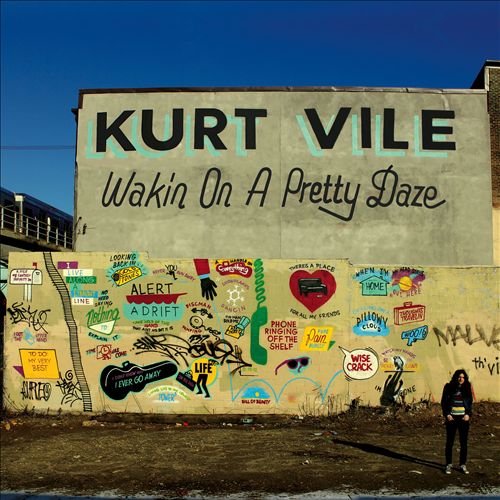
This is a more polished effort, but still has the same chilled vibe. The opening title track is a standout, with a longer than average running time that doesn’t wear out it’s welcome. It’s as long as the song needs to be.
3. Kanye West, Yeezus
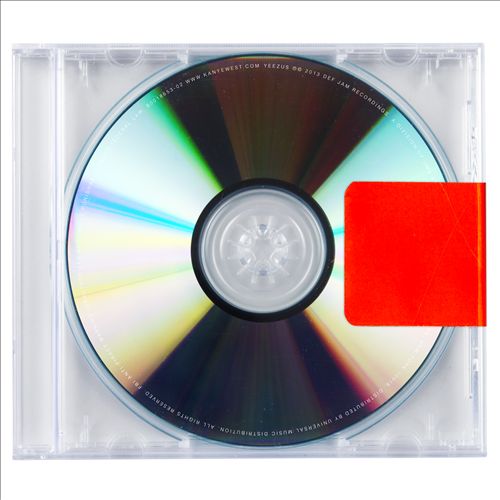
This seems to be a divisive record. There’s a ton of praise, and a ton more hate. I’m a big fan of Kanye as an artist. He has popularity and could easily cater to the lowest common denominator, but I like that he makes unique, creative music. Now he just needs to learn the difference between Spartans and Trojans.
2. The National, Trouble Will Find Me
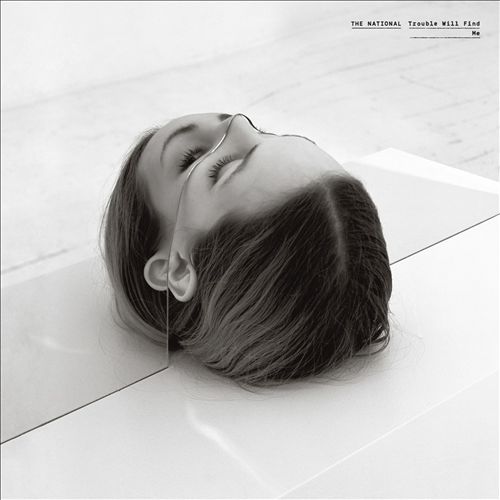
I’ve found myself disliking just about every National on the first listen or second listen, but they have a way of growing on me. I liked this one a little more out of the gates, thanks to a slightly more accessible and poppy sound, but that turned out to be a good thing.
1. My Bloody Valentine, MBV
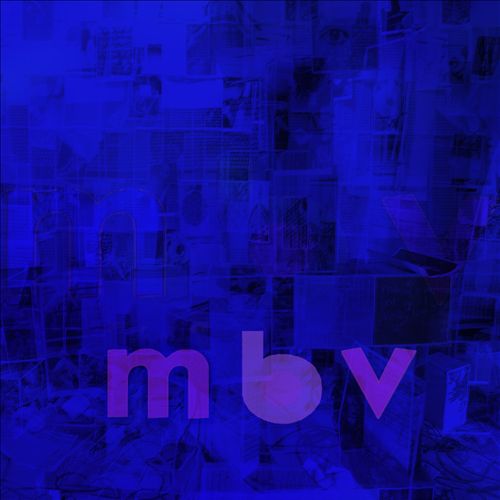
Was the long wait worth it? Honestly, no, but it’s easy to forget after such a fantastic follow-up. This one came with a pleasant memory, as they released it at midnight, crashed their servers, and pissed off the entire internet. I waited through it and will never forget the first listen, late at night with the volume turned up, drowned in sound. It was a little bit of Loveless and a little bit of something new.


 Criterion Close-Up