Category Archives: Film
1934 List
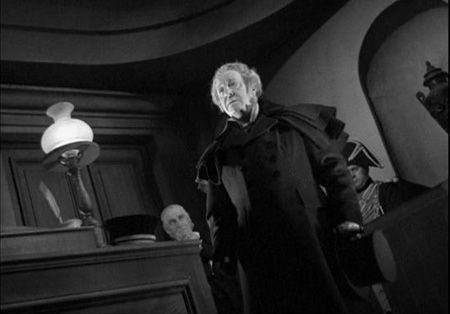
In my opinion, the 1930s were dominated by French cinema. That’s one of the reason I chose that as my independent study (technically resistance films, but used the 1930s to establish the film language and influences of those later films). It is no surprise that I have seven movies in my top 20 that are either directly involved with France or have French connections. My number one is the under-seen adaptation of Les Misérables is the most faithful and highest quality that I’ve seen. In fact, the others, especially the recent musical, pale in comparison. I saw the Eclipse version, but I hear that a restoration has been touring and I hope to re-watch that version someday.
My final cut was, The Black Cat . I have a lot of problems with the film, but the final haunting 20 minutes make up for my reservations. These are dark scenes even by some modern standards, so I felt it almost deserved inclusion.
1. Les Misérables
2. L’Atalante
3. A Story of Floating Weeds
4. Merry Widow
5. Imitation of Life
6. Le Grand Jeu
7. Madame Bovary
8. The Thin Man
9. Man of Aran
10. Rapt
11. The Affairs of Cellini
12. Scarlet Empress
13. La Signora di Tutti
14. Twentieth Century
15. It Happened One Night
16. Marie Chapdelaine
17. The Lost Patrol
18. It’s a Gift
19. The Man Who Knew Too Much
20. The Scarlet Pimpernel
1944 List
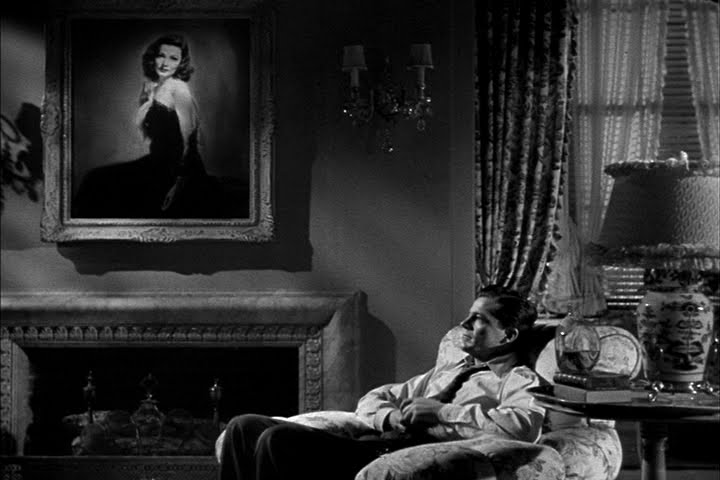
Pickings are slim thanks to the second world war. Compared to other years, European and Asian films are hard to find. Two German films made the list, both technicolor pieces with hints of propaganda, albeit a long ways from Riefenstahl. An early de Sica, early Bergman, and a late Eisenstein were the only other European selections, and there were none from Asia. This is probably one of the few years where a French film wouldn’t make my list. The Woman Who Dared would be somewhere in the 20s.
American and British films dominated the year, specifically noir. It was a dark period and that was reflected in the films. The two at the top are some of the best noir films ever made, in my opinion. Even the movies that aren’t strictly categorized as noir have some of dark elements, like Torment, The Uninvited and even the Sherlock Holmes addition, The Scarlet Claw. The remainder are upbeat wartime crowd pleasers like the two Sturges projects with Eddie Bracken as the lead. Even though there were a lot of them, none of the rah-rah war films made my list. Thirty Seconds Over Tokyo would probably be the closest. Others that I’ve seen acclaim for, like The Fighting Sullivans are not my cup of tea just because of their heavy-handedness, even if such strong messages were appropriate.
As a result, 1944 is not the deepest year for film. Numbers 15-20 would probably not make my list most years.
1. Laura
2. Double Indemnity
3. A Canterbury Tale
4. The Children Are Watching Us
5. Ivan the Terrible, Part 1
6. Lifeboat
7. Torment
8. Miracle of Morgan’s Creek
9. Gaslight
10. Ministry of Fear
11. The Uninvited
12. Great Freedom #7
13. Meet Me in St Louis
14. To Have and Have Not
15. Opfergang
16. Curse of the Cat People
17. Bon Voyage
18. The Scarlet Claw
19. Hail the Conquering Hero
20. Henry V
The Two Misérables
As it happened, I watched two versions of Les Misérables for each of my film classes. The first was by choice, as I wanted to watch some leftist poetic realists films in order to provide context for the later resistance films. The latter was for religion in film, to show how symbols were used to convey religious meanings. The candles were the objects that we focused on the most, as they represented his second chance, and tied him toward his messianic destiny.
Les Misérables, 1934

Raymond Bernard, who was Jewish and would have to cease filmmaking and flee during the war, produced some popular early films that established class as a major theme. The work he is most remembered for is his adaptation of Les Misérables. At a running time of over 5 hours, it was the most detailed adaptation of Victor Hugo’s 1862 novel. Bernard uses Hugo’s characters from the early 19th century to highlight the class struggles of the 1930s. With Jean Valjean’s arc from criminal to the aristocracy, he does not lose sight and empathy for those less fortunate, hence his adoption of Cosette after feeling somewhat responsible for her mother’s death. Bernard’s film develops Marius Pontmercy whose rebellious spirit is contrasted with his father’s loyalism to the royalty. The events culminate in the 1832 June Rebellion, but Bernard’s classist portrayal is reminiscent of the post-Bolshevik political reality in Europe.
Bernard’s version is undoubtedly the most accomplished of the two. While the major brush strokes of Valjean’s character are the same, Bernard is able to highlight the subtleties through performance. The conflict with Javert, portrayed as strict good versus evil in the musical, is more complicated in Bernard’s version. Javert has a code, and both versions are obsessed with their pursuit of Valjean. It is with the resolution where the characters divert. Since Russell Crowe’s Javert is the absolute face of evil, there is a catharsis in his suicide. He was getting his just desserts. The french Javert was eventually able to see the morality within Valjean, and his departure from the screen is far more effective as a character destination. Again, the focus was on subtle actions rather than grandiose theatrics.
Les Misérables, 2012

Tom Hooper can now call himself an Oscar winner for The King’s Speech, but he has yet to remind me that he is even an adequate director. His best film in my opinion was The Damned United, although I think that is mostly thanks to some interesting source material and characters. I noticed his poor direction in The King’s Speech. It’s mostly lazy. Rather than set the scene and let the characters breathe, he smothers them with the camera. Close-ups are fine if they serve a purpose. Sergio Leone, Jean-Pierre Melville, Francois Truffault have iconic close-ups that reveal deep emotion. Hooper reveals nothing. He was bailed out by some stellar acting in King’s Speech, but was completely exposed when directing the musical.
Hooper hammers you over the head with everything. As a musical, you have to expect bombast, but there are limits. Let’s also not forget that poor casting can ruin a movie. Everyone who saw Russell Crowe here, or Richard Gere in Chicago understands. Even Pontmercy seems to sing in the incorrect key for his role, but he at least has chops.
Raymond Bernard’s tale is 5 hours, while Tom Hooper’s is 2:30. Because of all the excessive music, the actual narrative and character content is more like under two hours. Bernard had the luxury of a large canvas, something that wouldn’t be possibly today, but he also had a firm understanding and appreciation of the source material that shows on the screen. He could have made an excellent 2:30 movie if that were hi limit.
If you haven’t seen it, I highly recommend checking out the Raymond Bernard version. There is a Criterion Eclipse version for relatively cheap, and it can be streamed on Hulu Plus. I hear there is a new restoration making the rounds, which hopefully will find its way to DVD soon.
Unless you’re a musical and broadway enthusiast, avoid the Tom Hooper version. Even if you loved the stage production, don’t expect to love the film.
1974 List
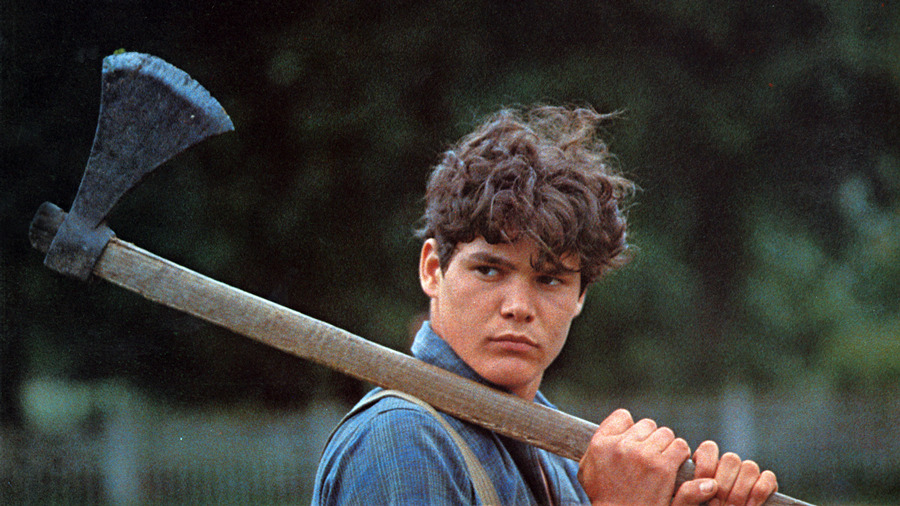
1974 was an especially strong year in film. Many would call classics like Chinatown and Godfather 2 among the greatest films of that decade. The fact that those two were not at the top of my list says less about them about films, and more about the other greats that came out that year. Lacombe, Luciene by Louis Malle is one of the films that inspired my topic study this semester. Ali: Fear Eats the Soul works on a number of different cultural and even linguistic levels, plus it is simply a well told and produced story.
What was striking about this year were the films I left off my list. There were some good ones, such as Young Frankenstein, Blazing Saddles, The Texas Chainsaw Massacre, Murder on the Orient Express, The Taking of Pelham One Two Three, The Longest Yard, and many more.
1. Lacombe, Lucien
2. Ali: Fear Eats the Soul
3. The Conversation
4. Godfather 2
5. Alice in the Cities
6. Lancelot du Lac
7. The Enigma of Kaspar Hauser
8. Chinatown
9. The Castle of Sand
10. Hearts and Minds
11. The Parallax View
12. Alice Doesn’t Live Here Anymore
13. Going Places
14. Harry and Tonto
15. Bring Me the Head of Alfredo Garcia
16. The Phantom of Liberty
17. Black Christmas
18. The Gambler
19. A Woman Under the Influence
20. Lenny
Malle + Melville = Resistance
“This film has no pretension of solving the problem of Franco-German relations, for they cannot be solved while the barbarous Nazi crimes, committed with the complicity of the German people, remain fresh in men’s minds.”
These are the opening lines of Jean-Pierre Melville’s Le Silence de la Mer. Of the La Résistance filmmakers, his message is the most aggressive, the most caustic. Part of this can be attributed to the time and political situation when he directed his films, which also include Leon Morin, Priest and Army of Shadows.
Louis Malle, on the other hand, has a different style entirely. His methodology is almost lamentation, even nostalgia and pride towards actions taken during the resistance. He throws a wrench in everything by portraying a French collaborator in Lacombe, Lucien, making his protagonist an unquestionable traitor to his country.
Malle made his resistance films later than Melville, and had the benefit of his own maturity and the sentiment that time heals all wounds. Politically, the two filmmakers were not too indifferent, and they both had some participation with the resistance.
My project for this semester has been narrowed down to just these two auteurs. There are countless others who expressed their feelings towards the occupation through film, specifically Clouzot, Bresson, Chabrol, Truffault, and others. Due to space, they are being snipped from this project. I don’t blame my professor from doing so, since this could blow up to become a 100-page opus. Even with extra free time on my hands, that would be too much for me.
While I’m working on the project, I will look at many of these other films. I’ll probably talk about those films here, while leaving my core work for my professor. I’m feeling good about this project, and if turns out how I hope, it’s possible I could explore publication or perhaps a larger work.
Here are the films that I’ll be focusing on:
Jean-Pierre Melville
La Silence de la Mer
Leon Morin, Priest
Army of Shadows
Louis Malle
Lacombe, Lucien
Au Revoir Les Enfants
Murmur of the Heart
The latter Malle film has less to do with the resistance, and more towards post-war France, but that might be worthwhile as a postscript to this project.
2004 Film List
The yearly lists continue. We just finished 2004, then will be going backwards a decade at a time. 1994 should be fun.
2004 was one of the better years for film in the aughts. I found myself removing many movies that could make my top 10 in other years like Shaun of the Dead, Sky Captain, The Sea Inside, and even my favorite of the Harry Potter series, The Prisoner of Azkaban.
There were some documentaries, 5 Asian films, and various other indies. Eternal Sunshine was one that I initially was lukewarm about even though I loved the premise and script. With time, I have come to appreciate it a lot more.
1. Eternal Sunshine of the Spotless Mind
2. Kings and Queen
3. Before Sunset
4. Nobody Knows
5. Sideways
6. The Incredibles
7. DiG!
8. Motorcycle Diaries
9. Downfall
10. Born into Brothels
11. Primer
12. Maria Full of Grace
13. Tony Takitani
14. Mysterious Skin
15. The World
16. House of Flying Daggers
17. Team America: World Police
18. The Lost Skeleton of Cadavra
19. Friday Night Lights
20. 3-Iron
12 Years in the Old South

This semester I’ve been taking a history class on The Old South. We have covered the role of women and poor whites, but the vast majority of our studies have been on the peculiar institution of slavery, and their relationships with their planter masters.
Because of this class, I’ve been highly interested in seeing 12 Years a Slave. Not only has the buzz been deafening, and it appears to be the front-runner for the Academy Award, but it seems to be a film that really gets slavery. At least that’s what I was led to believe.
The Old South class informed and influenced my viewing of the film. I came to appreciate it a lot more now that I have a better understanding of how the south works. While the people and places within the film might not be historically accurate, the way the institution functioned was spot on. They even gave a literal shout out to one of the most respected historians, which I’ll discuss momentarily.
Paternalism

Ever since the 1970s, historians have believed that the slave owners had a paternalistic sensibility towards their slaves. This wasn’t quite a white man’s burden sentiment. It was more of a product of the 2nd great awakening, and belief in the Christian ideal that all souls are the valued the same in the eyes of God. It wash’t just for show either. The Christian planters believed that their role was to Christianize and mentor their slaves. They treated them with respect and, at least in their eyes, created a bond that went beyond the master and slave contract.
Even though the Christian planters may have believed they were doing good, of course we know that they were not. Another reason that they became paternalists was out of necessity. Around the turn of the 19th century, there was a lot of negative pressure against slavery. It was being banned internationally, and the slave trade would be completely outlawed soon. Planters were invested in their own slaves, and the only way to grow them was for them to breed other slaves.
Benedict Cumberbatch’s Mr. Ford exemplifies the paternalistic relationship. While he is portrayed as an imperfect and conflicted character, we can tell that Platt/Northup has an amount of respect for him. Unlike Paul Dano’s overseer, Mr. Ford listens to his slave’s ideas, and is impressed with his experience. He preaches to them on Sundays, and carries himself as a virtuous, educated Christian man who happens to own slaves.
The major reason for the shift to paternalism was that to debate this anti-slave rhetoric, they had to change the argument from necessary evil to positive good. The slavers were not blind to the evil of the institution. It just happened to be part of the world and economy that they grew up in. It was a necessary evil that it existed. With abolition movements rising, that argument changed to positive good. Slavery was a vehicle for planters to do right for their slaves. They took care of them, nurtured them, clothed and sheltered them. Their argument was that free laborers were subject to the whims of capitalist industrialists who had their own interests in mind.
This is where Mr. Ford’s character has nuance. He protects him from retaliation from the overseer, but stops short of listening and taking action on behalf of Northup’s unfortunate situation. Despite his qualities, he lived in this system and had to abide by its rules. Helping slaves was conditional upon them remaining slaves, and the institution persisting.
Overseers, Drivers, and Poor Whites

Even if the master was pleasant and benevolent, that didn’t mean that slaves were treated well. However, the mistreatment often came from their direct supervisors, usually the overseers or drivers. These positions attracted poor, irresponsible white men, who otherwise would not have many employment opportunities. These men were usually the most racist individuals in the south. They were invested in slavery being tied to race and color, because otherwise, they would be prime candidates to become slave laborers. Essentially, the color of their skin was the only thing that separated them from slaves.
Paul Dano’s Tibeats and Garret Dillahunt’s Armsby characters embody the poor white perfectly. Tibeats wears his racism like a badge of honor, and is hardly able to utter a sentence without maligning the black man. A key scene that exemplifies the difference between rich planter and poor white was when Platt/Northup was recalling his experience with canals in New York, which conflicted with Tibeats’ way of doing things. The core of the overseer’s debate is simple. Since Platt is black, anything he says cannot be correct. The master favors the Platt plan and slights Tibeats. He even acknowledges that Tibeats cannot be impressed because of his prejudice, but Ford is quite impressed.
Armsby may not have been as outwardly hostile towards blacks as Tibeats, but even though he labors along with slaves, we find that he secretly does not consider himself to be on the same level. He is a bumbling, irresponsible poor white, who is just trying to make out the best that he can. Platt is fooled by Armsby, thinking that just because they work and live together, that they have anything gin common. He tries to recruit Armsby into helping his cause, but the lowly white man immediately double crosses him.
The way Master Epps responds to Platt’s cover story again proves the poor white’s lowly station. The story that the drunken laborer was using this lie as a means to becoming an overseer makes more sense than a slave writing letters to find his freedom. Of course he believed it! Even if it was true, the real story was quite remarkable.
Roll, Jordan, Roll
As I was watching 12 Years a Slave, I was continuously impressed by the respect towards history. What surprised me was when I heard the slaves singing Roll, Jordan, Roll. This was the title of Eugene Genovese’s 1976 book about slavery. Genovese did some groundbreaking research on the history of slavery, undoing the belief that slaves were simply mistreated tools for the master’s gains. With his previous work and research, he showed the paternalistic relationship between slave and master. He was also the first to rely on slave rather than planter sources. He proved theories by using their own words, and he probably also relied on Solomon Northup’s written experiences.
The song came from an old slave Spiritual, which was also how Genovese arrived at the title for his work.
Anti-Paternalism

While Genovese’s work was groundbreaking, his idea of Paternalism was not all encompassing. There were two historians Fogel and Engerman (actually cliometricians, people who prove history with numbers), who argued against paternalism because the numbers proved that slavery was an efficient and profitable institution. The only way to explain this efficiency is that the masters were tough on their slaves. They pressured them to be as productive as possible. While they did not shred the idea of Paternalism, they showed that is was not always the norm.
Michael Fassbender’s Edwin Epps was the antithesis of Christian Paternalism. He had no interest in civilizing his slaves. All he cared about were the amount of cotton they picked. If there numbers were below average, they would be subject to the whip. He was the biggest bastard of them all, treating his slaves with abject cruelty.
Like with Master Ford, McQueen does a good job at drawing Epps as a complicated, textured character. When his wife throws an object at Patsey, Epps protects his slave and threatens his wife. We wonder then whether he has genuine affection for her, but eventually realize that it is not affection, but greed that drives him to protect his “favorite” slave. She picks the most cotton, so she must be protected.
When Patsey goes to the Shaw Plantation to get a bar of soap, Epps responds with rage. He has her whipped. At first you wonder if there’s a little bit of humanity within his psyche, because he initially has Platt do the whipping. The thought is that maybe because he has affectionate feelings towards her, he cannot bear to personally harm her. Not so. When Platt doesn’t whip her with the intensity that his master desires, he takes the reins and unleashes the whip with ferocity. How dare she cross him!
The Plantation Mistress

Women were not considered property like like slaves, but based on their rights, they might as well have. They were in a different sort of bondage. Whether they entered the arrangement willingly or not, they were subject to the wishes of their husband, who was their master. He may be a bastard, like Master Epps was, but the mistress had to look the other way. Divorce was rarely an option, as the woman would be socially isolated and scorned for the rest of her life.
One would think that given their similar station, that there could be a sort of sisterhood between the mistress and slaves. History has shown that was definitely not the case. The mistress was in essence the planation manager. The husband may be the master, but they often ran the operation. They felt no kinship between slaves because they were simply from different worlds. Rich southern women were among the most highly educated in the US at the time, many having gone to private academies in their youth, learning the classics and high levels of mathematics.
One of the stronger characters is Sarah Paulson’s Mistress Epps. She has an eye of suspicion towards Patsey, showing that she is aware of the secret “relationship” between slave and master. Aware or not, she does not voice her suspicion, but she treats the slave with varying levels of aggression. She is violent with the slave at one point, and undermines her with passive aggression at other times. Master Epp’s eventual punishment of Patsey could have been a direct result of the Mistresses constant needling.
We don’t see Mistress Epps working on the books or managing the business, but we see her as more competent and sober compared to her overbearing husband. Even though her station is nearly as low as a slave, she is a tough, stoic woman, more than capable of asserting herself.
12 Years a Slave
If I had not known better, I might question the history of Steve McQueen’s 12 Years a Slave. I’ve skimmed some message boards where people are critical of the portrayals. They defy many stereotypes seen in other movies, most recently notable in Quentin Tarantino’s Django Unchained. After studying the Old South for a few months, however, I have found myself more than impressed by the treatment of history. McQueen could have easily succumbed to Hollywood stereotypes to make a more palatable movie. He and his historical adviser, Henry Louis Gates, have done as much as possible to capture slavery as it was in reality. As a result, they have created one of the most compelling, and perhaps one of the most historically accurate popular films to come out in recent years.


 Criterion Close-Up