Stephen King, Revisited
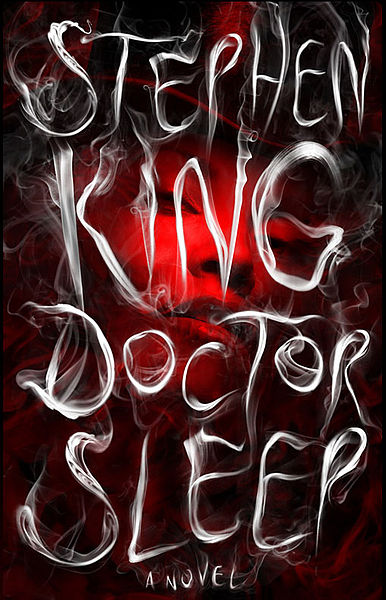
I was a huge Stephen King fan when I was a child. I’m not sure whether it was the quality of his work back then, or the fact that his work is more appealing to kids. Probably a little bit of both.
Some of my childhood favorites were It, Pet Sematary, The Tommyknockers, Christine, Salem’s Lot, and many others. I enthusiastically consumed pretty much everything he released in the 70s and 80s.
Then came the 90s and adulthood. I remember enjoying Needful Things well enough. Our relationship ended with Gerald’s Game, which I bought on the release date. I hated that book. It seemed to go absolutely nowhere, and was boring, a first for King. After that, I moved on from King and broadened my tastes. I barely thought about another King novel for 20 years.
Meanwhile, my love for The Shining as a film grew. I have hardly any memory of the book, although I’m sure I liked it fine. The movie was a different story. I have watched it numerous times, and have come to appreciate Kubrick’s artistry, the hidden themes, and even the ridiculous conspiracy theories postulated in Room 237. I did a close reading in a film studies class. Because of the richness of the source material, it was probably my most enjoyable college project.
I tried King’s writing again with Dallas 11/22/63. Wow. The magic was back! I loved, loved this novel. It reminded me of his earlier work. The characters were rich; there was a sense of place, and most importantly, it was enthralling. I couldn’t put the book down at some points. To my surprise, this became among my favorite novels of the last several years.
And that leads me to Doctor Sleep, which I just finished yesterday. This is a sequel to the book, not the film, but I was intrigued. What could have happened to the Torrances after the Overlook hotel? King does not write sequels, so if he broke his rule in this case, then he must have had a story to tell.
The one thing I immediately noticed was that Doctor Sleep was not written as well as Dallas. The chapters were shorter, page-turning style, and the writing more simplistic. The characters were thinner, some (like the True Knot gang) were single dimensional. Despite these limitations, it worked as a page-turner for the first few hundred pages. I enjoyed reading about Torrance conquering his demons and interacting with the youngster Abra.
The book held my attention until about 60-70 pages from the end, and then it just put on the brakes. There had been foreshowing that was impossible to miss, and it was clear how the ending would play out. I found myself laboring through the pages, just like with Gerald’s Game. The first four hundred pages took me about two weeks. The last hundred took the same. It was just ran out of steam (no pun intended).
Laboring through, I realized that this was an engaging story, but still not the King that I remembered. That’s probably the norm these days, and Dallas was an unusual exception. I won’t say that I’m finished with King, but I’m less inclined to give him another shot without a firestorm of good reviews.
2011 Film List

Some friends have been putting together year lists of their favorite 20 films. They give about a 2-3 week deadline for each year, and count down a decade at a time. Since I have some downtime, I’ve jumped in with a 2011 list. From here we’ll go next to 1994, then 1984, and so forth.
The list year was documentary heavy, mostly because I got into a kick and saw quite a few. Listing The Story of Film was a bit of a cheat, as it is more of a TV series than a theatrical film, but I enjoyed it immensely nonetheless.
20. Margaret
19. Shame
18. Beats Rhymes and Life: The Travels of a Tribe Called Quest
17. Girl With the Dragon Tattoo
16. Comic-Con Episode Four: A Fan’s Hope
15. This is Not a Film
14. Ides of March
13. Page One: A Year Inside the New York Times
12. The Descendants
11. 50/50
10. Cabin in the Woods
9. A Better Life
8. The Story of Film: An Odyssey
7. Tinker Tailor Soldier Spy
6. Jiro Dreams of Sushi
5. Moneyball
4. Project Nim
3. Hugo
2. Paradise Lost 3
1. Tree of Life
Tree of Life may be high concept, but the sheer beauty is hypnotic. Every frame is gorgeous.
12 Years in the Old South

This semester I’ve been taking a history class on The Old South. We have covered the role of women and poor whites, but the vast majority of our studies have been on the peculiar institution of slavery, and their relationships with their planter masters.
Because of this class, I’ve been highly interested in seeing 12 Years a Slave. Not only has the buzz been deafening, and it appears to be the front-runner for the Academy Award, but it seems to be a film that really gets slavery. At least that’s what I was led to believe.
The Old South class informed and influenced my viewing of the film. I came to appreciate it a lot more now that I have a better understanding of how the south works. While the people and places within the film might not be historically accurate, the way the institution functioned was spot on. They even gave a literal shout out to one of the most respected historians, which I’ll discuss momentarily.
Paternalism

Ever since the 1970s, historians have believed that the slave owners had a paternalistic sensibility towards their slaves. This wasn’t quite a white man’s burden sentiment. It was more of a product of the 2nd great awakening, and belief in the Christian ideal that all souls are the valued the same in the eyes of God. It wash’t just for show either. The Christian planters believed that their role was to Christianize and mentor their slaves. They treated them with respect and, at least in their eyes, created a bond that went beyond the master and slave contract.
Even though the Christian planters may have believed they were doing good, of course we know that they were not. Another reason that they became paternalists was out of necessity. Around the turn of the 19th century, there was a lot of negative pressure against slavery. It was being banned internationally, and the slave trade would be completely outlawed soon. Planters were invested in their own slaves, and the only way to grow them was for them to breed other slaves.
Benedict Cumberbatch’s Mr. Ford exemplifies the paternalistic relationship. While he is portrayed as an imperfect and conflicted character, we can tell that Platt/Northup has an amount of respect for him. Unlike Paul Dano’s overseer, Mr. Ford listens to his slave’s ideas, and is impressed with his experience. He preaches to them on Sundays, and carries himself as a virtuous, educated Christian man who happens to own slaves.
The major reason for the shift to paternalism was that to debate this anti-slave rhetoric, they had to change the argument from necessary evil to positive good. The slavers were not blind to the evil of the institution. It just happened to be part of the world and economy that they grew up in. It was a necessary evil that it existed. With abolition movements rising, that argument changed to positive good. Slavery was a vehicle for planters to do right for their slaves. They took care of them, nurtured them, clothed and sheltered them. Their argument was that free laborers were subject to the whims of capitalist industrialists who had their own interests in mind.
This is where Mr. Ford’s character has nuance. He protects him from retaliation from the overseer, but stops short of listening and taking action on behalf of Northup’s unfortunate situation. Despite his qualities, he lived in this system and had to abide by its rules. Helping slaves was conditional upon them remaining slaves, and the institution persisting.
Overseers, Drivers, and Poor Whites

Even if the master was pleasant and benevolent, that didn’t mean that slaves were treated well. However, the mistreatment often came from their direct supervisors, usually the overseers or drivers. These positions attracted poor, irresponsible white men, who otherwise would not have many employment opportunities. These men were usually the most racist individuals in the south. They were invested in slavery being tied to race and color, because otherwise, they would be prime candidates to become slave laborers. Essentially, the color of their skin was the only thing that separated them from slaves.
Paul Dano’s Tibeats and Garret Dillahunt’s Armsby characters embody the poor white perfectly. Tibeats wears his racism like a badge of honor, and is hardly able to utter a sentence without maligning the black man. A key scene that exemplifies the difference between rich planter and poor white was when Platt/Northup was recalling his experience with canals in New York, which conflicted with Tibeats’ way of doing things. The core of the overseer’s debate is simple. Since Platt is black, anything he says cannot be correct. The master favors the Platt plan and slights Tibeats. He even acknowledges that Tibeats cannot be impressed because of his prejudice, but Ford is quite impressed.
Armsby may not have been as outwardly hostile towards blacks as Tibeats, but even though he labors along with slaves, we find that he secretly does not consider himself to be on the same level. He is a bumbling, irresponsible poor white, who is just trying to make out the best that he can. Platt is fooled by Armsby, thinking that just because they work and live together, that they have anything gin common. He tries to recruit Armsby into helping his cause, but the lowly white man immediately double crosses him.
The way Master Epps responds to Platt’s cover story again proves the poor white’s lowly station. The story that the drunken laborer was using this lie as a means to becoming an overseer makes more sense than a slave writing letters to find his freedom. Of course he believed it! Even if it was true, the real story was quite remarkable.
Roll, Jordan, Roll
As I was watching 12 Years a Slave, I was continuously impressed by the respect towards history. What surprised me was when I heard the slaves singing Roll, Jordan, Roll. This was the title of Eugene Genovese’s 1976 book about slavery. Genovese did some groundbreaking research on the history of slavery, undoing the belief that slaves were simply mistreated tools for the master’s gains. With his previous work and research, he showed the paternalistic relationship between slave and master. He was also the first to rely on slave rather than planter sources. He proved theories by using their own words, and he probably also relied on Solomon Northup’s written experiences.
The song came from an old slave Spiritual, which was also how Genovese arrived at the title for his work.
Anti-Paternalism
While Genovese’s work was groundbreaking, his idea of Paternalism was not all encompassing. There were two historians Fogel and Engerman (actually cliometricians, people who prove history with numbers), who argued against paternalism because the numbers proved that slavery was an efficient and profitable institution. The only way to explain this efficiency is that the masters were tough on their slaves. They pressured them to be as productive as possible. While they did not shred the idea of Paternalism, they showed that is was not always the norm.
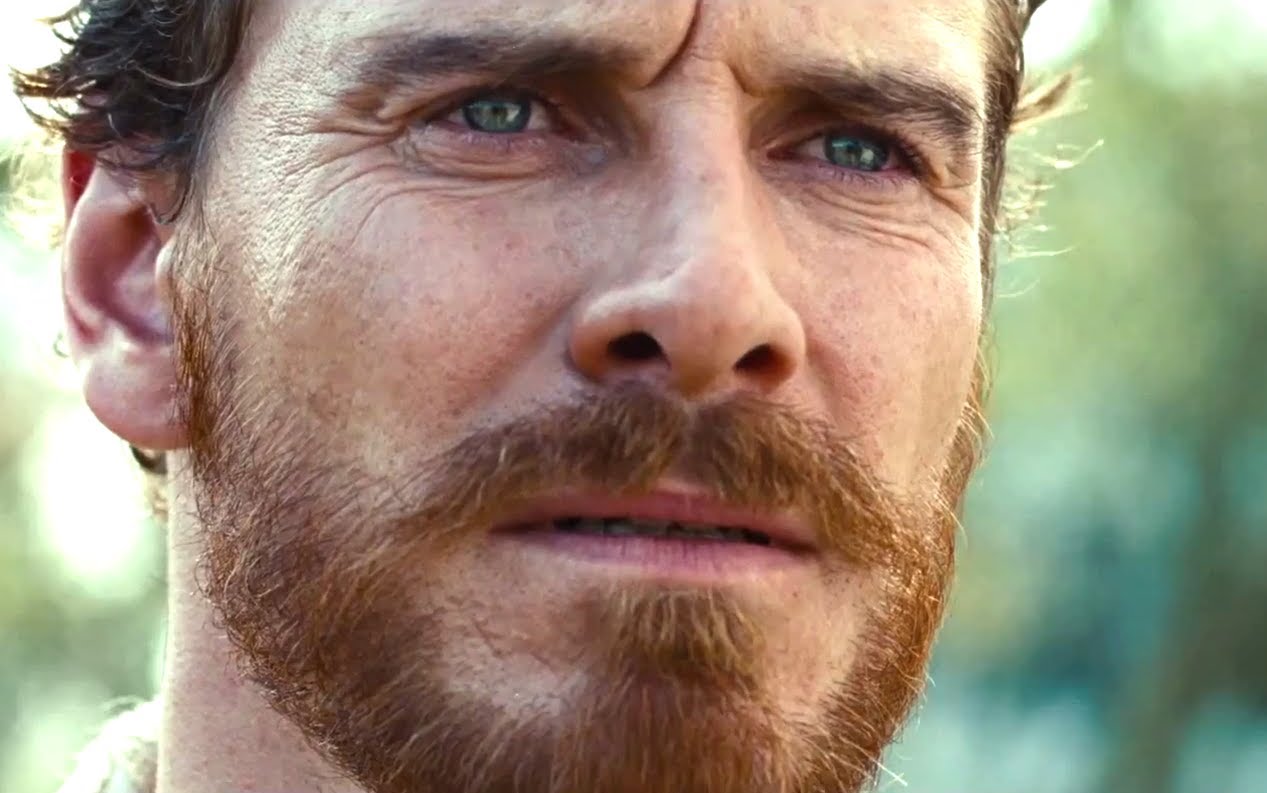
Michael Fassbender’s Edwin Epps was the antithesis of Christian Paternalism. He had no interest in civilizing his slaves. All he cared about were the amount of cotton they picked. If there numbers were below average, they would be subject to the whip. He was the biggest bastard of them all, treating his slaves with abject cruelty.
Like with Master Ford, McQueen does a good job at drawing Epps as a complicated, textured character. When his wife throws an object at Patsey, Epps protects his slave and threatens his wife. We wonder then whether he has genuine affection for her, but eventually realize that it is not affection, but greed that drives him to protect his “favorite” slave. She picks the most cotton, so she must be protected.
When Patsey goes to the Shaw Plantation to get a bar of soap, Epps responds with rage. He has her whipped. At first you wonder if there’s a little bit of humanity within his psyche, because he initially has Platt do the whipping. The thought is that maybe because he has affectionate feelings towards her, he cannot bear to personally harm her. Not so. When Platt doesn’t whip her with the intensity that his master desires, he takes the reins and unleashes the whip with ferocity. How dare she cross him!
The Plantation Mistress

Women were not considered property like like slaves, but based on their rights, they might as well have. They were in a different sort of bondage. Whether they entered the arrangement willingly or not, they were subject to the wishes of their husband, who was their master. He may be a bastard, like Master Epps was, but the mistress had to look the other way. Divorce was rarely an option, as the woman would be socially isolated and scorned for the rest of her life.
One would think that given their similar station, that there could be a sort of sisterhood between the mistress and slaves. History has shown that was definitely not the case. The mistress was in essence the planation manager. The husband may be the master, but they often ran the operation. They felt no kinship between slaves because they were simply from different worlds. Rich southern women were among the most highly educated in the US at the time, many having gone to private academies in their youth, learning the classics and high levels of mathematics.
One of the stronger characters is Sarah Paulson’s Mistress Epps. She has an eye of suspicion towards Patsey, showing that she is aware of the secret “relationship” between slave and master. Aware or not, she does not voice her suspicion, but she treats the slave with varying levels of aggression. She is violent with the slave at one point, and undermines her with passive aggression at other times. Master Epp’s eventual punishment of Patsey could have been a direct result of the Mistresses constant needling.
We don’t see Mistress Epps working on the books or managing the business, but we see her as more competent and sober compared to her overbearing husband. Even though her station is nearly as low as a slave, she is a tough, stoic woman, more than capable of asserting herself.
12 Years a Slave
If I had not known better, I might question the history of Steve McQueen’s 12 Years a Slave. I’ve skimmed some message boards where people are critical of the portrayals. They defy many stereotypes seen in other movies, most recently notable in Quentin Tarantino’s Django Unchained. After studying the Old South for a few months, however, I have found myself more than impressed by the treatment of history. McQueen could have easily succumbed to Hollywood stereotypes to make a more palatable movie. He and his historical adviser, Henry Louis Gates, have done as much as possible to capture slavery as it was in reality. As a result, they have created one of the most compelling, and perhaps one of the most historically accurate popular films to come out in recent years.
Why a New Blog?
Those of you who know me from my cycling blog, SteepClimbs.com, know that I’ve been nursing an injury on and off for over a year. That’s put a damper on my activity, and with still no diagnosis at present, there looks to be plenty of downtime in the immediate future.
I have a lot to say. And I need a creative outlet.
I’ve been writing in some capacity since I was a child. The creative releases would come in bursts, and rarely amounted to much. I would write short stories as a child, all of which were lost. That’s probably a good thing, as they were probably terrible.
After starting a technology company in my 20s, I settled on writing more. There began my love affair with the world wide web, and ended with my selling a company and working as Content Manager for a media company in North Hollywood, California.
As that company was going under amid the new decade’s dot-com bust, I got a book deal and advance. That was quite a story of its own, which I may tackle later.
As I started my new career as an Underwriter, I started writing again. This time it was about film, and lasted a few years until shortly after moving away from a major film market.
The cycling blog is not going away anytime soon, as fitness is a passion of mine, but there simply isn’t too much for me to talk about, and I have a lot more free time now.
So I launched a new blog. Here I’ll talk about all sorts of things that simply would not be interesting to readers of SteepClimbs. This one is also going to be much smaller without nearly the amount of readers. I’ll publicize it a little bit, but it’ll be mine, for the most part. If people find this interesting, then that’s great, but this is not a vanity project.
Topics will be wide ranging. This is a blog for whatever fits my interests at any given moment outside of health and wellness.
Right now my passion is again for film and media. I’m finishing up a history degree, and reading a lot of books. I’m also a news and political buff.
The tagline is “Musings About Popular Culture & History.” That sounds about right for now. My guess is that I’ll write most about film. I was once a film studies minor until the college slimmed down that department, and I had to change to an English cognate. Film has been my first love for most of my adult life, and usually of the non-mainstream artistic variety.
We’ll see where this takes me.


 Criterion Close-Up