Blog Archives
Criterion: Cul-de-sac, 1966

Some might consider this a lesser Polanski, but it was produced during what I consider his peak. Repulsion, which I consider to be the best Polanski (sorry Chinatown!) came out just the year before, and this pictures uses many of the same crew, including the DP, Gilbert Taylor. It has a similar look and feel to Repulsion. While this film is lighter in tone and has some comedic moments, it still had similar, dark themes as his surrounding films, which would culminate a couple years later in Rosemary’s Baby, another of his best films.
Cul-de-Sac could have been a three-act play using mostly four lead actors, but the location of Lindisfarne / Holy Island was almost like another character. It was the dead end, or cul-de-sac in many ways for all of these characters, whether temporary or permanent. The castle was beautiful, but remote, isolated, and subject to the tidal whims of the sea. It was a change in tide that created the situation that put these characters together, as the car of two gangsters stalls on its way to the island.
The ensemble case consisted of lesser known talent, but they really shined here. Most notable was Donald Pleasence in his effeminate portrayal of the cuckolded husband George. Françoise Dorléac played his restless French wife. I admired her work in Truffault’s The Soft Skin, and it is worth noting that she is the elder sister of Catherine Deneuve, who was absolutely fantastic in Repulsion. In many ways the two characters were similar, albeit Dorléac’s Teresa responds to her isolation with adultery rather than psychosis. Finally, Lionel Stander played Dickie, the gangster who occupies and bullies the quiet lives of this odd pairing. He was perfectly cast as the loudmouth ruffian, which results in terrific character conflict between Pleasence and Dorléac.
I would be remiss if I didn’t mention the amazing long take. There is a period where the threesome are on the beach, when Dorléac strips naked, runs into the water and leaves the men to argue. As they continue their bickering, a noise is heard from overhead which Dickie thinks is a helicopter coming to rescue him. Instead, to his disappointment, it is a low flying airplane. The actors play off it exceptionally well, and the plane enters the frame with perfect timing. Dorléac right on cue, returns from her swim towards the end of the shot. It was over 8-minutes, and it’s difficult for me to remember a better orchestrated take in Polanski’s long career.
Film Rating: 8/10
Special Features:
The disc has a short, making-of featurette. What I like about the Criterion documentary features compared with traditional releases is that they aren’t self-congratulatory. They are honest about the production, warts and all. First off, I was surprised that they practically bash Stander, who was extremely difficult to work with. You wonder whether they would have been so frank about his behavior if were still living. They also talked about the animosity on the set between Polanski and pretty much everyone else. Finally, they talk about how they put together and timed the praiseworthy long take. If it weren’t for production problems and delays, it may not have happened.
They show a black and white TV interview with Polanski in 1967, just after he had filmed The Fearless Vampire Killers. Sometimes these features don’t work well, but this was a good interview, especially considering this was from when Polanski was young and at the height of his career. He touches on his rough childhood in Poland during the war (he was a Jewish refugee whose mother died), and focuses more on his career, and shows old shorts and previous works of his. It is a nice retrospective and Polanski is always a good interview subject, young or old.
The disc is light on special features and that is okay. Other Polanski releases, including Repulsion have a lot of features. This is a good companion to all of them.
Criterion Rating: 8/10
Criterion: Scanners, 1981
SCANNERS, 1981
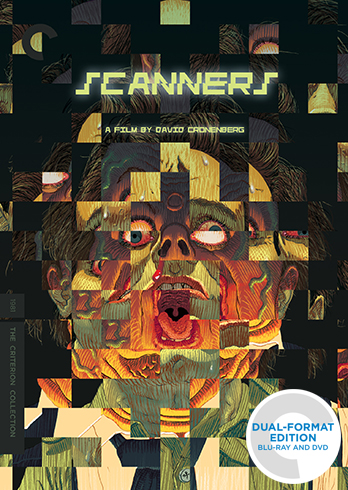
I first saw Scanners as a teenager. I cannot remember precisely where, but it was a cable stable in the 1980s-1990s, and it infamous for that exploding head scene. It was Cronenberg’s breakthrough film, which established what would be an interesting and diverse career for someone who cut his teeth making raw horror films. When I was younger, I embraced the novelty of the special effectives, especially that head that I have seen probably 1000 times via GIFs.
Sometimes time and experience can change perception. My memory was that Scanners was a cutting edge, state of the art, ground breaking horror film. It is some of those things, lots of those things, but I remembered it being a little better than what I saw yesterday. The plot is scattershot, and some of it hasn’t aged well (like having the protagonist scan into a monochrome computer system via a pay phone). Until the final scene, it lacks character conflict. We don’t really understand the motivations for each of the two scanning leads, and the clunky corporate exposition doesn’t help matters. Michael Ironside practically steals every scene he is in, and I found myself wanting more of him — one of my favorite scenes being the archived videotape where he explains drilling into his own head. His adversary, played by Stephen Lack is barely interesting and could have used some acting lessons.
The head explosion scene was absolutely fan-f’ing-tastic! I had forgotten when to expect it, and I love that it came 13 minutes in. It sets the tone for the violence and special effects to come. The Blu-Ray transfer didn’t make too much of a difference, but it probably would have if I had watched frame by frame.
I found much of the exposition to be plodding, and some of that makes sense now that I understand the production difficulties. And then comes the ending, which I will do my best not to spoil. Let me just say that these effects are most definitely dated, and I still cringed at what they did with the veins, which DID look a lot better in Blu-Ray.
Rating: 6/10
Special Features:
The 25-minute or so featurette about the visual effects was more engaging than the movie itself. I had no idea how they pulled off the exploding head, and I won’t say here, but it is worth watching just to see that. I will say that the way they did this would not happen in a studio production today. It also spoke to the issues with production, the daily re-writes, and what a mad, chaotic scramble the entire production was. Yet they managed to bring in some of the best in the business, which showed in the end product.
There were interviews with Michael Ironside and Stephen Lack, which were somewhat interesting, but I find myself less interested in Criterion interviews, especially when they are nearly half an hour a piece. There are exceptions, like Sterling Hayden’s interview for The Killing, but that’s a topic for another day. Ironside’s was somewhat more compelling because he’s since gained a lot of credibility by working in countless features. Lack was, well, lacking, and I probably am biased because I didn’t like him in the role.
The Cronenberg appearance on Canadian television was short, to the point, and my 2nd favorite feature. It was mostly a retrospective, as they showed trailers for his handful of prior films (Shivers, The Brood, etc.) and had him say a few words about them. It was mostly interesting to see Cronenberg in 1981, in his element, looking like one of the early Microsoft programmers. He said that he wasn’t really a horror fan, yet the genre found him. That speaks to his later work, where he would dabble in other areas, and has practically abandoned the horror film today.
Despite this not being a Criterion-caliber film, its position in pop and specifically horror culture makes it worth a look.
Criterion Rating: 7/10


 Criterion Close-Up