Category Archives: Film
1965 List
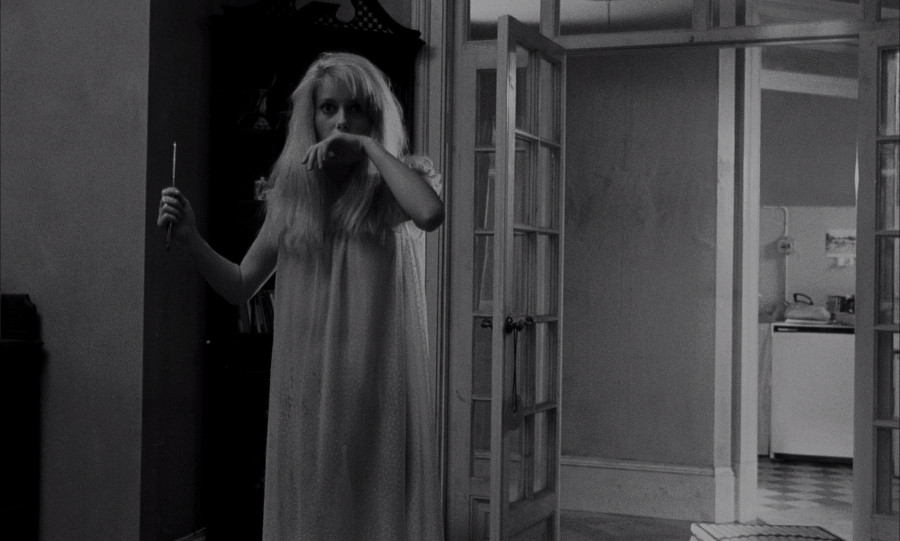
When reviewing my list for 1965, I was struck by how few Hollywood films I included. Most of the English language films were British productions. I count five of them and only two Hollywood productions: King Rat and A Patch of Blue. My #21 would have been another American film, Flight of the Phoenix. Another English film, Thunderball also barely missed the cut.
Aside from the unusual number of UK films, this list is quite spread out geographically. There’s some French, Spanish, Czech, Italian, and some Japanese round out the end of the list. There is only one documentary, the splendid Tokyo Olympiad.
1. Repulsion
2. Loves of a Blonde
3. Le Bonheur
4. The Hill
5. The Moment of Truth
6. The Shop on Main Street
7. Yoyo
8. The Spy Who Came in From the Cold
9. Fists in the Pocket
10. King Rat
11. Juliet of the Spirits
12. Simon of the Desert
13. Zatoichi and the Chess Expert
14. Story of a Prostitute
15. Red Beard
16. Doctor Zhivago
17. Tokyo Olympiad
18. The Collector
19. Pierrot le Fou
20. A Patch of Blue
Criterion: Blithe Spirit, 1945
BLITHE SPIRIT, DAVID LEAN, 1945
Blithe Spirit can easily be dismissed as one of the lesser of the Lean/Coward collaborations, or the inferior of Lean’s two comedies, or the mediocre movie that Lean got out of the way before focusing on arguably his finest masterpiece, Brief Encounter. All of these statements are true to an extent. This is a light, mediocre effort, yet it is engaging and at times pleasurable despite its flaws.
Lost in the comedic ghost story is a great deal of class-consciousness and their virtues, or lack thereof. Charles Condomine states early on that “it’s discouraging to think how many people are shocked by honesty and how few by deceit.” His current wife, Ruth, is shocked by his later honesty, even though she claims that she would not be offended by his calling his dead wife Elvira more attractive. Both Condomines act under the auspices of honesty, but in fact, there is a deceit going on that will be uncovered later.
Madame Arcanti is a lower class medium who travels by bicycle to the Condomines to reach out to the dead for them. She is excited by having some interest in her gift, but she is the object of their upper class ridicule. As it turns out, this is a clever deceit, as they believe none of it, and are merely using her to witness her methods for Condomine to write a mystery book later. Unlike her hosts, Arcanti is completely honest. She even states in a later scene that “honesty is the best policy.” After the ghosts are brought back into the world, she is fascinated by her abilities coming true, yet is clear about her limitations. She is helpless as to how to get them to leave. A lot of unsuccessful trial and error ensues.
Much of the comedy has to do with Arcanti bumbling around during her séances, and later when Charles’ ex-wife appears to his eyes and ears only, and he tries to talk to both her and his wife Ruth at the same time. His current wife is easy to offend, shocked by his honesty, even if it is directed at his dead wife and not her.
Kay Hammond is a delight as Elvira, and her capricious bantering with Charles is when the film is at its most enjoyable, especially since his responses end up with him inadvertently insulting his wife. Elvira relishes in Ruth’s reactions, pulling the strings to drive the couple apart.
Ruth comes off worse as the film progresses, and she seems to represent the worst of her upper class upbringing. She maligns Elvira, referring to her as not having the “slightest sign of breeding.” She does not get along with Arcanti either when she recruits the medium for a solution, and insults the poor woman’s credibility. She proves to be a poor wife to Charles, and the deceit is that she has his best interests in mind. She is thinking of herself only, and the only way to rectify her situation is to rid the living world of Elvira.
Elvira is a unabashed liar, lout, and rarely gives anything but a flippant response to anything Ruth or Arcanti says. She is the spirit that is being described as blithe, which is defined as “showing a casual and cheerful indifference considered to be callous or improper.” Over time, she wears out her welcome to Charles as well, and she admits that even during their marriage, she was unfaithful. She is the queen of deception and the antithesis of honesty.
Despite being occasionally charming, Blithe Spirit can be plodding and tiresome. It is a good thing that Lean made Hobson’s Choice later to prove that he had a comedic voice, although it is unfair to compare Charles Laughton with Rex Harrison on any level. This was a spirited attempt, but more of a stepping stone on the way to better things for Lean’s career.
Film Rating: 5.5
Supplements:
Interview with David Lean scholar Barry Day: Day was also not altogether thrilled with the film, although I don’t necessarily agree with all of his criticisms. He thought that Kay Hammond as Elvira was a problem because she was not as physically attractive on screen as Constance Cummings. Perhaps this is true on a physical role without being made up for the roles, but attraction is not always derived from looks. Her Elvira, however unscrupulous, was more desirable than the square-pegged Ruth. Day concludes that the film is “not bad, but not as good as it could have been.”
The Southbank Show on Noel Coward: This gem of a TV documentary is better than the actual feature, in my opinion. It is a life retrospective of Coward, from his upbringing to his death, and finally to his legacy. Some of the best parts were archived versions of him singing his songs, something I had never seen before. They go on through his plays, the failures and the successes, show him as an actor, and discuss his closeted homosexual personal life. He was unquestionably an interesting and talented man and this was a worthy portrait of him. As for his legacy, one of his later quotes are that he “was not all that keen on being significant.” He may not have been keen on it, but the works stands on their own as being extremely significant.
Criterion Rating: 6/10
Criterion: Richard III, 1955
RICHARD III, LAURENCE OLIVIER, 1955

After tackling Henry V and Hamlet, Laurence Olivier directed and starred in his third and final Shakespeare feature, in spectacular VistaVision Technicolor. Many consider this to be his magnum opus, and as an actor, the character he is most commonly associated with. It has inspired many actors and performances, ranging from theatrical actors to punk rock singers (Johnny Rotten). It is undoubtedly a performance for the ages.
Unlike Polanski’s Macbeth, which I recently reviewed and highlighted that the character’s speeches to the camera were handled via internal monologue as voiceover, Olivier continues the tradition of speaking to the screen/audience as the ‘Vice ‘ character. One can argue which is the preferable method, but in the mid-1950s, the sort of revolutionary direction that Polanski undertook would have been too radical. Not to mention, the film would have lost something special in Olivier’s performance. His finest moments in the film are when he is speaking to us, beginning with the “Now is the winter of our discontent” to the infamous “My Horse!” line – although in fairness, the latter plea was desperately spoken to everyone.
As Olivier puts it, he prefers to work from the outside-in. He develops the look of the character and uses that as his starting point for the performance. In Richard III, he worse a long, dark wig, a prosthetic nose and walked with a hunched gait in order to demonstrate the character’s disability, which could be seen as his evil motivation. He wore brash, ostentatious costumes, which for half of the film made him appear as if a bird of prey. His look was ferocious, and blended together splendidly with the evil nature of Richard’s inner self.
The performance is the cornerstone of this production, and Oliver shines throughout. There are a couple of scenes where he was extra impressive. The two scenes in which he is scorned by, and later seduces The Lady Anne. He goes from being spit on by her after she suspects (rightfully) that he murdered her husband, to being manipulated into loving him. This is one scene in the play, which Olivier cuts into two in order to make it seem more plausible. Even that is a reach, but through the performance and Richard’s urging The Lady Anne to end him, he makes it somewhat believable. It does not hurt that Claire Bloom is up to the task of playing opposite him.
Other scenes that stand out are when Richard goes from a measured speaking voice, to lashing out at anyone and everyone within earshot. His moods were explosive, larger than life, and he stopped at nothing to achieve his ambitions. Yet, he was also a charismatic leader, which was on display at the Battle of Bosworth Field as he gives a rousing speech to rally his troops.
Olivier was not the only star in this vehicle. Sirs John Gielgud, Cedric Hardwicke, and Ralph Richardson. The other performances are more grounded, solemn, and more in tune with Shakespeare’s blend of theatrical acting, whereas Olivier contrasts them with his emotional and tonally flat reading. The peripheral cast are superb, but they are rigid, and upstaged by the flamboyant and electrifying Olivier. This contrast reminded me some of the British stage actors contrasting with method actors in Hollywood. Richardson’s performance in William Wyler’s The Heiress is an example of this, as he had to trade barbs with method actor Montgomery Clift. This enhanced that movie, just as the supporting performances do for Olivier’s production.
The film is not without flaws. Another contrast with Polanski’s Macbeth is that he shot exclusively on location. The majority of Richard III is shot on a stage, which gives it a more theatrical look and feel. Some of the stages were not very realistic, with obviously painted clouds as background and buildings that look like a theatrical production designer could have created them. The Technicolor, while superb for most of the film, makes these facades all the more evident, and at times it feels like we are watching a stage play that just happens to have a camera there.
There are other problems with the middle acts. The beginning and final acts are electrifying. The former is due to Olivier’s introductory speech and stage setting for what is to come, and the finale for the location shooting and the battle action. The middle seasons suffer as being plodding. Following Shakespeare dialogue is difficult without knowing the play already, and the original audience lived in a time where they would be aware of the history, which happened to be told through previous Shakespeare plays. We are not as in tune with that history, and it becomes difficult to follow the machinations of Richard as he consolidates his power by eliminating his enemies. The only obvious end is in a decapitation scene, but the outcome of The Lady Anne and the two princes are more muddled. Since Olivier had taken license with Shakespeare’s words in the beginning, he could have continued in order to make the play more understandable for a wider audience.
That leaves us with Olivier in arguably his best performance and without question his most iconic on film. The film stands up and is remembered because of him, and he carries it through the long running time of 160 minutes. Even though he is an anti-hero and easy to root against, he sparkles when he is on the screen and we want him to succeed just so we can see where his performance will head next. This is my favorite performance of his, but not my favorite film.
Film Rating: 7/10
Supplements:
Audio Commentary: Criterion has a good habit of using commentaries that complement the film and educate the viewer. Here they use two people involved with the theater, stage director Russell Lees and former governor of the Royal Shakespeare Company John Wilders. While they are educated on the film language, they share details about the theatrical nuances and how they are translated to film. Lees dissects the iambic pentameter style of verse, giving some background into how and why it was used during Shakespeare’s time. He also shows how Olivier deftly plays with the verse to make it oftentimes sound like he is speaking directly, whereas the other traditional actors tend to speak in a Shakespearian manner.
1966 Interview: This is from the BBC series Great Acting, where theatrical critic Kenneth Tynan interviews Olivier as a career retrospective. Olivier is a great subject out of character and talks candidly about various subjects. He does discuss the differences between his and Gielgud’s style, which he defines himself as ‘earthy’ and his rival as ‘spiritual.’ He also speaks about how significant his Richard performance became, and how he modeled the look and demeanor after Jed Harris in as uncomplimentary a fashion as possible.
Restoration demonstration: Martin Scorsese talks about the challenges with restoring this film. One was with the VistaVision print, which most labs cannot scan. Another major problem was that there had been cuts to the film, most notably for the American TV audience. They had to find a Premier print and use that as a guideline for what should be included in the original film, and then re-insert those scenes. In addition the normal scratches and blemishes, there were chemical stains and color fading, all of which had to be corrected digitally. Fortunately we are living in a golden age of film restoration, otherwise we might not be able to see the film as Olivier intended.
Criterion Rating: 8/10
Criterion: My Darling Clementine
MY DARLING CLEMENTINE, JOHN FORD, 1946

The best genre films are those that touch on deeper themes, and John Ford was an expert at using the Western as a way of examining his present. My Darling Clementine is considered by many to be among the best of his films, and I’ve seen it mentioned as best of the genre. While it maintains many of the genre conventions that are found in his and other films, it is as much a statement about the horrific war that had just completed and Ford had seen, and the relieving peace and prosperity with his return.
Walter Brennan’s Clanton gang begins the film by welcoming Wyatt Earp and pointing him towards Tombstone, which we discover soon enough is just a ruse for them to rustle his cattle and kill one of his brothers in the process. Despite their benevolent first appearance, they are the embodiment of evil and completely merciless. In a later scene, Pa Clanton is unhappy with his sons when they create a ruckus in a saloon. At first we think he is angry because of their behavior, when in reality it is for pulling out their gun and not killing their opponent. This is the nature of the enemy, pure evil, and there is not a redeemable quality within them. This portrayal is not dissimilar to Nazi Germany, and that is probably no coincidence. Ford had seen the evils of total war firsthand.
Ford makes good use of darkness versus light in order to isolate his themes. Most of the beginning takes place at night, and Ford uses light and shadows to frame his shots, similarly to how he did with Gregg Toland on The Grapes of Wrath. When he discovers the misdeeds of his enemy, night is not only dark, but a torrential rain falls. Many of the confrontional scenes take place at night and oftentimes the characters are obscured by shadows and speak openly of death, especially Doc Holliday who is obsessed with the subject and his own mortality. This could again be yet another statement about the horrors of war.
However, the battle between the Clantons is not the only storyline in the film. After establishing Earp’s motivation of revenge and getting him situated as the town Marshall, the title character of Clementine appears on the screen. She is a former paramour of Holliday’s when he was a different person from a different world. She is grace incarnate, and she is out of place in the tumultuous town of Tombstone. With her comes peace and progress. Not long after her arrival, the foundation of a church is laid and later a school will be coming. She is not coincidentally filmed almost exclusively during the daytime, which is lit so brightly that it is the antithesis to the scenes that square off the the Earps versus the Clantons. On top of this, aside from her role as a nurse towards the end of the film, her storyline and the battle with the Clantons does not intersect. When she interacts with Earp, there is almost no sense that anything amiss is happening.
When Clementine is present, things are calm, peaceful. One of my favorite scenes is when Earp spots her getting out of the coach. He is calm yet is obviously stricken by her. Aside from the ending, the daylight scenes are total peace. Earp seems unaffected during these scenes by his feud with the Clantons. In another terrific scene, he does a little balancing trick with a support beam while leaning his chair back, seemingly without a care in the world. In the daytime, Tombstone is a nice, relaxing place to be.
The presence of Clementine is somewhat perplexing, and we cannot really tell what Ford intended. This disc includes two versions, the one cut by Zanuck and the rough cut put together by Ford. The latter is not a director’s cut by any stretch, but it gives a better idea of how this relationship was supposed to play out. The changes that Zanuck made were sometimes slight, like using the score more forcefully in Earp and Clementine scenes. There were other, bolder changes, like the ending that required a re-shoot to give the relationship a more romantic touch. In Ford’s version, the relationship between Clementine and Earp is of mutual, platonic interest, with an ambiguous hint of a possible romance. Earp is reticent to show pursuit because of his friendship with Holliday, and it is almost out of character for a man with his set of values to be so forward in the final scene. The platonic relationship, on the other hand, keeps him from committing between war and peace. He is playing both sides.
The final battle at the OK Corral is a thing of beauty. It is John Ford doing action at his best. He builds to it with the Earp party slowly and deviously approaching, using decoys through the center of town, photographed in gorgeous long shots that show the monolithic structures of Monument Valley in the background. The shoot out is quicker yet more satisfying because of the pacing to get to it, and the dust storm that he uses is another move of cinematic, action genius.
Film Rating: 8/10
Supplements:
Comparison of versions: This was terrific. This is one of the movies, like with The Killing of a Chinese Bookie, where the consensus is that the shorter version is the better version. This lengthy comparison shows many of the key differences between the two, so you really don’t have to watch the longer version to understand it (although I probably will someday). As I noted above, a lot of the changes had to do with the Clementine scenes, and Zanuck also cut some of the light comedy. There were some cuts that I agreed with, and most likely Ford did too, and some I didn’t like as much, like the ending.
Video Essay: Often these are my favorite supplements on a Criterion disc, and this was good, but it was a little short. That said, Tag Gallagher is an often cited, leading western genre scholar, and he shows a lot of things that I might have missed. He touches on the war motif, although I took it a little further in my reading of the film.
Bandit’s Wager: This was a mediocre 1916 short directed by John’s brother Francis that stars Francis in the lead and John in the supporting role. While the film is nothing to write home about, it does give a glimpse of what western elements John would use in his later films.
1963 news report about Tombstone and 1975 report on Monument Valley : I found that I appreciated the historical featurettes the most of supplements. They are short and sweet. They show that Ford’s version of the Earp legend was mostly fiction and not shot anywhere near the real location.. Tombstone has fascinated people because of the legend and has been portrayed in many films before and since Clementine. Monument Valley, on the other hand, was a favorite of Ford’s because it provided the aesthetical beauty of the outdoor shots. Whether it was realistic or not, the location and the legend added to the film.
Audio Commentary: I’ve heard better and I’ve heard worse. Joseph McBride is a John Ford biographer and has worked in the industry. He discusses many of the things that are touched on in the other supplements, such as the historical accuracy, the differences in versions, and the war motif. He also talks about Ford’s methods, how he worked with actors, and how he got along with Zanuck. There were numerous interesting anecdotes even if the commentary wasn’t the most compelling.
Criterion Rating: 9/10
Criterion: La Promesse
LA PROMESSE, LUC DARDENNE AND JEAN-PIERRE DARDENNE, 1996

A friend once told me that once you’ve seen a Dardennes film, you’ve seen them all. He didn’t mean this in a flattering sense, but as an argument against their stature as modern auteurs. I’ve seen enough of their work to see what he means. They clearly have found a comfortable formula, a distinctive style, and a certain amount of predictability. For instance, I correctly predicted what would happen in the final scene about midway through the movie. Just like with the Classical Hollywood theory of “regulated differences,” it is the texture, nuances, and execution that makes their work stand apart.
La Promesse is the first significant example of what would become their filmmaking and thematic style. It is filmed in documentary style, with hand-held cameras, no musical score, and in unflattering, dirty locations. They are more existential filmmakers, highlighting how people live in squalor and by what means they go about trying to survive.
It is set in the industrial Belgian town of Serainge. The lead characters are working class, trying to scrape together a living by exploiting the illegal immigrants into the country. The father, Roger, is the most crooked. He is a terrible father and borderline evil, although even he has enough nuance to keep him from being a completely flat character.
The lead character is his son Igor. He is introduced as a thief and a liar, just like his father, as he blatantly steals an elderly lady’s purse with her pension money, and then tries to help her retrace her steps to find it. He then lies to his boss about going to the restroom, takes the money, and hides the pocketbook by burying it in the backyard. This would foreshadow another illicit burial that would take place later in the film.
The child is the moral center, and for much of the film has few redeeming qualities. His father is responsible for many of his faults, as he is trying to mentor his son to become street smart, savvy, and unscrupulous – basically to become another version of himself. His father is overbearing, sometimes commanding and violent, and Igor rebels by going behind his father’s back and breaking his wishes. He is still not an upstanding citizen, but is a saint compared to his father.
Even though the father is dominant and Igor is subordinate to his whims, he often tries to act as if they are peers. They sing songs together. There is one scene where Roger tries to playfully tickle his son. In his own warped way, he loves his son and is trying to ensure that, like him, his son will be able to play the system to his advantage. He even gives him tattoos and talks to him about sex. Their relationship is not like the traditional father and son. Roger wants them to be more like working peers, yet he still maintains absolute control in the relationship.
The child’s lack of morality is challenged by a dying man’s last words, and his own guilt for doing something that cannot be rationalized as being right, regardless of what his dad says. He feels a kinship with the widow, who is also subordinate and being kept in the dark from the real world. He does not act ethically towards the widow. The opposite is mostly true as he continually lies to keep her from threatening his and his father’s situation, but he gradually takes an interest in their well being which is absolutely wrong according to the values of his father. His father considers immigrants as subhuman.
However predictable, I will not reveal the ending, but I will say that I think they pulled it off perfectly. This is a penetrating character study and I understand why it launched the careers of arguably the top European filmmakers today.
Film Rating: 8/10
Supplements:
Dardenes interview: For Criterion interviews, this was quite well done. A lot of the credit goes to Scott Foundas, who asks terrific questions. The Dardennes prove to be excellent interview subjects as they talk openly about their craft. They value their independence and vision in production above all else, and they say that everything revolves around what they want. This is a type of freedom that is seldom enjoyed by any producer/writer/director team, but it absolutely works.
There are numerous interesting tidbits from the interview, a couple of which I found notable. One is that they said they tend to do about 7-8 takes because the actors grow tired and more spontaneous, and their best work is often the later takes. Bresson felt the same way, although he would do even more takes and would completely break down his actors. The Dardennes stop short of using them as models, but they get the most out of their performance. The fact that they keep a solid stable of actors, unlike Bresson, shows that the actors respond well to their methods. Another interesting thing is that they reject a lot of actor ideas about their character. One in particular is that they don’t allow actors to choose their costumes because that puts them in a comfort zone.
Interviews with Actors: La Promesse was basically the major film debut for both Jérémie Renier and Olivier Gourmet. They describe the process. The audition was more like a job interview, which they clearly passed. They became good friends on the set and Gourmet mentored Renier, which also came out in the Dardennes interview. This helped create the father and son bond as it was portrayed on the screen. They elaborated more on the process, that one scene was short per day and that they shoot chronologically, so that they are able to stick with the character. That makes the performance easier in a sense, but it can also make it evolve differently. It gives them some freedom, which they seem to appreciate.
Criterion Rating: 8.5
Criterion: Sundays and Cybele
SUNDAYS AND CYBELE, SERGE BOURGUIGNON, 1962

One thing I love about Criterion is they manage to balance title releases based on popularity and credibility. Rather than just sticking to top selling auteurs for every release, they’ll often pull a movie out of obscurity and allow it to be rediscovered, even if that means it won’t sell as well as Ford or a Lynch. Sundays and Cybele is hardly obscure, having won international acclaim at the time of its release, including an Oscar win. Yet, for an early 1960s release during the height of the French New Wave, plenty of other films overshadow it. Unlike his contemporaries who enjoyed lengthy, prosperous careers, Serge Bourguignon mostly disappeared into obscurity, his career all but dead by the end of the decade.
Sundays and Cybele is almost the antithesis of a French New Wave film, which may explain why it is such an outlier in the movement. It is slower, more poetic, less spontaneous, and more deliberate. It has more in common with Bresson than Godard, and it dabbles into a darker and less fanciful theme than most would care to engage.
Pierre (Hardy Krüger) is a shell-shocked veteran of the Indochina War, racked with guilt for possibly killing a young girl civilian. He has amnesia and struggles with a return to ordinary life. His former nurse Madeline (Nicole Courcel) becomes his lover and caretaker, yet he his progress with her has limits. It’s through a chance encounter at a train station with Françoise/Cybèle (Patricia Gozzi) that he finds his anchor. She is a 12-year old girl, abandoned at the boarding school, basically an orphan, and he poses as her father to visit her every Sunday. What follows is a friendship and, in a unique way, a romance, yet does not quite reach the level of pedophilia.
The film is visually stunning, thanks to some unconventional shot selections and the camerawork of Henri Decaë (who oddly enough had made his career shooting New Wave films). Most of these shots were visual representation of the disconnection with society and the haziness within Pierre’s persona. For example, there’s one tracking shot that shows the reflection of the street through a vehicle side mirror. As the vehicle climbs a hill, we eventually see Pierre walking, and the shot continues with the driver getting out of the car. There is another excellent shot when Pierre is having lunch with Madeline and her friends, when he gets up and wipes a circle in the fogged up window, where two horse riders are interacting on the other side of a pond. Not only were these shots gorgeously photographed, but they were precisely choreographed. These were but two of many that likely took a lot of thinking and staging, and the execution resulted in a strikingly original looking film.
There are several motifs throughout the film, but the one that impressed me the most was the use of glass, mirrors, and how it interacted with the photography. Glass objects are used as props, and at one point in the lunch scene, the camera takes Pierre’s perspective as he looks at his companions through a wine glass, again showing his distorted worldview with filmic elements.
The relationship between Pierre and Cybele is complicated. He is continually infantilized. Even Cybèle playfully observes that “deep down you’re like a lost child.” She unmistakably loves him in a romantic way, at least as much as she understands of love at her age. His responses are affectionate, yet he stops short of vocally acknowledging her interpretation of their relationship. She is his conduit to his inner self, and he is possessive of her affections, yet is actual intentions are unclear the audience, as they likely are to himself. She daydreams of marrying him when she is 18 and he is 36, which might have happened if the relationship were able to progress. To further complicate matters, he finds himself romantically impotent towards Madeline. Cybèle is the one who fulfills him, while his lover leaves him empty.
Even though this is a gorgeous film with richly drawn characters, it has some storytelling problems getting to the final act. The film plods when Pierre disappears and Madeline recruits Bernard to help find him. The finale is temporally out of synch, as we learn of the outcome before we see it. While that results in an effective scene, with Madeline’s reaction seamlessly cutting to Cybèle’s, it is makes the ending less impactful and somewhat unsatisfying.
Film Rating: 7.5
Supplements:
Serge Bourguignon interview. Much of the time is spent discussing the film and it’s themes, but I thought the most interesting aspect of the interview was hearing him explain why his career ended. He seems to think it was due in large part to the jealousy of the New Wave filmmakers for his American success and the Oscar. It sounds like there were some disagreements, and he acknowledges that some of the problems may have been his own fault.
Patricia Gozzi interview. Her experience is also interesting because she was such a young actress, and this was her first significant role. She also disappeared from acting approximately a decade later, yet she does not give her reasons (I believe it was for marriage). Her relationship with Krüger was a close friendship, and that translated to the screen. I wonder if she grasped the taboo nature of their relationship during the filming. That’s another topic she doesn’t address.
Hardy Krüger interview. Krüger is undoubtedly the most successful of those involved with this project, having gone on to do major American pictures like Hatari, Flight of the Phoenix, and Barry Lyndon. He remembers the production fondly. Even though they initially wanted Steve McQueen in his role he made it his own and was proud of the movie and its success. He was living in Africa at the time of the Oscars, so had to learn of the win via a telegram, but the excitement was not lost on him.
Le sourire: This documentary short won the Palme d’Or and ultimately launched Bourguignon’s theatrical career. It is a 20-minute short about Buddhists in Burma. You can see here how his slower, poetic approach to filmmaking originated. The film displayed the physical beauty of the temples and the people, while conveying their spirituality and purity. Having lived in Thailand when I was younger, this was quite familiar to me. In a way it felt like a trip to the past, so my rating might be a little biased, but I absolutely loved the short.
Criterion Rating: 9/10
Criterion: Macbeth
MACBETH, ROMAN POLANSKI, 1971

This entry will be a little different. I won’t try to establish and discuss the major themes of this work. Scholars, far smarter, more educated, and better read than I, have been exploring Shakespeare for centuries. Plenty of ink has been printed on the subject to Macbeth, and my take having is far from academic having read some of the play in High School and now seen interpretations from Polanski and Kurasawa. Instead I’ll look at this as a unique representation of the bard, and as a large-scale epic, which is truly unique compared to other Shakespeare adaptations.
Polanski’s take is far more accessible than most Shakespeare on film, and has more in common with Monty Python and the Holy Grail or Game of Throne than it does a traditional Olivier Shakespeare adaptation. It is a medieval epic on a grand scale with plenty of action, royal intrigue, brutality, and yes, even nudity (although not what you’d expect). The dialog is directly from Shakespeare, but it is spoken in a different manner. Rather than have the actors digress with poetic speeches, they use much of Shakespeare’s words as voiceover to show their interior dialog and establish their thoughts and motivations. As a result of these slight diversions, the material is more consumable and flows smoothly. It’s more engaging and less perplexing, yet it still isn’t dumbed down for a mainstream audience. It is distinctly Shakespeare, but presented through the lens of a young, trouble director in Polanski.
The elephant in the room is that this was Polanski’s first work after his wife and friend were savagely and brutally murdered by the Manson family a couple of summers ago. Some of the violent choices he made for this movie are curious given what he was dealing with. Some of the departures from the original are to show more violence. There is one scene in particular when a family gets slaughtered in their own home that had to have been inspired by the events of that fateful summer. You have to wonder whether this was a cathartic way of dealing with the tragedy. The one thing we can tell is that there is a personal edge that comes through the brutal telling of the story.
Despite his personal tragedies, this is a period of transition in the career of Polanski. He was already among the top directors at the time, having churned out a number of hits. Some of them were artistic (Repulsion, Cul-de-Sac), while he had also experimented with mainstream genre (Rosemary’s Baby). Macbeth was not only more literary than his previous works, but also his first attempt at an epic. He does quite a bit with a small budget, using elaborate, genuine costumes, glorious sets, and amazing cinematography. We can see here the filmmaker who would eventually make Tess and even The Pianist, many years later.
As a piece of art, Macbeth is up there with the best of the Shakespeare adaptations, and it’s a shame that few director’s (no offense to Branaugh) have been up to the task of putting together such an ambitious and daring treatment of the material since.
Film Rating: 8/10
Supplements:
Toll and Trouble: Making “Macbeth.” This new hour-long documentary touches on a lot of interesting subjects. One of which was how the film got made in the first place. No major studios were interested, so the surprising financier was Playboy. That led to a little bit of pressure and some stigma that would be added to the film, but also made it a little unique. Eventually they gave Roman plenty of artistic freedom. Also featured are Francesca Annis who played Lady Macbeth. She talks frankly about the mood on the set and her thoughts of doing nudity for the production. Martin Shaw talks at length about the project, and speaks about how Jon Finch came to be cast as Macbeth (he met Polanski on a plane), and how good he turned out.
Polanski Meets Macbeth: This documentary shows plenty of behind-the-scenes footage of the production, ranging from directing large scale acting scenes, to seeing how the cast and crew are fed (and hearing the complaints of the people who feed them.) This documentary isn’t enthralling, yet it is neat to see how much footage was captured from the shoot.
Dick Cavett Interview with Kenneth Tynan: This interview was conducted prior to Macbeth’s release, and most of the interview is not about the Polanski project. They discuss it briefly toward the end.
British Television “Acquarius”: Polanski and theater director Peter Coe discuss their Macbeth projects. The former is of course the Polanski epic, while the latter is “Black Macbeth” which couldn’t be anymore different.
Criterion Rating: 8.5/10
Criterion: Opening Night
OPENING NIGHT, JOHN CASSAVETES, 1977

At times while watching Opening Night, it felt like I was watching the ideological sequel to A Woman Under the Influence. Gena Rowlands again plays a woman going out of her mind, only this time it is not her immediate family that suffers, but the production staff of the play of which she is the star. Cassavetes explores her character a little deeper, focusing less on the peripheral characters, and more on her internal breakdown. We see what she sees, mostly from her perspective. She is primarily haunted by an autograph seeker who died outside of a playhouse, and sees images of this dead, young girl as she continues with the production.
It is probably unfair to compare the two movies despite the similarities, because Opening Night is more abstract and deeper in how it approaches its central theme, the aging of a famous actor – something certainly close to home in the real lives of Cassavetes and Rowlands. Age is the subject of the play, and it is overtly part of Rowlands’ hallucinations of this younger girl, who she at first feels sorrow for, which eventually transforms towards resentment. As she descends further into madness, her downfall has less to do with any feelings of guilt towards the girl’s death, and more as a wrath for her representation of youth. The character looks like a younger Rowlands, and as she rejects the script of a play that characterizes her as older, she takes out her wrath on this phantom youthful ideal.
If anything, age was too much of a central theme, and even if it was approached creatively, it was not portrayed with much subtlety. I felt that too much of the lengthy running time was dedicated to exploring this theme, but the message would have been just as clear with a lot less.
With the utmost respect for Cassavetes and his craft, and some people that I regard highly consider this his best work, but I had some problems with Opening Night. Part of this has to do with the heavy-handed treatment of aging. Another part was that I felt the independent nature of a Cassavetes production did some damage to this film. Sometimes answering to a producer can keep someone accountable with their ambition.
Realism went out the window, and I’m not referring to the hallucinations. The plot became unbelievable as the producers of the play continued to abide by someone who they could tell was losing it. I don’t expect they would have kept this person in the lead role and risk disaster during opening night. Or they would have delayed the open until they got the situation under control, resolved, and the star actress became comfortable with the material, which she clearly wasn’t. I also had problems with the final scene with Rowlands and Cassavetes playing off of each other, obviously improvising, and the audience gushing at them. The scene itself was entertaining simply because of the magnetism of two experienced actors. The problem was that the play did seem all over the place, and an actual audience would have trouble enjoying it. A real broadway audience would have problems with this play within a play. The final scene continues for awhile and expresses very little, and I feel the audience would have become impatient.
Film Rating: 5.5/10
Supplements:
Gena Rowlands and Ben Gazzara: There was a similar conversation after The Killing of a Chinese Bookie. It’s enjoyable to hear these two talk to each other and reflect. They discussed how disappointing it was that this movie essentially flopped after Bookie did as well, and that the final scene was mostly improvised.
Al Ruban: This was a short interview yet was one of the more revealing interviews of the entire disc. He said that Cassavetes gave his crew almost carte blanch to work based on their own interpretations of the script. He also revealed that John could be difficult to work with, and during one period of the shoot they ran out of money and had to go on hiatus for two weeks. Ruban had a falling out with Cassavetes and considered walking off, but Gazzara convined him to finish his work.
Criterion Rating: 5/10
Criterion: The Innocents
THE INNOCENTS, JACK CLAYTON, 1961

My first exposure to Henry James’ The Turn of the Screw was as a young teen. It scared the daylights out of me, and I never really forgot it. Jack Clayton also experienced the material as a youngster, and was likely scared just like me, but he could identify with the children in different ways – the sense of loneliness, abandonment, and that is part of the reason the material remained special for him, and eventually he would be responsible for the best visual representation of the novel.
The Innocents is, more than any film I’ve yet seen, the quintessential gothic movie. Of course a lot of that is due to the James source material and Truman Capote’s eerie script, but most of it has to do with the look and feel. It was not just Freddie Francis’ brilliant cinemascope camerawork, but also the clever editing, the mise en scene complete with a distinctly gothic floral motif, the dissolves between shots, and of course the location and the Victorian-style house.
The performance salso deserve some accolades. While Deborah Kerr is the focal point that carries both the plot and the ambiguity, and she is amazing, I was also impressed by the children. It was interesting to hear that much of the ghost-story plot was withheld from them so that it would not impact their performance, so perhaps Clayton deserves just as much credit. Pamela Franklin is brilliant as Flora, in an understated and fragile role, but Martin Stephen’s Miles really stole the show and sold the possibility of what was taking place in the house and/or in Miss Giddens’ head. The scenes where Stephens and Kerr interact directly were particularly exceptional. He played wise beyond his years, and was able to hold his own when discussing and debating the goings on with Miss Giddens. His intelligent, knowing looks made clear that at the very least, he had some behavioral problems, and was at worst possessed by a ghost.
There are two readings of the film, and they were intentionally ambiguous. I cannot continue without spoiling the film, so please stop reading from here if you have not seen it.
The question is whether the ghosts are present or whether they are a figment of Miss Giddens’ imagination. There are plenty of arguments scattered throughout the film, although upon repeated viewings, there does appear to be more evidence of the latter theory. She notices the apparitions before the children, or at least as much as they will admit, and reacts before they are shown on screen. The children continually seem oblivious to what she is observing, and she implants thoughts and feelings into their minds that do not always seem rational.
Another piece of evidence that suggests the ghosts are real is that Giddens sees Miss Jessel at the lake before learning that’s where she committed suicide. Also, as noted, Miles is a clever human being, and the best evidence for the real apparitions is at the very end when he lashes out at Giddens, with the ghostly Peter Quint appearing in the window engaged in laughter at the tirade. Then, as she sees Quint clearly just before the child’s last breath, there is a shot of him with a momentary look of acknowledgement. Had he finally seen the ghost? Was he indeed possessed and this act of exorcism was his undoing? A third theory could also be explored, that Giddens was possessed by Jessel, who wanted her revenge on Quint and achieved it during the final scene. It was brilliant of Clayton to leave this ambiguity intact.
I cannot say enough about the film’s quality, especially the lighting. The highlight for me was the dream sequence about an hour into the film, which consists of a multitude of dissolved sequences, ranging from flocks of pigeons, dancing with the music box, or praying hands like opening and closing of the film. Whether they were real or imaged by Miss Giddens does not take away from their brilliance.
Film Rating: 8.5/10
Supplements:
Audio Commentary: Christopher Frayling, a cultural historian, brings a lot of detail from the Henry James novel, the adapted play of [i]The Innocents[/i] and stories from the set. He also does a good job at pointing out the filmic elements that are used to support the different readings of the film.
Introduction: Frayling again introduces the film by visiting some of the locations of the shoot. The remainder is mostly repeated in the commentary, with a few scant unique details.
John Bailey Interview: Bailey is an accomplished Director of Photography, and he discusses Freddie Francis’ techniques in detail. The technical limitations of the Cinemascope cameras give more appreciation with the final product given what Francis had to work with. He made the absolute most of it, and the film would be completely different with another aspect ratio or a different DP.
Making Of: This is a newly edited series of interviews from 2006 with Freddie Francis, editor Jim Clark, and script supervisor Pamela Mann Francis. These are all interesting in their own right. Francis has the least screen time, but he is mentioned constantly by Clark and Francis. They also credit Capote’s contribution and Clayton’s vision. The interviews are mixed with HD clips from the 4k restoration and are a suitable accompaniment.
Criterion Rating: 9.5/10
1954 List
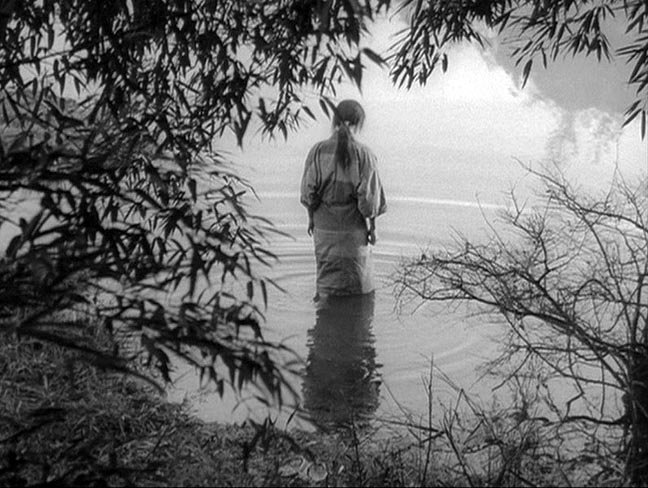
The 1950s are a unique decade for film. The studio system was winding down following the Paramount decision, and it faced competition from TV. Meanwhile the Hays code was still in effect, but that did not restrict foreign releases. The quality of films from Japan and Italy were near their peaks, while American films were arguably at their lows, despite a few independent gems. What I found interesting when compiling this year’s list, which I consider a strong year, is that it has a high amount of Japanese films. Kurosawa, Mizoguchi, Naruse, and others were cranking out amazing films, and in my opinion, Sansho the Bailiff ranks among the best Japanese films in history.
1. Sansho the Bailiff
2. On the Waterfront
3. Samurai I: Musashi Miyamoto
4. Senso
5. Seven Samurai
6. Journey to Italy / Voyage to Italy
7. French Cancan
8. Rear Window
9. Chikamatsu Monogatari
10. Touchez Pas Au Grisbi
11. Hobson’s Choice
12. Sound of the Mountain
13. La Strada
14. Johnny Guitar
15. Executive Suite
16. Twenty-Four Eyes
17. Late Chrysanthemums
18. Inauguration of the Pleasure Dome
19. Dial M For Murder
20. Sabrina
21. The Caine Mutiny


 Criterion Close-Up