Criterion: The Essential Jacques Demy
THE ESSENTIAL JACQUES DEMY, 2014

This is the first completed box set for this blog, although there should be another one following pretty closely behind. This was a good one to start with. Going in, I had limited exposure to Demy, and wasn’t a huge fan of what I saw. Even though this set only includes the ‘Essential’ titles, it’s the best representation of his work, and with the shorts included, I felt that I had seen the development and evolution of style.
Even though I wouldn’t call any of his films masterpieces, I closed this set having a lot more respect for his craft. He went to places that other filmmakers wouldn’t go, and did some things that were truly original. I really like that his film universe had some connectivity, with reoccurring characters, motifs, and references to other films in the mise-en-scene. This would not be as easy to pick up if you watched the films individually over a longer span of time.
There are a couple of titles omitted that I wanted to see, especially Model Shop. My expectations are not high, but it seems to fit into the Demy universe since it is a sequel to Lola. Since the Demy family was so involved in this project, I am hopeful that Criterion will work on some of these other titles as standalone releases. On that note, I’m praying for an upgrade of Varda’s 4-films. The fact that this set was so comprehensive and she was heavily involved, I’d say it is a strong possibility.
Aside from Lola, the restorations were all impressive. Many of the discs had a short restoration supplement, and it was neat to see them remove blemishes as they found them. Lola’s restoration was poor, but I know that they had problems getting a workable master print. Since it was his debut feature film and it set the stage for so much of his later work, it had to be included regardless of the quality.
As for my impression of Demy, as mentioned, it improved. Musicals are my blind spot, but I found myself enjoying The Umbrellas of Cherbourg far more on this new visit, and I appreciated The Young Girls of Rochefort. As I progressed further into the set, I found myself appreciating Lola and Bay of Angels a little more, and will enjoy revisiting them at a later date. Donkey Skin was disappointing. While Une chambre en ville didn’t measure up to it’s stylistic sister, it was surprisingly effective, and it was refreshing to see Demy push beyond the boundaries he set for himself.
There were no commentaries on any discs. While that was disappointing, the vast number of supplements almost made up for it. I appreciated the two Varda documentaries a great deal. In fact, her The World of Jacques Demy is my favorite film of the entire set. I missed a lot of the critical examinations on the earlier discs, but was pleased to view James Quandt’s A-Z evaluation. His essay and Varda’s documentary were on the final disc, and that punctuated the set extremely well.
Here are all of the films:
Lola
Bay of Angels
The Umbrellas of Cherbourg
The Young Girls of Rochefort
Donkey Skin
Une chambre en ville
Box Set Rating: 8.5
Criterion: Une chambre en ville
UNE CHAMBRE EN VILLE, JACQUES DEMY, 1982

After an opening strikers versus police scene that seems yanked from the Les Miserablés play (it wasn’t), the camera cranes up to an overlooking room with a baroness looking down at the commotion. After the conflict dies down, the baroness speaks with her boarder, who happens to be one of the strikers.
Strike that. She doesn’t speak, she sings, and he sings back. The wallpaper is a blood red, which matches her outfit. Immediately this scene recalls The Umbrellas of Cherbourg. It may be unfair to compare the two films, but Demy clearly intended to use the same style to tell this new story, and there are parallels with both films, albeit with a far different tone. Every line is sung, wardrobes and sets have matching colors, and so on.
As a musical, Une Chambre is no comparison to Umbrellas. The missing ingredient is Michel Legrand. I’m not sure why his collaboration with Demy didn’t continue, possibly because of the time commitment as he was a busy man at the time. Either way, his presence is sorely missed in this format. Michel Colombier is the replacement, and while he has put together a decent career scoring films, the only other thing he has in common with Legrand is the first name. His music in this film is uninspired and the sung dialogue doesn’t fit into the narrative as snugly as Umbrellas. Without Legrand, I wish they would have chose to let the actors speak rather than sing (or lip-synch). The intensely dramatic script could have made for a much better acting vehicle. Alas, that is not Demy’s style.
From the first ten minutes as the two characters sing the exposition to each other, I was prepared to dislike this film. It was immediately clear that it was trying to be another Umbrellas, and it was also clear that this was anything but. It took some time to introduce the characters and get the narrative rolling, but eventually I found myself taken in. While the music was lacking, everything else was vintage Demy. The costumes, set design and wallpaper did compare respectfully with Umbrellas. I particularly liked the scene with Edith and Guilbaud in his room, with the earthy colors of yellow and brown. These are colors that aren’t bright or flamboyant enough for Umbrellas, but they fit better with the darker story in Une Chambre.
Speaking of dark, when I reviewed Umbrellas, I mentioned how the ending was bittersweet, yet it manages to leave us on a high note. Aside from that, it is bright and bubbly despite being about a romance interrupted by the Algerian War. Une Chambre has a similarly dour premise, with a romance happening at the same time as a 1955 worker’s strike, but this is not bubble gum and butterflies. We know that when Edith and her husband Edmond first fight and the result is domestic violence. Later when Edmond confronts Edith’s mother, the baroness, he threatens to kill both Edith and her lover, if his suspicions of adultery are correct. Edith wears a fur overcoat with nothing underneath and she is bold enough to share the mystery underneath, which is an act far too seedy for the characters of Umbrellas, or any other Demy film for that matter.
I will not spoil how this plays out because it is worth watching. I’ll just say that it lives up to the dark foreshadowing. Compared with Umbrellas, Une Chambre has more grisly violence, stark sexuality, and the characters are not nearly as likeable, but the payoff is daring and not something you would expect from Demy’s universe.
Film Rating: 6.5
Supplements:
There are a handful of supplements on this disc, such as a retrospective and a couple of interviews, but I’m going to ignore those and focus on the two big ones, which happen to be the best supplements in the entire box set.
The World of Jacques Demy: Agnes Varda is an excellent documentarian, but none of her works is nearly as personal as this one. Created within years of her husband’s death, this is a retrospective and love letter of his entire body of work, including all of the inclusions in this set and other notable films like Model Shop and his final film, Three Seats for the 26th. It features Varda and family to a certain degree, but the most powerful sequences are three young girls who are simply fans of Demy. One of them reads a lovely letter she wrote to the director, thanking him for giving her life beauty and inspiration. The others felt the same, and they shared personal stories of how they grew up to Demy, how much they adored him and his work, and how they were left empty with his loss. Neither Varda nor any of his two children talk about his death, but they don’t have to. These three girls say enough.
Jacques Demy, A to Z: Film Critic James Quandt narrates this Criterion-produced visual essay about Demy’s body of work. He uses the alphabet to track Demy’s career, talking about the people who inspired him, motifs in his work, characters, and especially his family. With the letter B, he mentions Robert Bresson. Quandt also did the excellent commentary for Bresson’s Pickpocket, so he knows what he’s talking about. My first reaction when I saw Bresson’s name was that the two filmmakers have little in common with each other. Bresson is austerity while Demy is an eruption of style. Yet, Quandt still demonstrates a number of similarities that I had missed. Many of the male characters in Demy’s world are quiet, austere and understated, especially in his first two black and white films. Quandt parallels these characters with Bresson’s Michel and shows certain Demy scenes that were directly inspired by Bresson scenes. Near the end we get V for Varda, which is the most fitting. Oddly enough, they never worked together and they convey distinctly different styes and tones, but they complement each other and are forever intertwined. Finally, we have Varda and the Demy family to thank for putting this box set together and letting us experience Demy through their eyes.
On the strength of these two supplements, this is the best disc in the entire box set. Also note that The Young Girls of Rochefort is included in the DVD version.
Criterion Rating: 9/10
Criterion: Donkey Skin
DONKEY SKIN, JACQUES DEMY, 1970

After watching two New Wave-ish films, and the two arguably most popular French musicals of all time, the last thing I expected was a surrealistic and unusual fairy tale. It is based on one of French Author Charles Perrault’s (Cinderella, Sleeping Beauty) lesser-known fairy tales, and is nearly a reverse Beauty and the Beast, which was not a Perrault work.
The tale begins with a king losing his fair wife and promising to not re-marry any princess that is not as lovely as her. This seems to be a typical and benign fairy tale premise until it takes a wide left turn. After reviewing the available princesses, he finds that none are worthy of the vow. Finally he realizes that there is one princess that he has forgotten to consider, his own daughter, played by Catherine Deneuve. He decides he must marry her. She isn’t opposed to the idea since she loves her father, but for some reason it doesn’t feel right. She demands that specific colored dresses be made for her, which the king obliges, until she finally requests a dress made out of the hide of a Donkey that, umm, defecates jewels. The king also obliges, and she uses this skin as a disguise to escape.
If that doesn’t sound weird enough, much of the rest of the film has Deneuve traipsing around with a Donkey head on top of her, looking ridiculously silly. On top of that, she encounters a kingdom that is obsessed with the color red. Everything is painted red, including the horses. The fairy tale aspect reminded me in a way of Louis Malle’s Black Moon, albeit with a clearer narrative and without the nudity. To my surprise, I found in the supplements that Demy intended this to be a children’s film, and he said that the incestual content would not seem unusual to young children because they naturally love their parents. I’m no prude, but I wouldn’t show my children a movie that even touches on them having a relationship with their parents, but maybe he is right that a child would miss this taboo. It’s difficult to put yourself in that position as an adult.
While this one doesn’t exactly fit tightly into the already established Demy oeuvre, it contains many elements that are familiar from his earlier films. I wouldn’t call this a musical, but it does contain a few Michel Legrand songs, which the actors sing in the same manner as Umbrellas and Rochefort, clearly lip-synching. The use of color and attention to detail is also Demy-esque. This is the case in the first palace, but it really stands out in the latter kingdom with the strong red color scheme. The costumes are also fantastic, and overall this is a technically accomplished film.
The problem is everything else. This does not quite work as a children’s fairy tale, and the reverse Beauty and the Beast plot is mundane and lazy. Some scenes go on for far too long, such as when the king is reviewing princesses, or later when the prince is trying to fit a ring on a maiden’s finger. It seems that Demy meant this as a commercial work without saying much. I’d say he failed on that level, yet still managed to put together a visual feast.
Film Rating: 4.5/10
Supplements:
Pour Le Cinema: This French TV program contained set interviews with Demy, Deneuve, Marais and others. This is the supplement that has Demy talking about how the children would not pick up on the incest theme. Aside from that, most of it was light and promotional, with the participants talking about how much they liked working on the film.
Donkey Skin Illustrated: This was rather interesting. They showed sketches, drawings and paintings inspired by the story. The best ones were those of the princess wearing her donkey skin. Many of them were the way that Demy portrayed it on screen.
2008 Discussion: This is a round table discussion with a critic, psychoanalyst, and literary buff about the film and it’s themes. While I said above that the film said very little, they brought out a few themes that I had missed, like the theme of liberation that embodied hippie generation of the time.
Demy AFI Interview: This was an audio recording at AFI, which I didn’t listen to in its entirety. In the parts I listened to, they talked about the process. Unlike a lot of other lighter interviews (like the French TV one), the AFI asks good questions about the filmic elements. It seems like an interesting interview.
Criterion Rating: 5.5/10
Art Vs. Commerce in Classical Hollywood
The Scarlet Empress
This semester I am taking a graduate Film Studies class about the Classical Hollywood period, mostly from the early sound movies until just beyond the end of the studio system. Even though I’ve seen my share of Classic Hollywood films, they are not my primary interest. With some exceptions, I far prefer the European products of the 1930s (especially French: Renoir, Duvivier, Feyder, Carne), and have never been a fan of Hollywood icons like Capra. The studio system was the barrier and it seemed to inhibit creativity to a degree, although there were some brilliant films out of that era — like those from Von Sternberg, Lubitsch, Hawks, Ford, and of course the later noir movement brought a lot more artistry thanks to people like Orson Welles (even though we was constrained and ultimately defeated by the system).
One noteworthy aspect of this class is that the textbook and a lot of the modules will focus on the business and economics of Hollywood rather than artistic merit. Of course when we examine the films, we cannot help but view and evaluate them as pieces of art, but we also look at them as instruments of entertainment and tailor made, easily digestible products.
When looking at this era from the 21st century, with film studies firmly established as an academic discipline and the debate settled as to whether film is art (spoiler alert: it is art!), it is a little odd to examine how they treated the early films as they were produced and released. The studios and the stars were the main attraction, and the directors were secondary. The auteur theory is ingrained in the fiber of modern film, but didn’t exist prior to Andre Bazin. There’s no question as to whether the director is the author today. Not so back then. Thus far we have seen films from Rouben Mamoulian (Queen Christina) and Josef von Sternberg (The Scarlet Empress). The former had talent and could be argued to be an auteur. The latter is unquestionably an auteur — one of the most notable working in Hollywood.
We have just scratched the surface, and soon will be looking at Depression era films, Noir, Musicals, and the end of the studio system. Since I’m enrolled in this class as a grad student, I’ll be leading the section about the end of the studio system, and will be doing my project on Elia Kazan and how his films were impacted by the system and, naturally, his part in the HUAC proceedings.
It should be a good class, and will inevitably change my perception of Classic Hollywood — probably just in time for me to revisit It Happened One Night just one more time. Maybe the ‘Walls of Jericho’ will finally come down and I’ll enjoy the movie.
Criterion: Vengeance is Mine
VENGEANCE IS MINE, SHOHEI IMAMURA, 1979

Shohei Imamura’s Vengeance Is Mine was his first foray into narrative films after more than a decade of working with documentaries. It shows, as this is based on true events. With a couple of exceptions, Imamura does not rely on artistic storytelling methods. Aside from bouncing back and forth across the timeline via flashbacks, the storytelling itself is a straightforward portrayal of a man who has committed crimes and is on the run.
Within the confines of this narrative, Imamura uses a great deal of creativity with his shot selection. Even though he had more than established himself as an auteur during the Japanese New Wave, he still borrows from his heroes, namely Kurosawa and Ozu. You’ll see a lot of unique framing, such as shooting through doorways or blocking shots with walls, which Ozu was famous for. The lead character Iwao Enokizu, played by Ken Ogata, is usually subdued, but has moments of rage and extreme behavior. He is reminisicent of Mifune characters in Kurosawa films — tough minded and rarely showing weakness, and generally a tough character to penetrate.
At the center of the film is a moral crisis. That is not confined to just the serial killing of the protagonist, but most notably by the peripheral characters and how his live impacts theirs. His father is a devout Catholic that is tempted by Iwao’s wife, who holds him with high esteem. She is also Catholic, but her husband has left her with an emptiness and she clings to his father for support, sexually or otherwise. The only instance that she encounters another man, she only succumbs (and this is not perfectly clear) because he was recommended by her father-in-law.
The other moral question is with the ladies of the Asano Hotel, who harbor Iwao after he masquerades as a professor. At first they are taken with him, and when they discover his true nature, they respond in curious ways. The mother, also a former killer, is opposed to Iwao being a part of their life, whereas the daughter believes in him and tries to hide and protect him.
The flashbacks are put together well, not to the point where they confuse the narrative, although the film benefits from being watched a second time. They range from when Iwao defies his father at a young age prior to Pearl Harbor, and continue to the time of his murders, his subsequent escape and time on the run, and his subsequent arrest and interrogation.
Iwao is not a character that is easy to understand. We do not and cannot see inside his soul to see why he does things. Instead, Imamura plants little clues that shows that he has complete disregard for anyone else. There are a couple occasions when he shows a bit of humanity, like in the second half when he is carrying on an affair, he at times shows feelings towards her. You wonder whether he is falling in love or just playing with her. Yet he ends the relationship in a way that clouds his feelings even further. The character is mostly an embodiment of evil. Anyone that he encounters is either an obstacle or an opportunity, and he has ways of handling both.
The title of the movie is ambiguous. Who is taking vengeance? Is it Iwao for all the people who he feels have wronged him the past? His father perhaps? I’m sure there are plenty of theories on the internet, which I have not read, but I have a feeling it relates to the final scene. His ex-wife and daughter throw his bones into the air, only to have them freeze midway through. Even though his final wishes were an act of rebellion, just to throw his bones off a mountain, they were not granted. You could argue that the vengeance was of the Christian God that he turned his back on, not letting him have his final resting place, damning his bones from reaching the earth. You could also argue that this is Iwao’s spirit, rejecting any sort of resolution, especially anything coming from his despised father. Imamura leaves this open-ended, which punctuates the film. Why did he freeze the bones in the air? We’ll never know the answer, just as we’ll never understand what possessed Iwao to perform such unspeakable acts.
Movie Rating: 8/10
Supplements:
Audio Commentary with Tony Rayns: This was an exceptional commentary. He filled in a lot of the gaps regarding the source material, Imamura’s career, his influences, actors, themes and styles. For the entire 2:20 running time, he barely pauses and always shares interesting details.
Interview with Imamura: This is a brief interview where he talks about the film. You can tell he is pleased with how it came out. One interesting tidbit was how the crew would frequent a noodle shop run by the real killer’s sister.
Criterion Rating: 8.5/10
1985 List
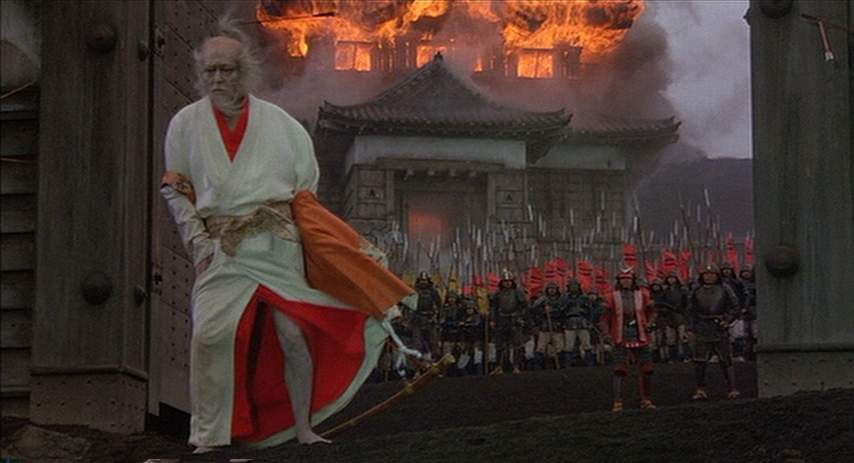
I don’t often think of the 80s as being the pinnacle of cinema. That was the decade of my childhood, so I remember vividly going to see a number of terrible films that I loved then, and have mostly forgotten now. I still feel that the 80s is a relatively weak decade, especially compared to the 60s and 70s, but this year in particular was surprisingly strong. The top three are extremely important films and would be near or the top of the list in any year. I have yet to do a best of the decade, but these films will unquestionably be featured prominently.
There are some schlocky, silly movies, like Re-Animator, Fletch, Pee Wee, and Return of the Living Dead. A couple of those are guilty pleasures, and some have simply held up. They are like a theme park compared to the serious top three. The 80s may have had some bad mainstream movies, but there is no shortage in cult comedies.
The one title is noticeably absent from this list is Back to the Future. I remember loving the movie as a child, even purchasing the novelization (not exactly high literature) and seeing it a few times. As I’ve grown older and seen it multiple times, I have become less fond of the movie. It just seems yet another one of those formulaic, mainstream adventure comedies. It is still better than most, but not one of the best.
1. Ran
2. Shoah
3. Come and See
4. Brazil
5. Vagabond
6. Purple Rose of Cairo
7. Breakfast Club
8. Mishima: A Life in Four Chapters
9. After Hours
10. Lost in America
11. When Father Was Away on Business
12. My Beautiful Laundrette
13. Re-Animator
14. Fletch
15. Pee Wee’s Big Adventure
16. Tracked
17. My Life as a Dog
18. Return of the Living Dead
19. Pale Rider
20. No End
Criterion: The Killing of a Chinese Bookie (long version)
THE KILLING OF A CHINESE BOOKIE, JOHN CASSAVETES, 1976

Criterion often packages multiple versions of a film. Often the theatrical release is cut to shreds and the longer release is the director’s cut, which is usually the better version. As a habit, I’ve usually chosen the longer cut for the first viewing, and sometimes (usually never) will revisit the film by watching the shorter version. That’s how I approached this Cassavetes film, but I forgot one important difference between his work and all the others. He didn’t have to worry about studios, editors, or final cut. He wrote, directed, produced and usually financed his own films, so he had the ability to cut the film however he liked. So in this unusual case, the longer version is the inferior version.
Chinese Bookie has a lot going for it, especially the performance of Ben Gazzara as Cosmo Vitelli, a down on his luck New York cabaret club owner who finds himself in a difficult situation. He plays it with subtlety, but also with charm. He’s a likeable guy. He acts as a sort of caretaker for his performing girls, and feels very close to them. One of them is his girlfriend. He takes pride in his club, and puts all the money he makes back into it. Cosmo is a well-drawn character, like most in the Cassavetes world, and Gazzara plays him exceptionally well. He keeps himself calm and composed for the most part, and only loses control for a brief moment later in the film, a moment that is powerful because of how the character has been played.
As much as I liked the character and the actor, everything else was a slog. During the first 40-minutes or so, the film seems like it is going to be up to par with other Cassavetes films, mostly because of the strength of the performance and the character. He carries the momentum through his interaction with Seymour Cassell’s character. After that, the film just hits a brick wall. It should have been exciting when the titled act is carried out, but not really. It is hard to tell whether Cassavetes was going for artistic photography, pacing and editing, such as he had with Faces, but it simply didn’t work.
From there it gets worse. We go further inside the club. Most of the ensemble actors were amateurs and it shows. They show full musical numbers with a made up character named Mr. Sophistication doing the narration and provocatively dressed women playing out the parts. The catcalls from the audience suggest what the show is really about, as they bellow “Take it off!” and erupt in applause when one of the women momentarily pulls down her top. The problem is that we see too many of these numbers; they go on far too long; and they are not interesting. It is hard to imagine this show being popular. Early in the movie when Cassell visits on a Sunday, it seems that it isn’t, but during the performance sequences, the place seems packed. On screen, these performance sequences were overlong, awkward, and unnecessary. They took away from the character moments that bookended them.
After completing the film, being disappointed and navigating the supplements, I discovered that the longer version was, in fact, not the preferred version. Cassavetes felt that he was rushed to edit the film and did a poor job. The second version, released in 1978, is about 30-minutes shorter, but it isn’t simply fat being cut out of the film. Scenes are re-arranged. Many are cut, like the performance sequences that I loathed so much, and other scenes are included that weren’t in the longer version. The shorter version is supposed to be the definitive and preferred version. After watching the monstrosity of the longer version, I was not ready and willing to give it another try. Take this rating with a grain of salt because someday I will revisit this, and will probably prefer the 1978 version.
Film Rating: 3.5/10*
Supplements
Interview with Gazzara and Ruban. This is where I learned much about the controversy with the versions. When the 1976 version was released, it landed with a thud. People hated it, just like I did, and the actor and producer talk about how difficult that was to deal with.
Cassavetes interview: I always enjoy hearing Cassavetes talk about his style and his films. He conveys his passion, which can also be seen on screen.
Aside from the two versions, this disc is relatively thin on extras. It is the weakest thus far from the Cassavetes box.
Criterion Rating: 3/10*
* Could change when I see the 1978 version.
Criterion: Y tu mamá también
Y TU MAMÁ TAMBIÉN, ALFONSO CUARÓN, 2001

I thoroughly enjoyed Y tu mamá también on the first viewing back in the early 2000s. However sexually charged, it was a breath of fresh air compared to the formulaic Hollywood versions of adolescence, like the raunchy 80s comedies like Porky’s, or the more recent American Pie, both of which would spawn multiple sequels in pure Hollywood fashion. This was in the same vein, at least it explored similar themes, but it couldn’t be further apart in style and execution.
Also back then, I barely knew of Alfonso Cuarón. Over 10 years later, he has made what I consider to be the highlight of the Harry Potter series, and made what two technically impressive films with breathtaking and groundbreaking cinematography — Children of Men and Gravity. The former is among my favorite American movies of the 00s, and the latter was a wild ride. It fell short of my expectations probably due to the deafening hype, but I was still pleased to see the auteur pick up his Oscar. He deserved it for the last three films.
One aspect that escaped me upon first viewing was how gorgeously framed and shot it was. This was the origin of Cuarón’s creative partnership with Emmanuel “Chivo” Lubezki (although they had been friends for years). Lubezki also has an Oscar, for the same movie as Cuarón, but arguably deserves four – one for Children of Men, and two for his work with Malick in Tree of Life and The New World.
Visually, Y tu mamá también is similar to Children of Men in that it is not afraid to show the seedier sides of the world. He shows the rural, impoverished Mexico country, which is contrasted with the upper class background of the bratty young main characters. Children of Men does the same, but with a dystopian society where ugliness is expected. In both films, they manage to make the ‘warts and all’ viewpoint aesthetically pleasing, while they both show the best and worst of humanity and how that does not correlate with being rich and poor.
Y tu mamá también is first and foremost a coming of age film. The characters are deviants that happen to not get intro trouble. Their worst exploits are self-exploration on swimming pools or purposely spilling beverage on a nice suit at a presidential wedding. They are naïve when it comes to life, women, and as we’ll discover later, most notably themselves.
While the two leads grow during their journey across rural Mexico, the audience finds the nature of the country, at least as the characters encounter it, is in a form of decline. The tangential voice-overs talk about the people they encounter, some living, some not, and how their lives turn for the worse. The main characters barely notice the plight, and why would they since they are on their own course of discovery, yet as they blossom, others shrivel. The same could be said for Mexico, which makes Y tu mamá también a deeper film than it first appears.
Just like Tie Me Up! Tie Me Down!, this film is known for its sex, and I doubt that releasing both titles on the same day were coincidental. I recall discussing Y tu mamá también with a friend ages ago, and he called it basically a pornographic movie and that the sex was gratuitous. I could not disagree more. Sure, there are plenty of films, artistic or mainstream, where sex is used to fill seats.
In this film, the sex fits with the character development. Sex was a constant topic of the two lead character’s, which was realistic for two young kids at that age. All kids go through that phase where they explore themselves, although maybe not to quite the same extreme. The sex itself said more about the character’s inexperience and immaturity. Whether they were nervously and apprehensively standing there with a towel, or sitting in the backseat of the car, they were far from sexual champions. They were children that were following the lead of a dominant female. They were so stricken by the fact that she would consider them, that their fantasies could become reality, that their confidence and bravado faded in an instant. And they failed to perform adequately, something that Luisa frankly reminded them during a later pivotal scene.
The sex was part of their coming of age. Through Luisa, they got it out of their system and left the club of the Charalastras. When we last see them, they have barely aged physically, but mentally and emotionally, they are years older. They have come to terms with their sexuality, just like Mexico had (or has) to come to terms with its poverty and the class division.
Film Rating: 8.5/10
Supplements:
Then and Now: There are two documentaries reflecting on the movie. The first was roughly 10 minutes and was filmed shortly after the film was released. Another documentary was filmed recently and is over 40 minutes in length. Of course the second documentary gave a lot more information, and the most valuable parts were hearing Cuarón reflect on how he wanted to leave the Hollywood system and create something original. This was a decision that has paid off for him.
The Making of the Film: This is more like a traditional behind-the-scenes short documentary like the ones found as extras on mainstream discs. Compared to the other serious and analytical features, it is a lot more fun. It show that there were tough times, like dealing with angry drivers when they close a street, and fun times, like when they throw the producer in the pool as a way of baptizing him. You can tell that the work was work, but it was also fun, and I think that contributes to the quality of the final product on the screen.
You Owe Me One, Carlos Cuarón. This is a short film by Alfonso’s brother, Carlos, who wrote Y tu mamá también. This is similarly themed, with lots of sex and playfulness, only this time it is a family of three that all have their own illicit sexual experiences under the same roof in a span of 12-minutes. The short is a good companion to también because of the comedy and focus on sex, but it is by comparison a lot more shallow and more of a romp.
Criterion Rating: 9/10
Criterion: A Woman Under the Influence
A WOMAN UNDER THE INFLUENCE, JOHN CASSAVETES, 1974

What I love about Criterion is that they tend to canonize the most important films. When something is added to the collection, it’s for a good reason (even if I disagree on occasion, and let’s not get into Armaggedon). That’s why when I revisit a Criterion film that I thought was poor or mediocre, I will often re-evaluate. Sometimes the supplements or commentaries will help guide my opinion by pointing out things that I missed, or sometimes it is simply giving the film another chance and watching it a second time. The latter is what happened here.
The first time I saw the film, I was blown away by the performances, but felt that Cassavetes got a little carried away with himself. He let scenes go on too long, far past when the point was made. He seemed so proud of the performances, and rightfully so, that he did not want to interfere.
After a second viewing, I still have that feeling, yet I’ve come around to Cassavetes’ way of thinking. Part of this is because I’ve also fallen even more for Gena and Peter’s performances, and I found that I almost didn’t want the scenes to end. The fact that they sustained their characters for such lengthy and powerful scenes speaks volumes about their dedication and what they brought to the characters. The spaghetti and doctor scenes were where this was more apparent. They go on a long time, but the acting is magical, even if what happens is awkward and unsettling. At 2.5 hours, Cassavetes could have still trimmed a couple scenes or tightened a couple others up, but I am a little more forgiving of that now.
Another reason why I am more enamored of the movie now is because I’ve looked at it in proper context. Shadows was concurrent with the French New Wave and Faces was inspired by it, while this version was on the heels and owes a slight debt to the American New Wave. However, like his other films, it is wholly original and distinctively a Cassavetes. He is imitating nobody, although plenty of people who try (and mostly fail) to imitate him later. For the time period, this type of independent character exploration was revolutionary, and is probably one of the key origins for the indie movement that would follow in the 80s and 90s.
Film Rating: 8/10
Supplements:
Commentary: Unlike the usual commentaries with directors, actors, or historians, this was unique because it had the sound recordist and the composer. That worked well given the Cassavetes method. They described a lot of the inexpensive techniques with a lot of fascinating stories about the cast and crew. The most interesting part was hearing them describe seeing Gena and Peter give their performances, how they were when not in character, and simply seeing such amazing performances as they happened.
Gena Rowlands and Peter Falk conversation: Even though they had both aged, especially Falk (RIP), you could see they had a rapport and fond memories of their experience with this movie. They shared some neat anecdotes, like how Cassavetes would call theaters in big cities that were showing films he liked. Some would turn them down, but they would all take his call.
1975 Audio Interview with Cassavetes: I’m not crazy about it when Criterion places audio recordings on the disc. It’s not that the content is not interesting. Usually it is the opposite. The problem is that DVD is not the best method for audio only. I listened to only a little bit of this recording.
Criterion Rating: 8.5/10
Criterion: Tie Me Up! Tie Me Down!
TIE ME UP! TIE ME DOWN, PEDRO ALMODOVAR, 1989

Welcome to the Collection, Pedro.
Tie Me Up! Tie Me Down! (or the better Spanish title, Átame!) would not have been my first choice for an Almodovar film, nor probably my 2nd, 3rd or 4th, but I’ll take what I can get. I had seen it previously twice already. The first time was back around the time it came out, before Almodovar was on my radar as a filmmaker, and I was mostly curious because of the census X/NC-17 rating controversy. I remember feeling underwhelmed back then, and revisited it some time after Talk to Her. By that time I had revisited some of Almodovar’s other works and become an enthusiast if not quite a fan. That second viewing changed my opinion a little bit. I appreciated the Almodovar touch, but thought the story was bland, and frankly, ludicrous.
So here goes the third try. By this time, Almodovar has been established as a legendary filmmaker. I’m not as rabid as others about him, but I certainly appreciate him as an artist. That made me eager to approach what was arguably his breakthrough film, just to see if there was another reading of the film that I may have missed. Having an idea of some of his pet themes, I know a little better what to look for.
Speaking of pet themes, Almodovar is a master at handling sexuality, and this was again apparent in Tie Me Up. From the intro, with the director ogling and obsessing over his lead, to the nautical voyage in the bathtub, and climaxing (no pun intended) with an intense sex scene that, surprisingly, shows very little nudity. In the extras, Almodovar proudly states that Elia Kazan said it was the best sex scene ever. I’m not about to put together a top 10 or anything, but it was tastefully done and carried an intensity that helped sell what was still a ludicrous plot. The pyramid shot from above was a creative way of punctuating the scene with an artistic flair.
In retrospect, Tie Me Up! seems artistically constrained. The story was pretty banal, like an upbeat version of William Wyler’s The Collector, albeit with quite a different ending (of which I won’t spoil for either movie). While this was clearly an attempt to make a more consumable film that the prototypical Almodovar, there is more than meets the high. As an example, by taking the bondage approach, I think he is poking fun of the romantic boy-meets-girl formula that had been rinsed and repeated for the entire decade in American cinema. The plot was completely ludicrous, albeit I think somewhat intentionally, and he showed the rough layers of romance by touching on abuse, drug addiction, and mental instability. Yet this falls short of being a satire, as he treats his characters with a depth and seriousness that could never be seen when Andrew McCarthy falls in love with a Mannequin. Even if he is poking fun at the cycle of romantic comedies, we are continually reminded that these characters are highly flawed and seeking redemption.
I found some new appreciation for the film during this re-visitation. A lot of that had to do with the keen direction and vibrant, bright colors schemes with vivid color, which would become a staple in Almodovar’s later films. It’s as if we are seeing the painter stumble onto his signature style. While this is still a far cry from his better works, it is a good, accessible starting point.
Movie Rating: 7/10
Special Features:
Documentary: This is a run of the mill, 30-minute feature about the film, mostly with talking head interviews. Some of the discussion was about the impact of the film and the ratings controversy. This is the only part of the disc where Victoria Abril was involved. I cannot find the details, but it appears she had a falling out with Almodovar. She talks about the difficulty of working with him.
Michael Barker Interview: This was an odd inclusion, as I believe Barker is an executive for Sony Picture Classics. I’m sure he has worked closely with Almodovar, but he’s not the type of figure to usually get a Criterion supplement. He gushes about the director and how much fun it has been to be involved in his career. It’s more of a fluff, retrospective piece. Not too impressive.
Banderas and Almodovar: I really enjoyed this one. It’s basically a short conversation between the two actors filmed in 2003. By that time they were both highly successful, with Banderas an established Hollywood star and Almodovar fresh off his surprise Oscar win. The two talked about all sorts of things, especially how it impacted their lives. At the end, they vow to work together again, which happened almost a decade later for The Skin I Live In.
Criterion Rating: 7.5


 Criterion Close-Up