Author Archives: aaronwest
CCU15: Code Unknown & the Career of Michael Haneke

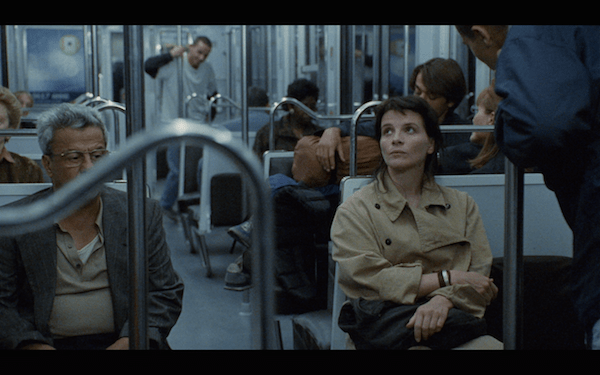
Aaron, Mark and Doug McCambridge from the Good Times, Great Movies podcast discuss this early work of Michael Haneke’s recently released on The Criterion Collection. We discuss the famous tracking shot, the way he explores culture, and of course the incomparable Juliette Binoche. We also discuss Haneke’s body of work, exploring how he works as a filmmaker, what he is trying to say, and why he is so often provocative. #ParisIsAboutLife
Or listen here to it here:
Or direct download/listen to the MP3.
Show notes:
Outline:
0:00 – Intro, Housekeeping
20:00 – News
38:40 – Code Unknown
1:22:50 – Michael Haneke
Intro
News
Ryan Gallagher’s tweet about The Manchurian Candidate
Dont Look Back packaging from Criterion Forum
The Rainer Werner Fassbinder Collection from Arrow
Code Unknown
Where to Find Us:
Mark Hurne: Twitter | Blog | Letterboxd
Aaron West: Twitter | Blog | Letterboxd
Criterion Close-Up: Facebook | Twitter | Email
The #CriterionBlogathon is Imminent
It is hard to believe how much time has passed since we announced The Criterion Blogathon. I know that quite a few are typing with fury as they finalize their submissions, and there have been a few early entries (thank you!).
This is going to be a huge event. How huge? Just take a look at the full schedule posted at Speakeasy. She will kick it off on Friday with a summary of the day’s posts, and I’ll follow on Tuesday, and then Ruth, and so on. Please note that we will be reblogging each other’s posts, so subscribers will get an email every day of the week.
There will also be a lot of activity on social media. If you tweet, Facebook, or whatever, please use the hashtag #CriterionBlogathon. Maybe we can even get it trending.
Whether you are participating or just reading, please do us a favor and click on the links, read the articles and comment. Please be supportive of those who are putting so much energy and enthusiasm into this event. We know it is a lot. Scratch that, it is a boatload. Hopefully you can do what you can.
Below are some of the early links. They will be incorporated into the summary posts, but with so much tremendous content coming, it doesn’t hurt to start early.
Cinematic Scribblings – The Adventures of Antoine Doinel – The 400 Blows, Antoine and Colette, Stolen Kisses.
Movie Movie Blog Blog – All That Jazz (1979)
The Last Drive-In – Carnival of Souls (1962)
Pioneer Pride – Elevator to the Gallows (1957)
Journeys in Darkness and Light – Fish Tank (2009)
Destroy All Fanboys! – High and Low (1963)
Pioneer Pride – I Will Buy You (1956)
The Cinematic Frontier – The Life and Death of Colonel Blimp (1943)
Our Planet Burke – Scanners (1981)
Top 30 of 1967

1967 was a crazy good year. Usually with these lists I just post a top 20, but there were so many worth entries that I am making an exception and posting 30. Many of those between 21-30 could make my list in other years.
My list is quite Criterion heavy. I didn’t plan it that way. I watch plenty of films, Criterion or otherwise. It just happens that Criterion has a great sampling of the year, whether they are on Blu-Ray, DVD, or as part of the Eclipse series. The label is represented well.
There is one omission that I could get some grief about, and that is Bonnie & Clyde. I do not hate the film. On the contrary, I think it was an important film that pushed the boundaries between what was happening overseas and was a crucial part of the American New Wave. So why is it not on this list? I’ve seen it three times, and it simply does not resonate with me.
Overall, I am pleased with this list. There is a nice balance of Hollywood and International film, and it is a diverse list, with even a couple cult classics and heavy art films that are probably not for everyone.
Phenomenal year!
1. PlayTime
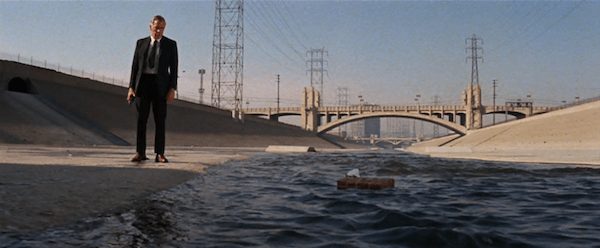
2. Point Blank
3. Belle de Jour
4. Marketa Lazarova
5. Mouchette
6. Dont Look Back
7. The Firemen’s Ball
8. Samurai Rebellion
9. Warrendale
10. La Collectionneuse
11. A Colt Is My Passport
12. The Graduate
13. Peppermint Frappé
14. Cool Hand Luke
15. Le Samourai
16. Branded to Kill
17. The Girls of Rochefort
18. In Cold Blood
19. Weekend
20. Two for the Road
21. Japanese Summer: Double Suicide
22. The Dirty Dozen
23. In the Heat of the Night
24. The Two of Us
25. Oedipus Rex
26. Zatoichi Challenged
27. Spider Baby
28. Night of the Generals
29. Sing a Song of Sex
30. Far From the Madding Crowd
Short Cuts 3: Night and the City, 1950, Jules Dassin

Aaron and Dave Eves kick off Noirvember with a discussion about Jules Dassin’s last Hollywood film before being blacklisted and out of work. We talk about the fascinating characters of Harry, Gregorius, and many of the other supporting actors. We also discuss the actual blacklisting experience and how that materialized on the screen.
Subscribe: iTunes | Stitcher
Or listen here to it here:
For other apps or mobile devices, try this link.
Or direct download/listen to the MP3.
Show notes:
Special guest:
Night & the City
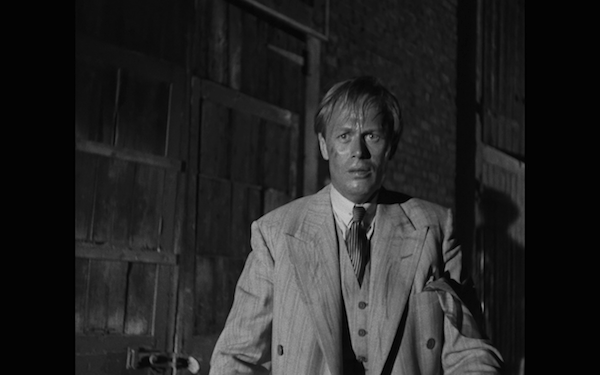
Dave’s Essay on Unlikeable characters and Night and the City.
Where to Find Us:
Mark Hurne: Twitter | Blog | Letterboxd
Aaron West: Twitter | Blog | Letterboxd
Criterion Close-Up: Facebook | Twitter | Email
CCU14: Blind Chance (1981) & Mulholland Drive Aftermath

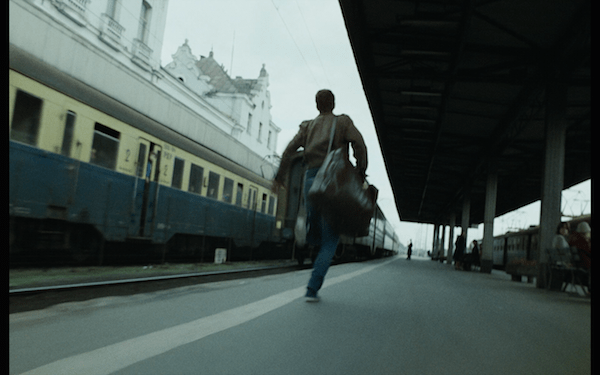
Aaron and Mark first talk about the aftermath of a monumentally popular Mulholland Drive episode, which may or may not have had a guest. We also have an extended intro and news section before delving into Krzysztof Kieślowski’s 1981 (or 1987) Blind Chance. It is a product of a volatile political time, very much a product and statement about that time, while also being an important work in the career of a respected international auteur.
Or listen here to it here:
For other apps or mobile devices, try this link.
Or direct download/listen to the MP3.
Show notes:
Outline:
0:00 – Intro, Mulholland Drive Aftermath, Housekeeping
25:00 – News
45:40 – Blind Chance
Intro
Criterion Blogathon – Schedule
News
Julien Duvivier in the Thirties
Blind Chance
Where to Find Us:
Mark Hurne: Twitter | Blog | Letterboxd
Aaron West: Twitter | Blog | Letterboxd
Criterion Close-Up: Facebook | Twitter | Email
CCU13: Mulholland Drive (2001) & Unraveling the Mystery
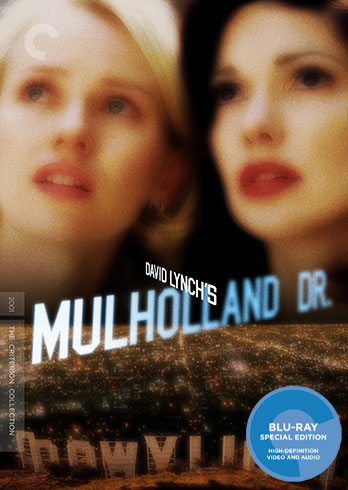
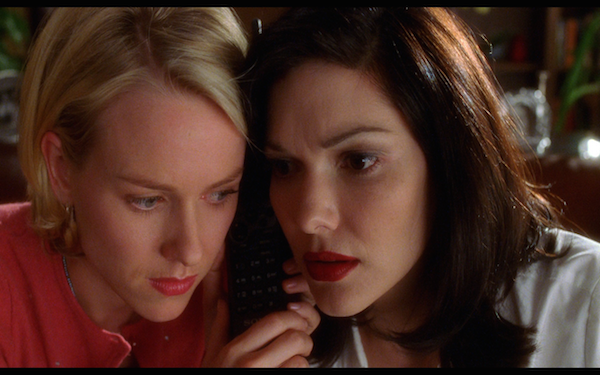
Aaron and Mark talk about David Lynch’s recent Criterion Collection release of Mulholland Drive. We talk about the nature of the production, from pilot to feature, the randomness, the allure of Naomi Watts, and why the film is so popular. We then turn the blue key and try to make sense of some of the reasonable and wild theories out there. Do we solve this possible? Maybe, maybe not, but we at least make some sense out of it.
Or listen here to it here:
For other apps or mobile devices, try this link.
Or direct download/listen to the MP3.
Show notes:
Outline:
0:00 – Intro, Housekeeping
3:40 – News
12:25 – Mulholland Drive
46:00 – Unraveling the Mystery
News
Only Angels Have Wings – likely coming to Criterion.
“Most if not all of the Almodovar catalog is coming to Criterion.”
Hou Hsiao Hsien on Criterion Current.
Mulholland Drive
Unraveling the Mystery
Everything you were afraid to ask about Mulholland Drive
Film Crit Hulk on Mulholland Drive
What’s Real About Mulholland Drive?
Memory, Identity and Desire: A Psychoanalytic Reading of David Lynch’s Mulholland Drive – Psychological abstract
The Perils of Fantasy: Memory and Desire in David Lynch’s Mulholland Drive
Where to Find Us:
Mark Hurne: Twitter | Blog | Letterboxd
Aaron West: Twitter | Blog | Letterboxd
Criterion Close-Up: Facebook | Twitter | Email
The Criterion Blogathon Roster & Schedule
Kristina has published the full schedule for the #CriterionBlogathon. What a lineup!
CCU12: The Brood (1979) & Early David Cronenberg

Aaron, Mark and Brian Saur talk about David Croneberg’s recent Criterion Collection release of The Brood. We talk about the intense acting, the pseudo-science that goes into the film, and we delve into spoiler territory. Don’t worry — we give plenty of warning. We also talk about the early body horror of Cronenberg and how he integrated science and sexuality into his films, which would continue throughout his career.
Or listen here to it here:
For other apps or mobile devices, try this link.
Or direct download/listen to the MP3.
Show notes:
Special Guest: Brian Saur from Rupert Pupkin Speaks and Criterion Cast’s Off the Shelf. You can find him on Twitter.
Outline:
0:00 – Intro, Welcome, Housekeeping
10:20 – News
22:00 – The Brood
45:45 – Spoiler section
52:15 – Ratings. Spoilers over.
1:02:40 – Early Cronenberg
Intro
Criterion Blogathon – Schedule Coming Soon
Weekend – second Criterion Short Cuts episode.
News
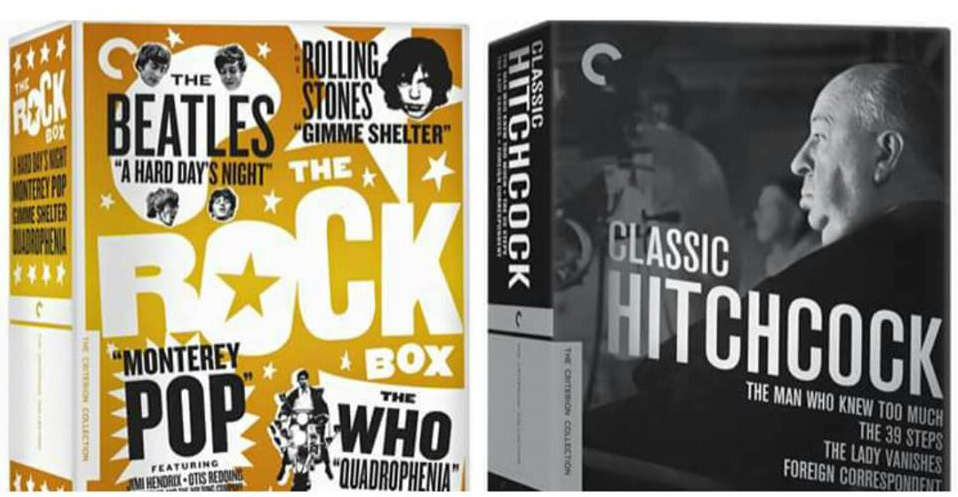
Is this coming to Costco?
Wenders Looking Back – confirms these titles are coming to the collection.
Ron Benson, founder of Eureka passes away.
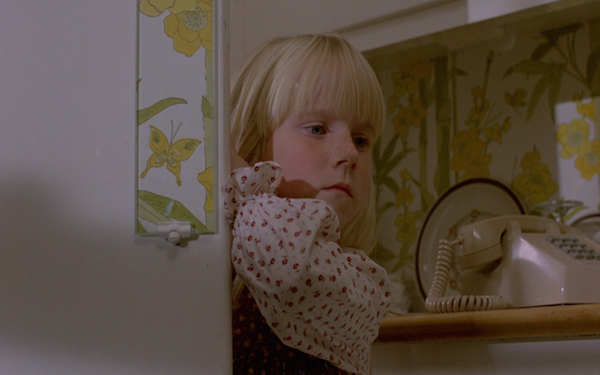
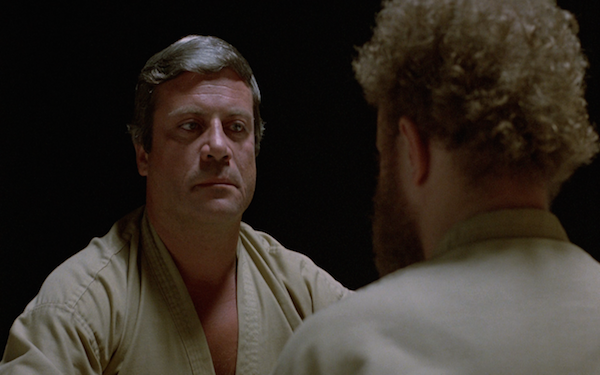
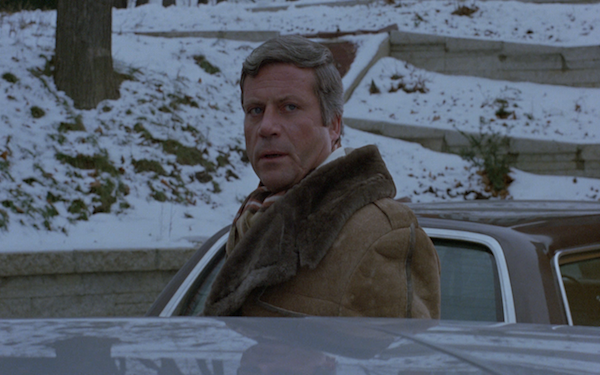
The Brood
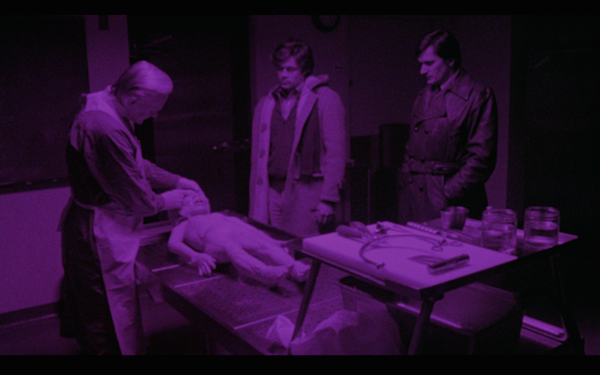
The incomparable Oliver Reed:
Early Cronenberg
Where to Find Us:
Mark Hurne: Twitter | Letterboxd
Aaron West: Twitter | Blog | Letterboxd
Criterion Close-Up: Facebook | Twitter | Email
Short Cuts 2: Weekend, 1967, Jean-Luc Godard

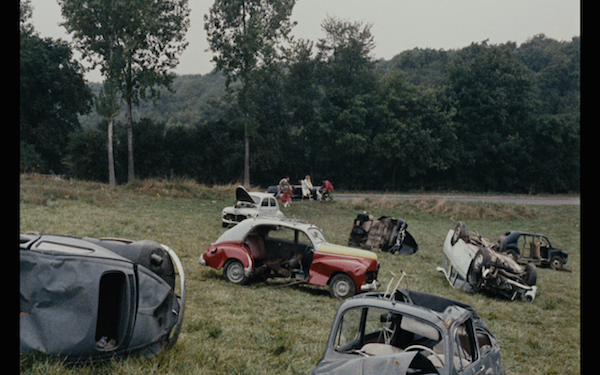
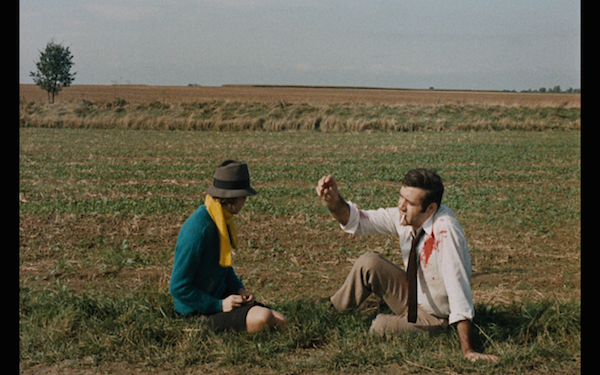
Aaron West does another solo cast looking at one of the later Godard works, as well as one of the most inflammatory, and one of the strangest. That’s saying something for Godard. He talks about the tracking shot, the political message, the references to film, and whether Godard was serious or just toying with the audience.
Or listen here to it here:
For other apps or mobile devices, try this link.
Or direct download/listen to the MP3.
Weekend

Where to Find Us:
Mark Hurne: Twitter | Letterboxd
Aaron West: Twitter | Blog | Letterboxd
Criterion Close-Up: Facebook | Twitter | Email
Zatoichi: The Blind Swordsman. Disc 6

It has been six months since I last blogged about Zatoichi, and that seems about right. Even though the series is often formulaic and closely resembles a TV series, there is still a great deal more artistry than in most mainstream productions. My good friend David Blakeslee recently discussed the perils of treating the Criterion Collection as a checklist, which is even more tempting with this box set that has functioned as a book-end for the last two years (seriously).
One disc at a time every months feels like the right way to let this series breathe, even if I am technically binging and having a triple feature. Having finished this disc, I wonder whether I would have thrown in the towel if I had continued to binge last time. Fortunately I did not, as I would soon encounter one of my favorites of the series.
ZATOICHI THE OUTLAW, SATSUO YAMAMOTO, 1967

I had a feeling the series had hit a creative slump near the beginning of Outlaw. Some people are having an arrow shooting contest, when Zatoichi walks up and humbly picks up the bow. The others were shooting at large targets from a good distance. Zatoichi says he prefers a smaller target. Not only does he get what he requests, but a lady holds the tiny target as he unleashes the arrow. Any guesses on where it lands? I don’t have to answer that question. It isn’t fair to expect realism from a series where a blind man can annihilate a horde of opponents at once, but sometimes they take it too far. It would be a reach for Robin Hood to be able to hit the target that Zatoichi hits, and who would dare to volunteer to stand in front of a blind man and a projectile weapon?
Outlaw did not get much better than there. The creative juices were nearly nil, as they went back to the well when drawing up the characters and the plot. Zatoichi goes to a town, finds some bad bosses who are taking advantage of peasants by cheating through gambling. He uncovers the operation by using a deft sword trick, and stands up for them.
Zatoichi does go into hiding and becomes an outlaw, but his companions are excruciatingly bad comic relief. They are like the Japanese peasant version of the Keystone Cops, only not nearly as funny.
What was most disappointing with this iteration is that there was potential to flesh out the character. He encounters another samurai who believes in non-violence, and there’s an ethical question given how many people Zatoichi has killed. It would be in the hundreds by this point, if not in 4-digits, which would have to weigh on a good man’s soul, but the thread is not pursued. Instead we get more bad comedy. The film nearly redeems itself with a good rain sequence near the end. It also ratchets up the gore, but this time some terrible practical effects quench the adventure and took me out of the picture. This is one of the low points.
Film Rating: 4/10
ZATOICHI CHALLENGED, KENJI MISUMI, 1967
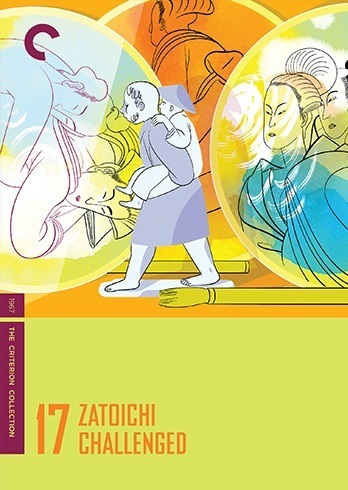
After seeing one of the worst, it was refreshing to see one of the best. Challenged follows some similar terrain as other episodes, but it gives a fresh spin and is well executed. There are two ingredients in particular that tend to make a Zatoichi film stand above the rest — a well developed peripheral samurai character and a child. The latter is central motivator, as his dying mother asks Zatoichi to find the child’s father. This is not unfamiliar, but this has a good child actor who has undeniable rapport with Shintarô Katsu. It is clear that the actor enjoyed being around children and probably helped them off the set, as the bond is easy to see in all of these films. Thus far, this was the best child and “uncle” dynamic.
The other samurai is Tajuro Akatsuka (Jûshirô Konoe), a mysterious figure that we first meet while Zatoichi is traveling with an entertainment troupe. When they are accosted, the samurai defends them by non-violently using the back of his sword. He is tall with a wide frame, and stands straight in an imposing manner. He has some age on him, probably older than Zatoichi, and his motivation is mysterious. He immediately becomes one of the more interesting side characters that the series has introduced.
There is an exceptional scene where we cannot tell whether there is tension or friendship between Zatoichi and this mysterious figure. Zatoichi gives the man a massage, and is offered more than ample payment for the task. Zatoichi tries to turn down the payment. He has his honor and does not feel he has deserved charity. Initially Akatsuka appears to take offense at this rejection, and this scene could go either way. The two have just met and we are not sure whether they will be allies or enemies. Unlike the previous film, this one is cut together well and it heightens the tension and the uncertainty, not just in this scene, but in many.
Even though few films are as predictable as a Zatoichi, this one unravels a little differently with both subplots. I will not give them away, but both are satisfying in a unique way.
Challenged is now my second favorite Zatoichi film next to Pilgrimage.
Film Rating: 8.0/10
ZATOICHI AND THE FUGITIVES, KIMOYOSHI YASUDA, 1968
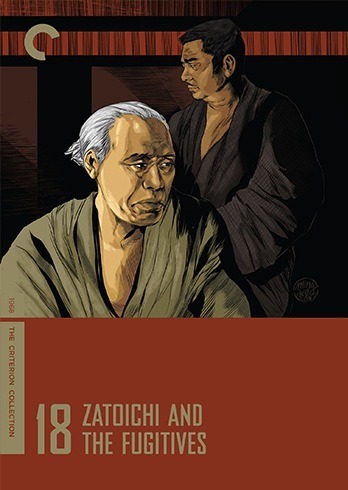
This section of the series is up and down, with highs and lows. Fugitives is closer to mediocrity, but like most of the series, is still highly watchable. One of the strengths is we get a truly great actor, Takashi Shimura, known for films such as Ikiru, Rashomon, Seven Samurai, and many others. He plays an aging doctor that kindly takes the swordsman into his home, allowing Zatoichi to ply his trade as a masseuse and earn an income. Dr. Junan is both ethical and giving to the town, as he gives more in service than he takes in income. At one point Zatoichi suspects him for being so altruistic, which may not be surprising since he encounters so many selfish characters. Junan also hates Yakuza, and is dismayed when he learns that Zatoichi considers himself to be one.
If I were to criticize Fugitives, it is that Shimura is not given enough to do. He is terrific when on screen, and aside from Zatoichi, has the best character. He also has an interesting familial arc that intertwines with the main plot, but even that is not explored with as much depth as I would have enjoyed.
The fugitives are the main plot, but they are underdeveloped and there are simply too many of them. Often the Zatoichi series is too simple, and the characters too flat. In this film, the majority of the characters and all of the fugitives are perplexing. We don’t understand why they are hiding, who they are hiding from, and what their relationship is with the local bosses. What we do know is that they are antagonists.
The series does well with action when they introduce different type of weapons. A group of 50 villains with short swords are as good as mince meat when facing the blind hero. His disadvantage is that he cannot see what is lurking in the shadows. One of the fugitives throws knives, and there is even a gun during one crucial scene. Zatoichi is not as superhuman and actually bleeds in this film, and the action sequences are well developed. If only we had fewer fugitives and more Shimura, this could have been one of the better episodes in the series.
Film Rating: 6.5/10


 Criterion Close-Up