Category Archives: Podcast

CCU31 – Antichrist & The Gross-Out Episode (Part One)
Mark, Aaron, Cole, and Dustin go further than most people want to go. This is our exploration of the gross film, and whether the subgenre has any artistic merit. Our main episode is a deeper look at Lars von Trier’s Antichrist (2009), followed by a history of gore and violence in film, and then a discussion about Ken Russell’s The Devils (1971) and Pier Paolo Pasolini’s Salò.

CCU30: A Podcast About Podcasting
Mark and Aaron are joined by JD and Brendan from InSession Film Podcast to discuss the world of film podcasting. We talk about what led us to this new medium, how the community embraces and enhances it, and how much of an impact it has on our lives. We compare it to the terrestrial radio days, and marvel at how much more captivating “friends talking to each other” can be.

CCU29 – Fat Girl (2001)
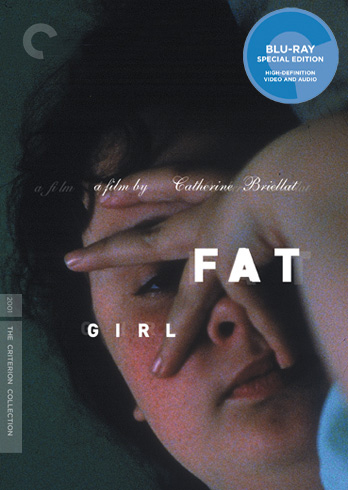
Mark, Aaron and Kristen Sales give Catherine Breillat’s Fat Girl a look. We look at Breillat’s methods, and the points about women in society she is trying to make. We delve into feminism, fat shaming, and the dichotomy between the lives of men and and women. We also take a close look at the shocking ending, and try to reconcile what she is trying to say about the world.

CCU28: Slacker (1991)

Mark and Aaron are joined by Cole & Ericca from the Magic Lantern Podcast. They are Austin, TX residents and shed a lot of insight into this landmark independent film, Richard Linklater and his involvement in the Austin Film Society. They also talk about how the film reflects the city of Austin, and how much the place has changed in the years since.
CCU27 – Canadian Close-Up

Mark and Aaron take a trip north to the wonderful world of Canada. This is a special, unscheduled episode to celebrate the O’ Canada Blogathon. We talk about all things Canadian, including our Canadian Connections, film and media culture from Canada, and two particular films from The Criterion Collection — Videodrome and My Winnipeg.
CCU26 – Jellyfish Eyes (2013)
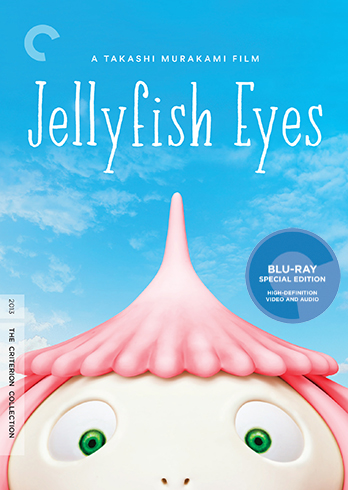
Mark and Aaron are joined by Matt Sheardown of … Criterion Close-Up. You heard right. Long story. Matt is also a video games expert, so we borrowed his expertise as we broke down and evaluated the controversial Criterion release of Takashi Murakami’s Jellyfish Eyes. We discuss the visuals, the influences, the intended audience, and how to classify it as a genre. We also ask the big question, which many have asked since the announcement — is it worthy of Criterion?
CCU25 – Dont Look Back (1967)

Mark, Aaron and Keith Enright give a look at D.A. Pennabaker’s documentary portrait of Bob Dylan in Dont Look Back (the no apostrophe is intentional). This was a pivotal period in the artist’s career, and both the film and the music were influential. We dig deep as to what type of persona Dylan revealed, the cinéma vérité filmmaking style that captured him in his element, and also his attitude towards the press and others who wanted to label him.
CCU24 – A Conversation with Caitlin Kuhwald

Illustrator extraordinaire Caitlin Kuhwald joins us to talk about her artwork and the Criterion Collection. She is a professional artist and has worked extensively with The Criterion Collection, illustrating covers for Amarcord, To Be or Not to Be, The Organizer, and many others. She talks about her film tastes including unveiling a new Criterion Top Ten, talks about how Criterion champions illustration, and weighs in on recent covers.
CCU23.5 – Star Wars: The Force Awakens

This is our first bonus episode and we look at the behemoth of the moment, Star Wars: The Force Awakens. This is a fun little detour from our usual serious, arthouse type of podcast. We tried to approach the movie as both fans and discerning cinephiles and give it an honest look.
CCU23 – Breaker Morant (1980), Mister Johnson (1990)

This is the first Criterion Close-Up double feature. Mark and Aaron take a close look at two films from Bruce Beresford, released theatrically a decade apart and just recently as part of The Criterion Collection. We look at Breaker Morant and how it reconciled British Colonialism on both its subjects and enemies, and how it dispensed justice. We then look at Mister Johnson, which deals with colonial issues such as commerce and civilization.


 Criterion Close-Up