1945 List
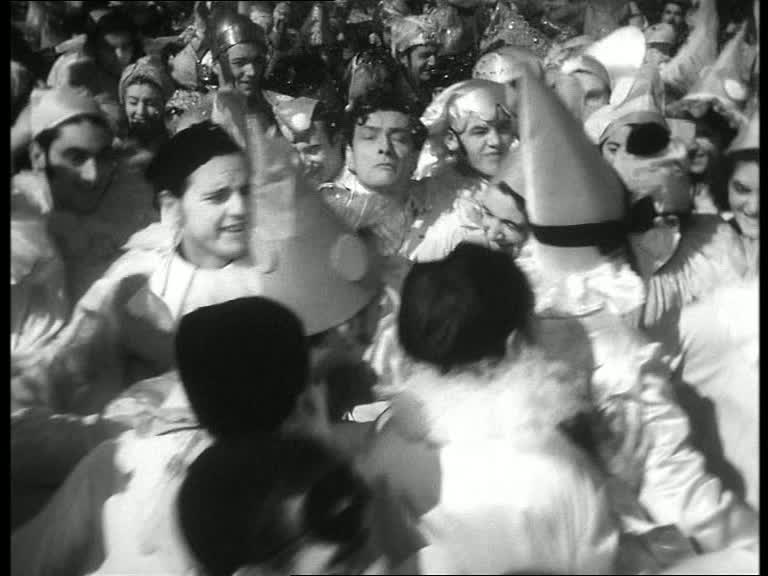
I consider 1945 a mediocre year with some strong high points. Most films released were created during the war, including Children of Paradise, filmed in the south of France under the occupation. Many of the production were in exiled, but most knew of the inevitable outcome and did not fear consequence. Rome: Open City is a neo-realism direct response to the war, which makes it all the more powerful.
The top four of this list were not American productions and they are pretty far above the rest.
1. Children of Paradise
2. Brief Encounter
3. Rome: Open City
4. I Know Where I’m Going
5. Detour
6. And Then There Were None
7. A Tree Grows in Brooklyn
8. The Lost Weekend
9. Les Dames du Bois de Boulogne
10. Scarlet Street
11. The Body Snatcher
12. Leave Her to Heaven
13. Spiral Staircase
14. The Southerner
15. The Picture of Dorian Gray
16. Vacation from Marriage
17. Mildred Pierce
18. Dead of Night
19. Fallen Angel
20. The Bells of St Mary
Criterion: The Shooting, Monte Hellman, 1966

The Shooting and Ride In the Whirlwind were companion, low budget westerns pieces, shot together over a 7-week schedule (3 weeks for each with a week off in between). At the time they were overlooked, but have become cult classics and influenced many of the ‘Acid Westerns’ that followed.
Of the two, I consider The Shooting to be superior. Maybe not so coincidentally, it also had the most problems with the production. Some flooding took place early and forced delays. While the movie was wrapped up in time and within the budget, there appear to be some short cuts taken. Some scenes probably did not get the coverage they deserved, and there are gaps in editing. Towards the end, the narrative skips and jumps ahead without dissolves, making the passage of time less clear and challenging the viewer
For such a small budget, the film looks spectacular. Some of the beginning photography has a gritty, washed out look, which may have more to do with the production delays than anything. The later scenes in the desert are brighter and more photogenic, in part because of some great choices in locations. Aside from a handful of interior shots, most of the movie was lit with natural light on location. DP Gregory Sandor deserves credit for making the most with limited resources, as the film does not look cheap by any stretch on the screen.
Compared to Ride In the Whirlwind and other westerns that came before and would come later, The Shooting is minimalist, with sparse dialogue and a lot of long shots of the characters that highlight the locations.
Warren Oates, who would become familiar to most film buffs later, was starring in his first lead role. Willett Gashade was a fitting character for him. He is quite, sober, sensible, and stoic, which is in stark contrast to Will Hutchins’ Coley Boyard, who is boisterous, cowardly, and wears his emotions on his sleeve, particularly his fondness for the mysterious woman that would set the narrative in motion.
Millie Perkins plays the unknown woman. We never learn her name, despite Coley’s attempts to learn it and get closer to her. She is also uniquely portrayed. In previous westerns, the villain’s are almost universally male. She is more like the mysterious femme fatales in noir films of the 1940s and 1950s. While we learn early on that she is on a mission of revenge, she keeps quiet as to her motivation until the very end, and we never learn of the circumstances that brought her there.
It is impossible to review Jack Nicholson’s involvement outside of the context of his later performances. While The Shooting was created before he was known, this is the same, familiar Jack that would rise to stardom in the upcoming decade. Like Perkins, he plays a reserved and quiet character and reveals next to nothing about why he does what he does. He reveals some information about a crime he has committed, but does so in the confidence of a character and the audience never understands how and why. His character relishes in cruelty, and he shows the same bright white, wicked smile that we would see later in his career. He grins widely and wickedly as he tells Coley, “Your brain is gonna fry out here. You know that?”. It is the same expression he would later use in The Shining, One Flew Over the Cuckoo’s Nest, and many other roles throughout his career. Even though he does not appear until the middle of the film with an unceremonious entrance, he steals most of his scenes.
The last 15 minutes are where the picture is the most impactful. They are when the action resolves, and they are also the most enigmatic and would embody the “acid” characteristics. There are some questionable editing decisions, such as when Gashade is burying a body. Most of the events unfold visually without narrative. We do not know how long they have been out there. The ending resolves the fate of some characters, but we do not know the fate of the rest. The actual ending is amazing, as ‘The End’ is written on the screening during a long shot with one of the remaining characters. Does that mean it is his end as well?

Film Rating: 8/10
Supplements:
Since this is a single disc combined with Ride in the Whirlwind, I am going to discuss the supplements in the entry for the other film.
Commentary:
The audio commentary was recorded this year with Hellman, film critic Bill Krohn, and western historian Blake Lucas. The three have an interesting dynamic. At times I wanted to hear more from Hellman about the production of the film, but on the other hand, I enjoyed them interacting with him and asking film geek types of questions. Without them, we probably wouldn’t have learned as much about his influences going into the film.
With this project, he wanted to get to the major question, as Hellman put it. He actually eliminated 10 pages of exposition just to speed up the plot. He eliminated dissolves as well, which he attributed to the French New Wave and the lack of a budget. Dissolves are more expensive.
His influences were of course John Ford films, and he mentioned a few others. One curious influence was One Eyed Jacks with Brando. He also mentioned that he was influenced by Antonioni, the French New Wave, and other arthouse cinema directors. Perhaps the most interesting influence was the JFK assassination. This project began soon after those events, and he said they were an influence on the film. You can see remnants of the Zapruder film and the footage of Oswald getting shot in the final scene.
This was a transitional period in westerns, which the critics commented more about than Hellman. The John Fords and Anthony Manns were slowing down, while Peckinpah was yet to come. One detail that came up but was not delved into was that Hellman was under discussion to do Pat Garrett & Billy the Kid. I can only wonder how that would have turned out under his hand rather than Peckinpah.
Criterion: Mon Oncle, Jacques Tati, 1958
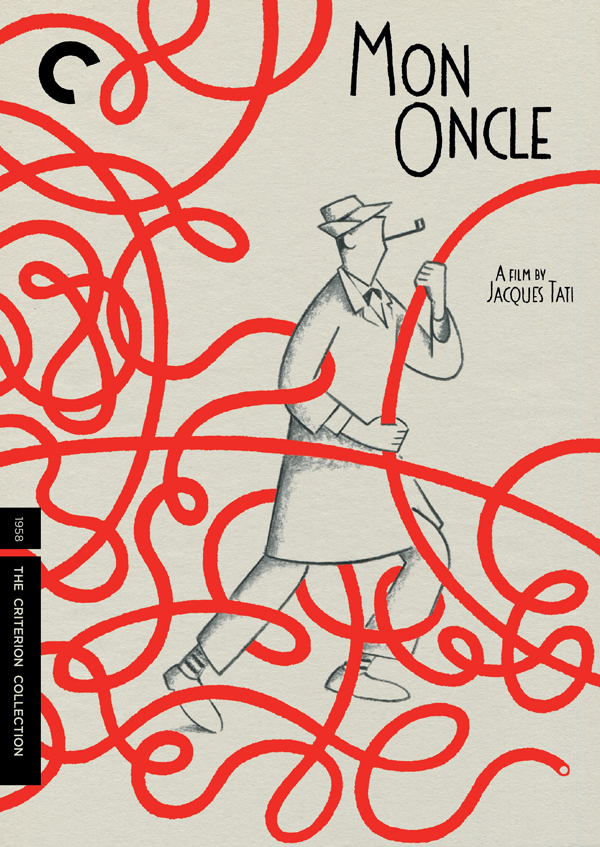
Jacques Tati can be an absolute riot at times, and in my opinion, Mon Oncle is his funniest effort. While he does not relax his recurrent theme of tradition versus modernity, he has more fun with these characters, and the material is ripe for comedy with big laughs. Playtime also has some scenes with big laughs, but is a little quieter, slower paced, and takes the theme a little further. The latter is my favorite of the two, yet Mon Oncle is one I could see myself watching more frequently just because it’s a lighter and more pleasurable experience.
The fact that the movie is bookended by dogs running around randomly without a care in the world is no accident. The dogs are contrasted by the silly adults who spend the majority of their effort on appearances, trying to show off their nifty little gadgets and elaborate architecture. The Arpel family are pre-occupied with exemplifying their higher class, while the dogs care less – and that includes the house weiner dog. Even though he wears clothing that would only come from an upper class family, the dogs are seen as equals. They run together where they wish and do not discriminate, nor do they care about such symbols.
The behavior and attitude of the dogs are similar to that of the children. The young Gerard Arpel is dressed in a fine suit representative of his class, yet when he goes out to play with the lower class children that wear patchwork sweaters, he is treated as an equal. Like the dogs, they collectively gallivant around, have fun, and engage in whatever mischief they can find. This can be doing cruel things to others, like pushing on cars to make people think they were in an accident, or whistling from hidden locations and placing bets whether people will hit the signpost. Gerard cares nothing of the technology back at home. He would prefer to eat a cruller with jam and sugar rather than a technologically advanced boiled egg.

Gerard looks to his uncle, Monsieur Hulot, as a mentor and influence. Hulot is from an older, traditional France. Like with Villa Arpel, his home is a maze of sorts, but his is out of necessity and not intent. His is run down and he has to go through a variety of different paths in order to reach his loft apartment. The path to his door is not aesthetically crafted and manufactured like the Arpels. He has no fish fountain. Instead he finds that a bird sings when he opens the window enough to let the sunlight shine on it’s cage. This he does for his own amusement, and not to impress others.

Villa Arpel Reproduction
Villa Arpel is another matter entirely. Their house is the height of design. They have a winding S-shaped pathway to get to the front door. There is a small pond with a gigantic fish standing vertically with mouth in the air, which will erupt with blue water when the correct button is pressed. The courtyard has small square pads for walking, surrounded by gravel, grass, or some other brand of landscaping, requiring people to walk carefully if they venture off the main path. The house is modern even for today, with two large portholes that can appear as eyes in some scenes (which Tati uses for great comic effect!).
The house is ostentatious if not completely ridiculous. It is actually quite nice. What is ridiculous is the behavior of the Arpels that inhabit it. They are only concerned with what the neighbors think. The most obvious example of this is that they wait for the doorbell before turning on the fish fountain. If the visitor is a deliveryman or anyone else from a lower class, including Hulot, they immediately turn it off. It is not meant for the lower classes. If it is for a neighbor, co-worker, or any other guest, then the fountain continues to flow as long as the guest is present – or if the fountain breaks, which is another hilarious scene.
There are two worlds in this movie: The Arpel’s world and Hulot’s world. In one of the supplements, Francois Truffault is quoted as saying that one world is 20 years in the past, while the other is 20 years in the future. The old France is the traditional France. The colors of the town are muted and drab, mostly earth colors, with clutter and disarray everywhere. There is one notable pile of garbage that remains in the middle of the street for the entire film. There’s even someone who is sweeping (a reference to the postman in Jour de Fete), but he is doing his job as slowly and inefficiently as possible. The Arpels, on the other hand, are immaculate and obsessed with cleanliness. Mrs. Arpel goes so far as to wipe off her husband’s car to make it as shiny as possible as he is departing for work.
A lot can be said about the contrast between old world, pre-war values and the coming modernization and Americanization. It is no secret that the shiny cars that Arpel and others of his class drive are all American. Mr. Arpel drives a 1957 Chevy Bel Air. By contrast, those in the old France usually walk or ride bicycles. The plastic factory is another statement of modernization and industrialization, and the film mocks how they are merely making plastic hoses. Hulot is so out of touch with this world that he cannot even make a simple hose, and ends up making what looks like sausage links.
Did I mention this movie was funny? There are a few scenes that had me roaring with laughter. The Arpels’ dinner party scene was a riot, and I loved that one of the guests (one from a lower class) couldn’t help but laugh at the ridiculousness as it took place. Another funny scene was when they mistake a neighbor for a rug salesman, but she was just trying to impress them with flashy clothing.
After all of this poking fun of modernity and technology, the dogs are shown running around. The ending is perfect, and reminds us yet again that this artificial world, the high tech gadgets, and the attention means absolutely nothing in the big picture.
Film Rating: 9/10
Supplements:
Terry Jones Introduction. Jones was disappointed with the film at first, and then came around and it became his favorite Tati film. He thinks that the main titles speak to the primary theme just like anything else in the film with hand-created nameplates showing the production credits amid heavy industrial background.
My Uncle. This is the English-language version, which was filmed concurrently with the French version. There are English signs and dialog, which was dubbed in later. The background voices are still French, but that does not matter since the audio is unintelligible. The spoken language version does not make much of a difference because so much of the film is silent, at least not spoken, and the sound effects are all the same.
Once Upon a Time: My Uncle. This featurette talks about the production and puts it into historical context. There are many interviews, including some archived with Tati. Pierre Etaix speaks a great deal as his assistant. He talks about how well Tati choreographed each character’s movement down to the smallest detail.
“Lines, Signs and Designs.” This is a short feature about the architecture behind the house. They talk to different architects about the house, who give their opinions about the designs. Many of them agree that the design was a little much, but they do not overly criticize. Some of them get a little defensive. One architect says that Tati would have slammed his early work.
“Fashion.” This feature talks with a fashion designer about the outfits. She said the apparel was very 1950s. She singles out the rug lady that resulted in funny misunderstanding, all because she was trying to outdo Ms. Arpel. Back in the 1950s, there was a lot of attention to matching colors. One instance where this is seen in the film is with the dog’s vest matching Mr. Arpel’s scarf.
“Have a Seat.” Some designers reproduced the rocking chair, the “kidney” couch and the two cylinder couch. The latter is not very comfortable until people relax in it, and experiment with different ways to use it. This was not mentioned in the feature, but the entire house is reproduced here.
Everything’s Connected. Visual essay and critical analysis by Stephane Goudet. This is the most conventional plot of all his films.. Tati is not against modern archictecture, but the way people use it to show off. It is more of a class contrast. She compares it to other films, like in Monsieur Hulot’s Holiday where Hulot becomes a role model for the kids, but not what the parents probably want. That’s the case with the Arpels. He is more of a role model for Gerard and the child adopts Hulot’s values more than his parents.
With walking on the water lilys into the pool, Tati’s character enters water just like in his two previous films, but this time he is not submerged because the water is not deep enough. This provides continuity between the films and his world, but this instance of water is distinctly artificial whereas the others are real.
This was subtle and probably not noticeable to non-French speakers, but the name Hulot is mixed up with “hublot” on at least one occasion. “Hublot” means means porthole. There are many portholes in this movie, such as the holes in the garage, the holes upstairs as windows (or eyes), and the porthole in the interview scene.
“Le Hasard de Jacques Tati.” In this TV special, Tati talks about all the dogs in the film and his relationship with them, including Chance the mutt, his own dog. The dogs for the film were obtained from the pound, and afterward he put out an ad for people to adopt the “stars” of the film. He wishes he had 30-40 dogs because he could have found homes for all of them.
Criteron Rating: 9.5/10
Criterion: Down By Law, Jim Jarmusch, 1986

The Tom Waits lyric of it’s a “Sad and Beautiful World” originated a Roberto Benigni misunderstanding of the line, but it fit better and they chose to keep it. As it turns out, this line of dialogue encapsulates and can be thought of as a conclusion to the movie. The characters find sadness, misfortune, and beauty throughout their travels.
Down By Law is Jim Jarmusch’s third film, although he would argue that the first one, Permanent Vacation, didn’t count since he was young and had no idea what he was doing. His 1986 effort has a number of similarities with his second film, Strangers in Paradise, which turned out to be his breakthrough. A significant difference is that he had $100,000 to make that film, whereas he had over a million for the follow-up. He made the most out of his money for both movies, as they both look better than most similarly budgeted independent productions of the time. In fact, Down By Law looks far better than many more expensive films. Jarmusch was always good at making the most out of his limited resources, which was a skill that would continue throughout his career.
Like Stranger than Paradise, there are three central characters that become companions based on circumstance and whim. Two of the actors were talented musicians that were popular in independent/alternative music circles. John Lurie was a member of the Lounge Lizards, and Tom Waits was … well, he was Tom Waits – basically an icon of his genre. Both are good actors, and you can tell they have good chemistry together. One of the better scenes with the two was when they are both in a jail cell and Lurie’s Jack gets Wait’s Zack to demonstrate his DJ abilities. To Jack, who was a grimy pimp in New Orleans, being on the radio was another world, and he takes a liking to his cellmate.
Both men are innocent in a sense, victims of a vindictive setup by someone in their life. They had the intent to commit crimes, and Jack’s profession was a criminal. Zack was simply down on his luck and would do anything to make a buck. He encounters Roberto in an early scene, where he is playing music and lamenting being thrown out by his girlfriend. That’s when the “Sad and Beautiful World” song occurs.
Jack and Zack are not the ideal prison cellmates. While they initially find common ground and friendship, that devolves into animosity and anger. They get sick of each other quickly. They fight. Fortunately a new cellmate interrupts their bickering. Roberto is the same person who encountered Zack earlier, although neither of them men make that connection. Roberto is not innocent, but you could argue that he was justified in his crime and that it was self defense.
Roberto, played by the young, exuberant and affable Roberto Benigni that Hollywood would fall in love with 10 years later and then forget in 20 years. He basically plays himself here, an Italian immigrant who has very little command of the English language. Roberto is engaging and plays intermediary between his cellmates. Roberto, a stranger to the country, is the one who initiates action. Jack and Zack have little ambition. It is fitting for their characters that they would later pedal around in circles when Roberto, who cannot swim and is petrified of water, is helpless to guide them. Benigni continues to guide them, even catching food, which at first the quarrelling friends are too stubborn to eat. He is the one who takes the initiative to enter the only building they encounter, while the other two wait outside for something to happen. They are literally lost and out in the woods without him.
Down By Law is a more accomplished and mature film than Stranger than Paradise. It is clear that Jarmusch has learned a great deal in the intervening two years where he first achieved success. The beauty is thanks to the gorgeous Louisiana locations and the cinematography of Robby Müller. He had previously worked with Wim Wenders on his major works, including The Road Trilogy and Paris, TX. As we learn in the supplements, Jarmusch gave him the freedom and respect to shoot as he desired, and the end product was mesmerizing. There are many examples of some great shots, but the one that stuck with me was when the trio are running through a tunnel/sewer that’s light is textured by mirroring shadows of the shimmering water.
Because of the excellent photography, the performances (especially Roberto Benigni), Down By Law is among the best of Jarmusch’s work.
Film Rating: 9/10
Supplements:
Audio from Jim Jarmusch. It is unusual to have a lengthy speaking track on a Criterion disc that is not a commentary track. This supplement has Jarmusch discussing the film with only his picture on the screen. Perhaps he just doesn’t like audio commentaries, as he is a little picky with how his films are represented. At a 1:15 running time, this was a little much to get through.
Robby Muller Interview. He talks about his collaboration with Jarmusch. The only direction he got was that “it’s just a fairy tale” and he made Louisiana his canvas. He was allowed to follow his instincts. One surprising portion of the interview was that, of all the director’s he’s worked with, he has the most respect for Jarmusch. They had a long collaboration, but he has also worked with directors like Wenders, Von Trier, Friedkin, Winterbottom, and others.
Cannes Film Festival Press Conference. This was an interesting press conference because they revealed some details about the film, yet also it was something to see Jarmusch interact with the audience, some of whom asked terrible questions. He said so at times, and refused to answer. One of the most hilarious questions was near the end of the conference. Someone asked whether they felt the film was too long. They also asked whether they felt Paris, TX was too long. The questioner sais that while she enjoyed the film, she fell asleep during the early portion, partly because she had seen numerous films during Cannes. Jarmusch didn’t take the bait about whether his film was too long, and didn’t seem to take offense either. He shrugged it off. As for Paris, TX, he wouldn’t be so bold to re-imagine a work he respected. He said that if anything, he would make it longer, and snipped that “you would have fallen asleep earlier during my version.”
During the interview he sticks to his guns as a true independent spirit. He was not interested in big budget films, and has mostly stayed true to that in the years since (although Only Lovers Left Alive had a large budget). At the time he had already been offered larger budget projects, and had been offered larger budgets for his own projects, but he did not believe in having more money just to have it. He felt the cost should be dictated by the content of the movie.
While a lot of the attention was dedicated to Jarmusch, Roberto Benigni got his share. He was just as as hammy and energetic as we’d see during the Oscars for Life is Beautiful, although his command of the English language was not as strong.
John Lurie Interview. This was a short interview and Lurie looks tired, yet was frank and revealing about how it was on set, and what his career was like. He was offered lots of parts and turned them down, which was fortunate because a lot of them turned out to be bad movies. Like Jarmusch, he had an independent spirit and wanted to work on the right project, whether it was in film or music.
John Lurie Commentary on his interview. It was funny that he even did this. Years later, Lurie did a commentary track for this short interview. “Who is that guy?” he asked. He shows some self consciousness as he reflects on his younger self, and a little bit of embarrassment because he had been up all night when giving the interview and it showed.
Deleted scenes. The majority of these scenes were deleted for good reason. There were only a couple that really added much to anything. There was one where Zack is complaining about being innocent to a fellow prisoner in a nearby cell. The prisoner responds with laughter. “I’m fucking innocent!” he says, although obviously he isn’t. He is mocking Zack, who really was not innocent. He was just set-up.
There was another scene where Roberto is trying to coax Jack back from stewing after a fight with Zack. He had just cooked the rabbit and was using it to lure Jack back. “Buzz off!” Jack says, recalling the earlier scene where Zack says the same thing to Roberto.
It’s All Right With Me. This was a Tom Waits cover of a Cole Porter songs. Jarmusch directed the music video. It was a little more experimental than his cinematic work. It had jarring camera movements with Waits dancing in his own way.
Jarmusch Audio Q&A: This was more interesting than the audio conversation because the questions were better. It was the same format, with Jarmusch’s picture on screen as he talks. We finally learned to pronounce Jarmusch’s last name. Another answer was that Tom Waits was not drunk, which means he’s a good actor. They had some wild times while not filming. Jarmusch laid down the law and wouldn’t let drugs or drink on set, but didn’t try to control what happened off set. Influenced both by French New Wave (Godard, Rivette) and NY Punk scene, which he grew up in, and that shows. He talks about books and music that he’s into, and is very literate, very well read, and ensconced in independent pop culture of the day. This contributes to the quality and cynicism found in his films. He’s a punk, but a smart one.
Telephone conversations: This is more of a novelty, as Jarmusch calls the three leads and records their conversations. Roberto is shot out of a cannon, just like he always is. Hardly spoke English during the filming, but speaks well now. John Lurie and Jarmusch name dropped all the music they saw down there, most of which I’ve never heard of. Jarmusch cannot watch the movie, which may explain why he chose not to record a commentary.
This is a great film and stacked release with plenty extras. The only thing lacking is a commentary. I’m tempted to give this one a perfect score, but I cannot justify giving that to any release without a commentary.
Criterion Rating: 9.5/10
1955 List

1955 was a remarkable year for film. There is quality across the board, from international films to Hollywood films. Nationalistic film movements were in full swing, and legendary directors were putting out some of their best work. My list for 1954 had a large Japanese representation, where this year is more diverse. It includes one of the best Indian movies ever created, one of my favorite Bergmans, one of the best French noirs (even if by an American director), and key works from Wilder, Dreyer, Resnais, Naruse, Sirk, Ophuls, Hitchcock, and plenty of others.
The toughest part was trimming down this list. The films I have from 20-30 would likely make the list of most other years, and some like East of Eden, Picnic and Samurai Trilogy II could make the top ten in other years. My favorite performance and the Oscar winner was my #20. Of the lists I’ve put together thus far, these were the toughest cuts.
1. Pather Panchali
2. Kiss Me Deadly
3. Smiles of a Summer Night
4. Night and Fog
5. Rififi
6. Night of the Hunter
7. Floating Clouds
8. Les Diaboliques
9. Ordet
10. A Generation
11. All That Heaven Allows
12. The Man From Laramie
13. To Catch a Thief
14. The Grand Maneuver
15. Lola Montes
16. The Ladykillers
17. Richard III
18. Rebel Without a Cause
19. Death of a Cyclist
20. Marty
Criterion: Monsieur Hulot’s Holiday
MONSIEUR HULOT’S HOLIDAY, JACQUES TATI, 1953
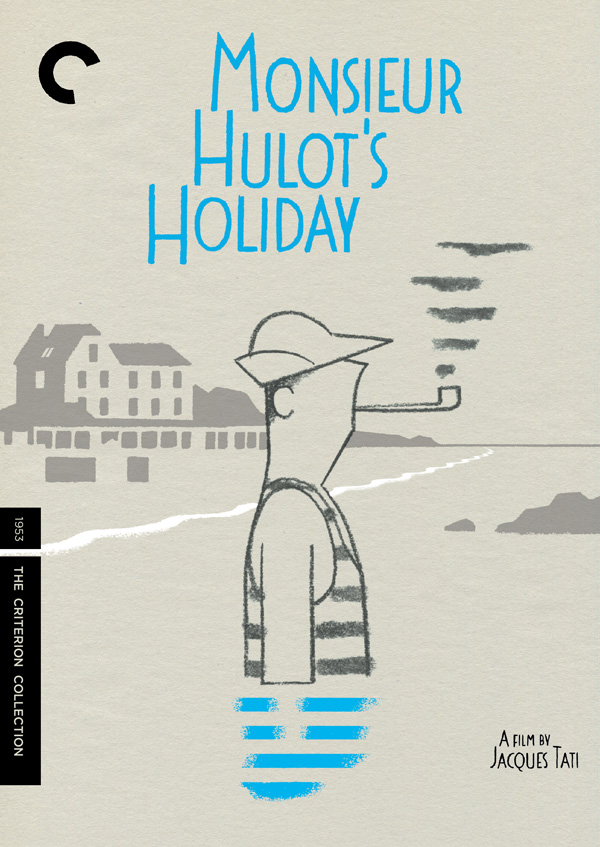
Summer vacation is a time to get away, to adventure, relax, and get away from the hustle and bustle of daily life. Jacques Tati plays with this logic, as some of his characters make the most of their vacation, while others bring their city lives with them. At the center is the theatrical debut of Monsieur Hulot, who aligns with and is arguably the catalyst for people enjoying themselves during their time off.
From his first appearance as he is driving his meager, sputtering and backfiring, tine Samdon A3, Hulot is introduced as a different type of character. He’s odd, clumsy, sometimes uncomfortable in his own skin, and his unconventional behavior and tastes make him an outlier compared with the traditional vacationers. He barely speaks, and is the center of the comedic gags that take place. He is also the embodiment of the central theme of Tati’s film (and those to come) of tradition versus modernity. Hulot initially seems not to belong because he awkwardly interacts modern technology, but he ends up belonging in his own way.
Holiday is ultimately a comedy, and bears a strong resemblance to the silent comedies that inspired him. He does pack in quite a lot of big gags, the type of which would be familiar in a Buster Keaton or Harold Lloyd picture. One example is the shark scene, which was added to the 1978 version in order to satire the recently released Jaws. There are other big laughs, like in his unconventional method of tennis playing, where he trounces his opponents by playing by a different set of standards and rules, not unlike how he behaves during personal interactions.
There are plenty of little laughs as well, like him painting a boat and the paint can rolls away from and towards him without his noticing. Or the older man who casually throws away seashells as his wife collects them. This is just the tip of the iceberg, as there are countless subtle oddities that Tati throws into the scene, many of which are humorous and sometimes are hidden. He rewards people for paying attention to the details.
There are plenty of other scenes that are not funny, nor are they intended to be, and this is what separates a Tati film from plenty of other comedies. He slows things down and lets the film breathe. This is, after all, a vacation, and he conveys the sense of getting away.
Not all of the characters participate in the vacation. The businessman is constantly taking calls about his stock purchases. A young political idealist is consumed by continually talking about intellectual matters. The characters who interact the moat with Hulot, however, appear to leave life’s trappings behind them. The children take to Hulot, and they are at home away from home, caring only for enjoyment, music and treats. A number of females also take to Hulot, although not so much in the romantic sense. One young, attractive lady finds herself a dancing partner that keeps a comfortable distance. Another older Englishwoman is delighted by the klutzy Frenchman, and she embraces his quirkiness. Even the older couple adore Hulot,and they spend most of their vacation walking around quietly and peacefully.
Those who accept and enjoy Hulot get the most out of their vacation, and that’s because they challenge their comfort zone. They don’t just follow the herd of modern trappings, but they embrace being outsiders and distant from this quagmire of a society.
Film Rating: 8/10
Supplements:
Terry Jones introduction. The Monty Python member gives a short introduction by Criterion standards and basically highlights his favorite scenes. His presence on the disc speaks more for the influence of Tati. His influence on people like Rowan Atkinson is obvious — the Pythons less so.
Clear Skies, Light Breeze: Critical essay. This is a French critical essay by Stéphane Goudet. She talks about Tati’s art and his comedy, how he embraces the middle class and ridicules bureaucracy and technology. One example is the untillegible speaker at the train station, which people follow blindly. She compares many of these same themes to Tati’s later films.
Sounds of Silence: Interview with Michael Chion. He talks about Tati’s use of sound. The sounds in the film do not fill up spaces, but they are used to complement the space. Tati uses sound to guide our eye to the object (like the swinging door in the restaurant). It enhances the silence. There’s actually quite a bit of sound in Tati films, like the sea in Hulot and the music, and there’s lots of dialogue, but it seems to be primarily in the background.
Cine Regard. This is a French TV program where Tati watches clips from his films and discusses them. He begins by telling a funny story about how he went to a screening of Holiday anonymously, entering in the dark so that nobody would recognize him. He sits next to a man who laughs throughout the film, nudges Tati and constantly calls the director an asshole, not realizing the object of his ridicule is sitting next to him. Tati shares a bit of insight into his films, but it is clear during the discussion that he is protective of their integrity. They are like his children.
1953 version of the film. This original version is not the primary version on the disc, because Tati was a proponent of adapting and improving his films over time, which in my opinion he succeeded with Holiday. Many of the changes are cosmetic, especially with the sound. The older version is busier and slightly more political. The older version is also about 10 minutes longer. Unlike a lot of directors, Tati didn’t mind cutting things out to increase the flow, and he did the same with Jour de Fete.
Criterion Rating: 9/10
Criterion: Jour de Fete
JOUR DE FETE, JACQUES TATI, 1949
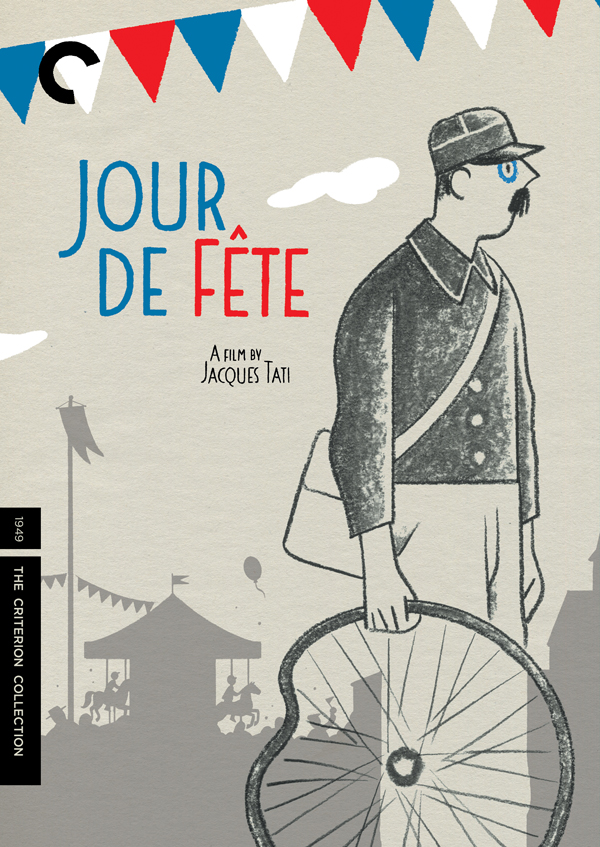
Jacques Tati’s debut feature film would be a sign of things to come. It was about a goofy, clumsy individual (played by Tati) in a small, provincial Franch town, going about things in his own, charming way, while being threatened by progress and pressure from overseas.
Jour de Fete also showcases what would become Tati’s trademark, charming style. Through his bumbling persona, we see hints of what would become Monsieur Hulot, and we see the inspiration of the silent slapstick kings like Keaton, Lloyd, and of course, Chaplin. We also find that the film is genuinely pleasant and comedic, which for the time, was a welcome reprieve from serious films such as Melville’s La Silence de la Mer and Cocteau’s Orpheus. In this regard, Tati was an outlier, a renegade, who made fanciful and silly films, yet they all had similar themes about the encroachment of technology and bureaucracy.
At its core, Jour de Fete is humorous and delightful, nearly silent physical comedy. There are plenty of voices and dialog, but not so much is heard from the protagonist, Francois the mailman. He is clumsy and is constantly the butt of jokes, especially from the visiting carnies. He is terrible at his job as a mailman, mostly because his priority is with helping out the townspeople their troubles and activities. He helps fix a fallen pole in the town square in one scene, while graciously delivers a cake out of his way in another. Even though he is a mischievous and troublesome character, he is endearing both to the audience and inhabitants of the small town. They enjoy joking about his hopeless ambition to deliver the mail in the American style, knowing that he will not succeed, but they are not malicious. His failings are part of his makes him such a charming character to us and them.
While Francois can be seen as a bumbling idiot a lot of time, at other times he shows remarkable ability and intelligence. In one hilarious sequence, he manages to re-arrange stakes in the ground so that a cross-eyed man can hit them correctly. In another sequence, he hitches his bicycle to a truck and does his paperwork on the rear flatbed. When he attempts to do his work quickly and efficiently, he finds brilliant ways of delivering the mail to people who are not in a hurry to receive it, such as fastening it to an animal’s behind, placing it into grain machinery, or sticking it onto a rake that someone is carrying. However goofy, he cannot be disregarded as a complete idiot.
A prevailing theme, which was prescient given the upcoming technological advancements, is tradition versus progress. Francois is happy to deliver the mail inefficiently with his bicycle, and he even curses at a speeding car that passes during one scene. He’s an advocate of a slower life. His mind is blown when he sees a video of aerial postmen in America, and how that sort of speed and efficiency will someday make its way to his country. With his livelihood threatened, he does his best to do his work “American style,” which means fast and with barely any social activity or engagement. Even though these scenes are funny, he loses his humanity and becomes merely a tool.
Even though he excels at first, the “American style” is not for him, nor is it for his townspeople. In one of my favorite scenes, he even loses his bicycle and it practically rides itself through the country roads until it conveniently comes to rest at the bar. “Even Americans take a drink, don’t they” he asks as a motorist beckons him to resume his American style. He ends up pedaling into a lake, and a lot of mail gets ruined. His experiment failed, but the movie is a delight.
Film Rating: 7.5/10
Supplements:
There are two other versions of the film on the disc:
1964 version. Tati was not pleased that after shooting with color cameras, he had to settle on a black and white film due to technological problems – how ironic given the themes of his films! – so for a later version he used rotoscoping to give his film a hint of color. He introduced a character of an artist in order to bring color into the story. Flags would be painted, as would the balloon he sees in the tavern and the rear light of his bicycle. In addition to the color additions, the film was re-cut, re-edited and had a different soundtrack. The dialog sounds more artificial than the original version, and while the color additions are a nice novelty, this version does not quite measure up.
1995 version: Tati’s daughter, Sophie Tatischeff, obtained a negative of the color print and was able to get it developed. This color version was the result. While it is interesting to see how Tati originally envisioned the film, the color quality is poor, not nearly up to par with the quality of his later color films, and probably not up to the standard that he envisioned. Again, this is more of a novelty and not the ideal way to view the film.
In Search of the Lost Color. This is an episode from a 1988 French TV show that documents the process of filming in both color and black-and-white, and how the negative was discovered that would eventually lead to a color print being released. It shows two cameras on set during the shooting, both side-by-side. This was to be the first French film in color using a Thomson technology, but it failed due to competition from Technicolor and Agfacolor, and the development factory was never built. The shoot was a lengthy 6-months to accommodate both filming techniques, and we are fortunate that they had the black-and-white cameras as backups, otherwise this film and may have never seen the light of day. That may have also meant that Tati’s career would not have continued since his debut film was among his greatest successes.
A L’Americaine. This is almost an hour and a half documentary about the film. It again goes into the history with the color cameras and the multiple release versions, and then it goes a lot further. A lot of time is spent demonstrating the anti-technology themes that would materialize again in Tati’s work. The clips of [i]Playtime[/i] make for quite a contrast in what Tati was going for. It talks about about the comic inspiration from silent film stars such as Chaplin, Keaton and Lloyd and how some scenes were homages to their work. That said, Tati in some respects resented being compared to the old masters like Chaplin, because he felt it reduced his films to mere imitations while he was creating something he thought of as original. On that point, I agree.
Criterion Rating: 8.5/10
1965 List
When reviewing my list for 1965, I was struck by how few Hollywood films I included. Most of the English language films were British productions. I count five of them and only two Hollywood productions: King Rat and A Patch of Blue. My #21 would have been another American film, Flight of the Phoenix. Another English film, Thunderball also barely missed the cut.
Aside from the unusual number of UK films, this list is quite spread out geographically. There’s some French, Spanish, Czech, Italian, and some Japanese round out the end of the list. There is only one documentary, the splendid Tokyo Olympiad.
1. Repulsion
2. Loves of a Blonde
3. Le Bonheur
4. The Hill
5. The Moment of Truth
6. The Shop on Main Street
7. Yoyo
8. The Spy Who Came in From the Cold
9. Fists in the Pocket
10. King Rat
11. Juliet of the Spirits
12. Simon of the Desert
13. Zatoichi and the Chess Expert
14. Story of a Prostitute
15. Red Beard
16. Doctor Zhivago
17. Tokyo Olympiad
18. The Collector
19. Pierrot le Fou
20. A Patch of Blue
Criterion: Blithe Spirit, 1945
BLITHE SPIRIT, DAVID LEAN, 1945
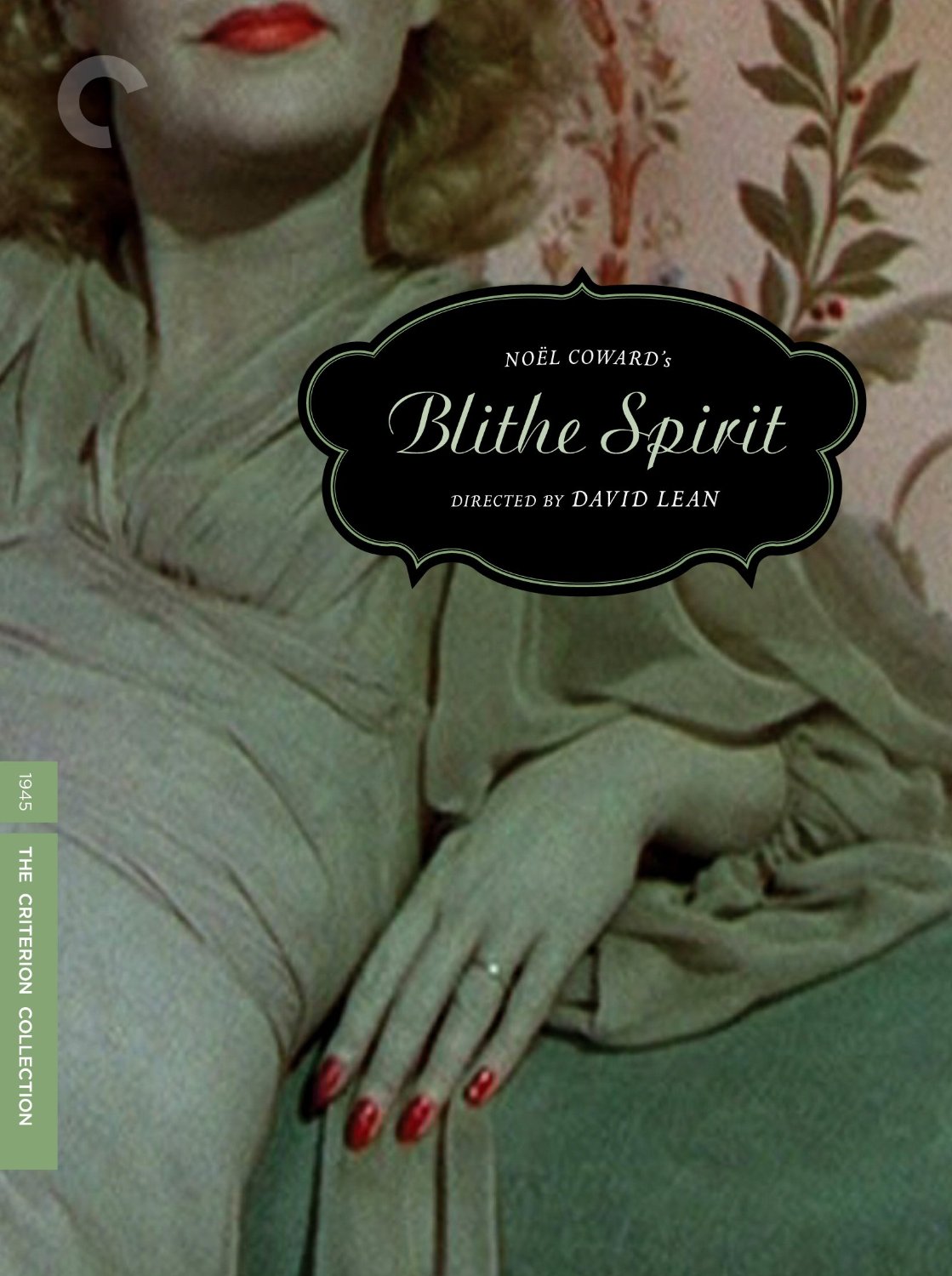
Blithe Spirit can easily be dismissed as one of the lesser of the Lean/Coward collaborations, or the inferior of Lean’s two comedies, or the mediocre movie that Lean got out of the way before focusing on arguably his finest masterpiece, Brief Encounter. All of these statements are true to an extent. This is a light, mediocre effort, yet it is engaging and at times pleasurable despite its flaws.
Lost in the comedic ghost story is a great deal of class-consciousness and their virtues, or lack thereof. Charles Condomine states early on that “it’s discouraging to think how many people are shocked by honesty and how few by deceit.” His current wife, Ruth, is shocked by his later honesty, even though she claims that she would not be offended by his calling his dead wife Elvira more attractive. Both Condomines act under the auspices of honesty, but in fact, there is a deceit going on that will be uncovered later.
Madame Arcanti is a lower class medium who travels by bicycle to the Condomines to reach out to the dead for them. She is excited by having some interest in her gift, but she is the object of their upper class ridicule. As it turns out, this is a clever deceit, as they believe none of it, and are merely using her to witness her methods for Condomine to write a mystery book later. Unlike her hosts, Arcanti is completely honest. She even states in a later scene that “honesty is the best policy.” After the ghosts are brought back into the world, she is fascinated by her abilities coming true, yet is clear about her limitations. She is helpless as to how to get them to leave. A lot of unsuccessful trial and error ensues.
Much of the comedy has to do with Arcanti bumbling around during her séances, and later when Charles’ ex-wife appears to his eyes and ears only, and he tries to talk to both her and his wife Ruth at the same time. His current wife is easy to offend, shocked by his honesty, even if it is directed at his dead wife and not her.
Kay Hammond is a delight as Elvira, and her capricious bantering with Charles is when the film is at its most enjoyable, especially since his responses end up with him inadvertently insulting his wife. Elvira relishes in Ruth’s reactions, pulling the strings to drive the couple apart.
Ruth comes off worse as the film progresses, and she seems to represent the worst of her upper class upbringing. She maligns Elvira, referring to her as not having the “slightest sign of breeding.” She does not get along with Arcanti either when she recruits the medium for a solution, and insults the poor woman’s credibility. She proves to be a poor wife to Charles, and the deceit is that she has his best interests in mind. She is thinking of herself only, and the only way to rectify her situation is to rid the living world of Elvira.
Elvira is a unabashed liar, lout, and rarely gives anything but a flippant response to anything Ruth or Arcanti says. She is the spirit that is being described as blithe, which is defined as “showing a casual and cheerful indifference considered to be callous or improper.” Over time, she wears out her welcome to Charles as well, and she admits that even during their marriage, she was unfaithful. She is the queen of deception and the antithesis of honesty.
Despite being occasionally charming, Blithe Spirit can be plodding and tiresome. It is a good thing that Lean made Hobson’s Choice later to prove that he had a comedic voice, although it is unfair to compare Charles Laughton with Rex Harrison on any level. This was a spirited attempt, but more of a stepping stone on the way to better things for Lean’s career.
Film Rating: 5.5
Supplements:
Interview with David Lean scholar Barry Day: Day was also not altogether thrilled with the film, although I don’t necessarily agree with all of his criticisms. He thought that Kay Hammond as Elvira was a problem because she was not as physically attractive on screen as Constance Cummings. Perhaps this is true on a physical role without being made up for the roles, but attraction is not always derived from looks. Her Elvira, however unscrupulous, was more desirable than the square-pegged Ruth. Day concludes that the film is “not bad, but not as good as it could have been.”
The Southbank Show on Noel Coward: This gem of a TV documentary is better than the actual feature, in my opinion. It is a life retrospective of Coward, from his upbringing to his death, and finally to his legacy. Some of the best parts were archived versions of him singing his songs, something I had never seen before. They go on through his plays, the failures and the successes, show him as an actor, and discuss his closeted homosexual personal life. He was unquestionably an interesting and talented man and this was a worthy portrait of him. As for his legacy, one of his later quotes are that he “was not all that keen on being significant.” He may not have been keen on it, but the works stands on their own as being extremely significant.
Criterion Rating: 6/10
Criterion: Richard III, 1955
RICHARD III, LAURENCE OLIVIER, 1955

After tackling Henry V and Hamlet, Laurence Olivier directed and starred in his third and final Shakespeare feature, in spectacular VistaVision Technicolor. Many consider this to be his magnum opus, and as an actor, the character he is most commonly associated with. It has inspired many actors and performances, ranging from theatrical actors to punk rock singers (Johnny Rotten). It is undoubtedly a performance for the ages.
Unlike Polanski’s Macbeth, which I recently reviewed and highlighted that the character’s speeches to the camera were handled via internal monologue as voiceover, Olivier continues the tradition of speaking to the screen/audience as the ‘Vice ‘ character. One can argue which is the preferable method, but in the mid-1950s, the sort of revolutionary direction that Polanski undertook would have been too radical. Not to mention, the film would have lost something special in Olivier’s performance. His finest moments in the film are when he is speaking to us, beginning with the “Now is the winter of our discontent” to the infamous “My Horse!” line – although in fairness, the latter plea was desperately spoken to everyone.
As Olivier puts it, he prefers to work from the outside-in. He develops the look of the character and uses that as his starting point for the performance. In Richard III, he worse a long, dark wig, a prosthetic nose and walked with a hunched gait in order to demonstrate the character’s disability, which could be seen as his evil motivation. He wore brash, ostentatious costumes, which for half of the film made him appear as if a bird of prey. His look was ferocious, and blended together splendidly with the evil nature of Richard’s inner self.
The performance is the cornerstone of this production, and Oliver shines throughout. There are a couple of scenes where he was extra impressive. The two scenes in which he is scorned by, and later seduces The Lady Anne. He goes from being spit on by her after she suspects (rightfully) that he murdered her husband, to being manipulated into loving him. This is one scene in the play, which Olivier cuts into two in order to make it seem more plausible. Even that is a reach, but through the performance and Richard’s urging The Lady Anne to end him, he makes it somewhat believable. It does not hurt that Claire Bloom is up to the task of playing opposite him.
Other scenes that stand out are when Richard goes from a measured speaking voice, to lashing out at anyone and everyone within earshot. His moods were explosive, larger than life, and he stopped at nothing to achieve his ambitions. Yet, he was also a charismatic leader, which was on display at the Battle of Bosworth Field as he gives a rousing speech to rally his troops.
Olivier was not the only star in this vehicle. Sirs John Gielgud, Cedric Hardwicke, and Ralph Richardson. The other performances are more grounded, solemn, and more in tune with Shakespeare’s blend of theatrical acting, whereas Olivier contrasts them with his emotional and tonally flat reading. The peripheral cast are superb, but they are rigid, and upstaged by the flamboyant and electrifying Olivier. This contrast reminded me some of the British stage actors contrasting with method actors in Hollywood. Richardson’s performance in William Wyler’s The Heiress is an example of this, as he had to trade barbs with method actor Montgomery Clift. This enhanced that movie, just as the supporting performances do for Olivier’s production.
The film is not without flaws. Another contrast with Polanski’s Macbeth is that he shot exclusively on location. The majority of Richard III is shot on a stage, which gives it a more theatrical look and feel. Some of the stages were not very realistic, with obviously painted clouds as background and buildings that look like a theatrical production designer could have created them. The Technicolor, while superb for most of the film, makes these facades all the more evident, and at times it feels like we are watching a stage play that just happens to have a camera there.
There are other problems with the middle acts. The beginning and final acts are electrifying. The former is due to Olivier’s introductory speech and stage setting for what is to come, and the finale for the location shooting and the battle action. The middle seasons suffer as being plodding. Following Shakespeare dialogue is difficult without knowing the play already, and the original audience lived in a time where they would be aware of the history, which happened to be told through previous Shakespeare plays. We are not as in tune with that history, and it becomes difficult to follow the machinations of Richard as he consolidates his power by eliminating his enemies. The only obvious end is in a decapitation scene, but the outcome of The Lady Anne and the two princes are more muddled. Since Olivier had taken license with Shakespeare’s words in the beginning, he could have continued in order to make the play more understandable for a wider audience.
That leaves us with Olivier in arguably his best performance and without question his most iconic on film. The film stands up and is remembered because of him, and he carries it through the long running time of 160 minutes. Even though he is an anti-hero and easy to root against, he sparkles when he is on the screen and we want him to succeed just so we can see where his performance will head next. This is my favorite performance of his, but not my favorite film.
Film Rating: 7/10
Supplements:
Audio Commentary: Criterion has a good habit of using commentaries that complement the film and educate the viewer. Here they use two people involved with the theater, stage director Russell Lees and former governor of the Royal Shakespeare Company John Wilders. While they are educated on the film language, they share details about the theatrical nuances and how they are translated to film. Lees dissects the iambic pentameter style of verse, giving some background into how and why it was used during Shakespeare’s time. He also shows how Olivier deftly plays with the verse to make it oftentimes sound like he is speaking directly, whereas the other traditional actors tend to speak in a Shakespearian manner.
1966 Interview: This is from the BBC series Great Acting, where theatrical critic Kenneth Tynan interviews Olivier as a career retrospective. Olivier is a great subject out of character and talks candidly about various subjects. He does discuss the differences between his and Gielgud’s style, which he defines himself as ‘earthy’ and his rival as ‘spiritual.’ He also speaks about how significant his Richard performance became, and how he modeled the look and demeanor after Jed Harris in as uncomplimentary a fashion as possible.
Restoration demonstration: Martin Scorsese talks about the challenges with restoring this film. One was with the VistaVision print, which most labs cannot scan. Another major problem was that there had been cuts to the film, most notably for the American TV audience. They had to find a Premier print and use that as a guideline for what should be included in the original film, and then re-insert those scenes. In addition the normal scratches and blemishes, there were chemical stains and color fading, all of which had to be corrected digitally. Fortunately we are living in a golden age of film restoration, otherwise we might not be able to see the film as Olivier intended.
Criterion Rating: 8/10


 Criterion Close-Up