Criterion: Zatoichi, The Blind Swordsman, Disc 4
ZATOICHI’S REVENGE

After a couple lighter and lackluster entries to round out 1964, the series re-invented itself in 1965, taking the character away from the formula and towards some darker areas. The foundations of the formula are still intact, with the hero wandering to a village to find distress and abuse. This time the adventure is personal, as he encounters a former mentor of his whose daughter has been forced to prostitute for the bosses in order to pay off her father’s debts.
Not only was the tone darker in this iteration, but the filmmaking was more creative. They experimented with different shot angles, which enhanced both the character moments and the actions. They also take Zatoichi away from his ethical code to never attack unless attacked. As the title implies, this time Zatoichi takes more initiative and [SPOILER ALERT]initiates the attack and murder of the villains. This is the first time in the series that he has used his cane sword as an offense rather than defense.[/SPOILER]
Movie Rating: 7.5/10
ZATOICHI AND THE DOOMED MAN

They cannot all be diamonds. The 10th film in the series was, in my opinion, easily the worst. Aside from some good landscape shots, a more confident use of color, the direction was lazy. The character development was practically non-existent, and the pacing sluggish. This one features one of the largest battles in the series, and they instituted a series of traps to try and outsmart the swordsman – not a man idea, both logistically and creatively – but the execution was off. It was one of the least thrilling action scenes in the series. On top of that, the ending was rather sudden without much resolution.
Movie Rating: 4.5/10
ZATOICHI AND THE CHESS EXPERT

My disappointment with the 11th film didn’t last long, as I quickly found myself engaged with the 12th and it is my favorite of the bunch so far. Zatoichi finds a friendly, chess-playing samurai who he forges a bond with and becomes a traveling companion. The chemistry between the two actors reminded me of the debut film, where Zatoichi gained respect and forged a friendship with a samurai hired by the opposing clan. Adding a richly drawn, strong male character contrasted well with Zatoichi’s demure and quiet persona. There were other strong character moments, such as his relationship with a woman that he had widowed by killing her husband, and the daughter that he becomes fond of. There was less action, but that worked to give the characters space to breath, and let the character suspense develop. The climax chess match was brilliantly done.
Movie Rating: 8/10
The Essential Jacques Demy: Lola, Bay of Angels
THE ESSENTIAL JACQUES DEMY

So begins my journey into the world of Jacques Demy. In the interest of disclosure, I’ll admit that I’m not a major fan of his work. Yes, that sounds like sacrilege to many Francophiles, but a major part of that is my limited exposure. I’ve pretty much only seen The Umbrellas of Cherbourg, and clips here and there of other movies, such as The Young Girls of Rochefort. I try to keep an open mind, and with this stacked new box set release, I can dive into his career from the beginning. One of the major selling points is the presence of his ex-wife and widow, Agnes Varda, who I adore. I especially like her Le Bonheur, which has a Demy-like feel to it and was released around the same time of his major films. She will be prevalent through these discs, and there will be some documentaries of hers later.
LOLA, 1961

Demy’s first feature came in the midst of the New Wave. In fact, he probably got his shot thanks to the successful efforts of Louis Malle, Francois Truffault and Jean Luc Godard. Lola is in the spirit of the New Wave. The narrative and plot do not follow a formula. There are a number of different characters with intersecting plotlines, and no direct narrative.
Lola, played by Anouk Aimée, and Roland, played by Marc Michel are the pivot points for these characters. There is also an American sailor, a mother and daughter, and the off-screen presence of Michel, Lola’s first love, who she is still dedicated to after all these years. Roland is a lost dreamer, who was just fired from his job for being tardy and has no regrets about it. He finds purpose when he encounters Lola, a long lost friend that he hasn’t seen in years. They rekindle their friendship, and it becomes immediately clear that he wants something more. Meanwhile, Lola is having a tryst with the American sailor, while still longing and waiting for her first love and the father of her child, who she is convinced will come back someday.
The mother takes to Roland, and the teenage daughter finds herself charmed by the sailor, but not in a romantic way. The sailor is fond of Lola, but he will be leaving soon for Cherbourg and knows that any sort of commitment is not realistic. The mother is a lonely war widow and single mother who seems to have affection for the Roland, but he does not look at her in that way. He sees her platonically, just like the sailor sees her daughter, and like Lola sees Roland. Demy juggles these complicated character motivations with delicacy and explores the nature of human relationships. Basically, his message is that oftentimes what you want does not want you.
Lola was filmed with a low budget, just like many of the early New Wave films. The Criterion print had a lengthy and arduous restoration process, overseen by the Demy estate, but was an uphill battle because the original negative had been lost. They had found a print and worked to get it as close to the original as possible, which was demonstrated in a special feature about the restoration. Unfortunately the print looks terrible, and not quite up to par with most Criterion releases. That said, since this is an ‘Essential’ box set, the movie has to be included as long as the restoration allows the film to be watchable, which it does. This first work is most essential in seeing the roots of what the filmmaker would become. Some have called it a musical without music (although there is one song performed by and about Lola). It’s themes will reoccur in his next films, whether they are nouvelle vague or mainstream musicals.
Movie rating: 8/10
Special Features:
This disc sets the stage for what will be a stacked set of special releases. It contains most of Demy’s early shorts, including his first filmed project, Les horizons morts an 8-minute depiction of a lonely man. The most impressive short in my opinion was Le sabotier du Val de Loire, where a pastoral family makes clogs. What makes this short special is the care and fondness for the subjects. It is more about their way of live rather than the clog-making process. It reminded me of Robert Flaherty documentaries, only without being staged or embellished. There are four shorts in all, which vary in quality, but are still worth seeing.
The documentary about the restoration is interesting, although you can tell that they are making some excuses for why the print is so poor. Mathieu Demy oversaw the process, and his input was primarily how to preserve the artistic intent rather than creating a technically perfect restoration. Since his part was mere snippets, I’d rather not play the blame game, but given the condition of the print, I think a little bit of artistry could have been sacrificed for clarity.
BAY OF ANGELS, 1963

One thing that is immediately apparent when watching Demy’s second feature is that it is a grander production. It may not measure up to his later color films, but it is ambitious. The main draw is that he cast Jeanne Moreau, who at the time was queen of the New Wave, having starred in Elevator to the Gallows, The Lovers, Jules et Jim, and La Notte. Despite her track record, her role as Jackie was a departure for her. First, she ditched her reknowned dark hair for a platinum blonde. Second, the character was hopelessly addicted to gambling, completely self-centered, impulsive, and basically a wreck of a person.
Like with Lola, the male lead is a meek, naïve, lovesick young man, this time named Jean, who basically becomes Jackie’s lapdog. He tries his hand at gambling in a local casino, has some beginner’s luck and a large windfall, which he then uses to take a trip to Nice for more gambling. There he runs into Jackie at the roulette tables. His luck rubs off on her, and they bond for adventures in Nice and Monte Carlo. He begins the movie being reluctant to fall into the trap of gambling, and disturbed to hear the pathetic stories of Jackie’s addiction. They have a roller coaster of winning and losing, and eventually he becomes like her. He makes poor decisions, mostly because of his romantic desire for her. She treats him like a puppy dog, and at one time admits that she is using him for his luck.
While I was impressed with the look of the film and the performances, particularly Moreau, I had some problems with the film. The major plot hole for me was that the gambling was completely unrealistic. I’ve spent my time near a roulette wheel and have never seen someone win or lose in such quick and dramatic fashion. Then there’s the matter of the ending, which I won’t go into detail about. I’ll just say that it didn’t seem realistic given how the characters were developed.
Movie Rating: 6/10
Special Features:
This disc was pretty thin. There was a 12-minute interview with Jeanne Moreau that I enjoyed. There were a few dumb questions, which I thought she handled well. I liked how she talked about choosing roles and how she chose to work with directors regardless of the material. That worked out pretty well for her.
There was another, shorter featurette about the restoration. Since they had the master, the process was not as difficult.
Criterion Rating: 7.5/10 (both discs)
Criterion: Pickpocket, 1959
PICKPOCKET, ROBERT BRESSON, 1959

Pickpocket is one of those films that I’m surprised I haven’t seen. It has been referenced numerous times in film class, and its influence on other films is well documented. It is arguably the most influential Bresson film, which is saying something. Even though I hadn’t seen it, I felt like I had. I’ve seen the ending maybe a half-dozen times, and I’ve seen it copied, most notably by Paul Shrader who was obsessed with the film and contributed towards it being revisited and eventually enshrined as one of the greats.
I have seen enough other major Bresson works that I’m familiar with his quiet, contemplative, and spiritual style – the Bressonian tone. Au Hazard Balthazar, Lancelot du Lac and others are beautiful, yet challenging films. A Man Escaped shares more in common with Pickpocket. They both have quiet, downtrodden characters, both with often expressionless performances. These explain why the film is often watched multiple times, because the subtleties in expression are easier picked up on subsequent viewings. Even the slightest reaction becomes more monumental, more telling, and makes you question what the film is trying to say.
I’ve heard people describe both Pickpocket and A Man Escaped films as slow, but compared to some of the spiritual films, they are quite fast paced. Pickpocket moves very fast for a Bresson movie, as pointed out in the commentary. If you break down the events that take place in the plot, it sounds like a bit of a thriller:
SPOILER ALERT —
Man steals to help his sick mother.
Man gets caught, gets let go.
He learns more about how to steal.
Goes on a thieving spree with two accomplices.
Gets interrogated by police, close to being caught.
Leaves country, comes back and tries to steal again.
Gets caught, thrown in jail.
Gets redemption through a girl.
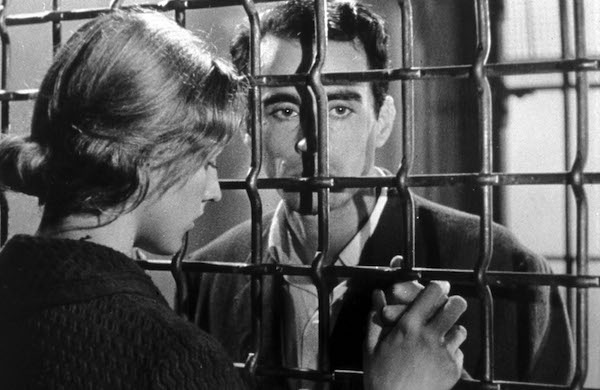
I could see another director taking the same plot points and making the film more exciting, less memorable, and a more fleeting and bland experience. This film is not just about what happens to the pickpocket. It is about exploring his soul, why he becomes what he becomes, how he lives with it, and why he comes back to it.
Movie Rating: 9.5/10
Special Features:
The introduction from Paul Schrader is interesting and useful, but not essential. He explains what he sees in the film, how it has affected his career, and why it has lasted.
There is a short French TV interview with Bresson in 1960. What I found interesting about this was that the interviewers were antagonistic, and somewhat attacked the film and it’s cool reception. For instance, they asked why Pickpocket was disliked when A Man Escaped was liked. Bresson handled himself well, and said that people identified more with the hero and escapist rather than the criminal.
Film scholar James Quandt’s commentary was extremely well prepared and said a lot about the film. If anything, it was too academic and robotic, but that’s what I look for in academic commentaries. These are the types that really enhance the perception of the film. He points stuff out that you might eventually come to on your own after half a dozen views, or looks into various readings of the film. Because Pickpocket is such a quiet film, I appreciated his constant vocal presence and that he always had something to say.
The best feature was a documentary from 2003 where the filmmaker tracked down three of the former stars. The interviews with Pierre Leymarie and Marika Green were captivating because they go through the Bressonian process, and how he breaks down the performance for the amateur actors (or Models, as he called them), so that they are not really acting. He takes take after take to get what he wants and never lets the actor know which it is, but tends to use the later takes when the actor is tired. That is certainly apparent in Pickpocket, where all the actors have a worn down look, and explains why the tone and character appearance is consistent throughout most of his films, because he just about always uses non-actors and molds their performance the way he wants.
In the second half of the documentary, they find Martin LaSalle living a quiet life in Mexico City. He recalls his experience in fascinating detail, but focuses more on the emotional impact that the entire process left on him. He said it took him 10-15 years to recover from the experience. He went to study with Lee Strasburg and barely worked in the decade after Pickpocket, until eventually settling in and making a living. His personality was affable and gregarious. You could see moments of dourness, especially as he recalled the aftermath of the movie, but overall he was a pleasant person. I see that he has continued to act in Mexican films, and he is probably very happy with these occasional small roles that allow him time to tend to his gardening.
Criterion Rating: 10/10
Criterion: The Fantastic Mr. Fox, 2009
THE FANTASTIC MR. FOX, 2009

As I began re-watching Fantastic Mr. Fox for the second time, I tried to convince my wife to watch it with me. “I’m allergic to Wes Anderson,” she said. I tried to explain that this was different from the typical Anderson film because it is animated and based on a Roald Dahl work. As it reached the five-minute mark and she heard Bill Murray’s voice, she said “yes it is! It is just a Wes Anderson movie with animation!” and she was gone. I still think she might enjoy this, as it seems to be one that other Anderson haters embrace. That includes me, to a certain extent.
Among some circles, this is blasphemy, but I am not a huge Wes Anderson fan. I respect him immensely as a filmmaker and acknowledge his creative vision, but his filmmaking mannerisms (or Andersonisms) are a little too organized, calculated, and a departure from reality. I like Bottle Rocket and Rushmore, and I liked The Grand Budapest Hotel. I loved The Royal Tenenbaums when it first came out, but it hasn’t aged well because he has gone back to the well too often.
That said, I cussing adore The Fantastic Mr. Fox! It is a cussing brilliant film, and easily my favorite Anderson.
Oddly enough, even though these are animals, they feel more real than any Tenenbaums, Zissou’s or other Andersonish characters. There’s a little of Mr. Fox in all of us, adventurous, impulsive, occasionally brilliant, and yes, egotistical. His faults can be frustrating and endearing, and that materializes with his marriage to Mrs. Fox, so eloquently voiced by Meryl Streep. Even his child and nephew and their little rivalry and is easily relatable. Most people can put themselves in either the Ash or Kristofferson category, and you can empathize with both. That they are so far apart makes their chemistry and eventual friendship that much more moving. They find that they both have different strengths and weaknesses, which is sort of the point of the entire film. On top of that, I love the wolf scene and how it embodies facing and embracing what we are most afraid of, which often is just as afraid and nervous about us.
That’s not to say that there are not a lot of Andersonisms added to the project. The game of Wackbat and the Owen Wilson quickly narrated instructions while showing an overhead view of the field with complicated, graphical examples that populate and crowd the screen. And yes, he relies on a lot of his stable of actors, such as Murray, Schwartzman, Murray, Wilson, and his brother Eric. If you only listened to the film, it probably wouldn’t sound too different than other Anderson movies. Even though I’m not a fanboy, that’s not a bad thing. Anderson has a lot of talent and a distinctive style, which I found to be a better fit with animation than live action.
Movie Rating: 8.5/10
Special Features: This disc is absolutely loaded with features. There’s an animatic version of the film, which is basically the same voices with storyboards. I’m sure there’s an audience of that, and I thought it was interesting for 10 minutes, but couldn’t re-watch the entire movie this way.
The making-of scenes were vast and fantastic. They range from showing the actors out on a farm doing their voice acting, to seeing the laborious stop motion animation process, to seeing the musical composition. They number more than a dozen little vignettes that are all enjoyable.
One of the coolest features is Dahl reading the original story, which I enjoyed for a short duration. There have been audio tracks like this on other discs. Red River for instance had the full radio play. All are interesting, but you have to keep the DVD in the player on that screen to listen to the audio. It is too bad Criterion doesn’t let you download the file to listen later on a mobile device.
There’s also a terrific audio commentary by Wes Anderson. He talks a lot about the technique and process, but also talks about where he got his vision. I liked when he pointed out where he lifted objects from, whether they were from Dahl’s house or borrowed from other films, such as Truffault’s The Story of Adele H, which Anderson wonders out loud if he can be sued for mentioning. Probably not since it made the cut.
If that’s not enough, there’s also an hour-long documentary about Roald Dahl. I watched the beginning and my interest was peaked, but I will save it for a day.
Because of the extensive special features and the gorgeous digipak case, if you have any appreciation for this film, I’d recommend the Criterion. I consider it among the best that have been released this year.
Criterion Rating: 10/10
Criterion: Zatoichi: The Blind Swordsman (discs 1-3)
ZATOICHI: THE BLIND SWORDSMAN (DISCS 1-3)

First off, the Zatoichi boxset from Criterion is a gem. You can tell just by holding it or flipping through the discs that it’s on a completely different level than all other box sets. It is the largest, most ambitious release, with 25-films total. That’s too much to tackle in a short period of time, much less to summarize in a single post. For that reason, I’m dividing these into a series of three posts.
Zatoichi is genre filmmaking and it unquestionably follows a formula with few deviations, but it is still a treasure. A lot of this has to do with the time in which these films originated. They were produced during some of the best years of Japanese cinema. They followed in the footsteps of Mizoguchi’s samurai films and Hiroshi Inagaki’s Samurai trilogy, and were contemporary of some of Kurosawa’s best films. One of the films even included Yojimbo, one of Kurosawa’s most iconic characters. Meanwhile, the Japanese New Wave was in its prime, most notably Seijun Suzuki and his Yakuza films. The Zatoich was a serialized amalgamation of all of these narrative forms, and it even shared some of the same crew and cast as these classical Japanese artists. These essentially were template art films, with some thrills and adventures to keep audiences hooked.
The quality varies on each film. None that I have so far seen come close to the highs of the contemporaries that I just discussed, but I didn’t expect to see Ozu, Kurosawa or Naruse. At best, they are excellent, stylized, escapist genre films. At worse, they are mediocre yet still engaging and watchable. In many respects they are like a high quality TV series today (and Zatoichi did become a series), with some amazing episodes and some that are just okay. None are poorly put together or not worth watching. Again, like a TV series today, they are easy to binge watch just to see what happens to the hero next.
The premise is usually that Zatoichi wanders into a town inconspicuously where there is corruption present. There’s usually a woman in the picture, often (although not always) innocent and being taken advantage of. There are often warring factions, and when they realize who Zatoichi is, they try to lure him to their side with food, money, comfort, or whatever it takes. They are almost always unscrupulous, evil people. Zatoichi has his faults. He is greedy, likes to gamble, is susceptible to the charms of woman, but he is basically good and looks out for the common man. Regardless of what side he takes, he looks down on all who will make trouble for others.
You have to suspend a lot of disbelief. Yes, Zatoichi is blind, yet he gets around very well for himself and hardly ever stumbles or runs into walls. He is always deadly with the sword, and most battles have him engaged with several people. He never strikes first, and will often kill 2-3 people with a single spin and sword stroke. And, spoiler alert, he doesn’t get killed – there are 25 movies, after all. He barely gets hurt. Sometimes the action can get monotonous because the outcome is clear; other times it is thrilling.
Of the nine that I have seen so far, I appreciated the ones where they peeled away at the character. The first two, which happen to be the only black and white ones, establish the legend and develop the character. They are not short of action either, but they spend more time investigating this unique character. The films shift to color with the third film, and there’s a little more action, and they settle somewhat lazily on the formula. The high point for me was the seventh film, Zatoichi’s Flashing Sword because it makes the best use of color and is the most stylized, while deviating from the formula enough to show that Zatoichi has some weakness, can be harmed, and is capable of blood lust. The films blend together to a certain degree, but Flashing Sword’s imagery has stuck with me the most. The latter two films I felt suffered from monotony as they tried to unsuccessfully break away from the formula. One of them has Zatoichi interacting with a child and a flawed woman, which would normally be a nice change, but it came across stilted and less confident.
1. The Tale of Zatoichi – 8/10
2. The Tale of Zatoichi Continues – 7.5/10
3. New Tale of Zatoichi – 7/10
4. Zatoichi the Fugitive – 6.5/10
5. Zatoichi on the Road – 7/10
6. Zatoichi and the Chest of Gold – 6/10
7. Zatoichi’s Flashing Sword – 8.5/10
8. Fight, Zatoichi, Fight – 5.5/10
9. Adventures of Zatoichi – 5/10
Special Features: None yet until the end.
Criterion Rating: 9/10
Criterion: Cul-de-sac, 1966

Some might consider this a lesser Polanski, but it was produced during what I consider his peak. Repulsion, which I consider to be the best Polanski (sorry Chinatown!) came out just the year before, and this pictures uses many of the same crew, including the DP, Gilbert Taylor. It has a similar look and feel to Repulsion. While this film is lighter in tone and has some comedic moments, it still had similar, dark themes as his surrounding films, which would culminate a couple years later in Rosemary’s Baby, another of his best films.
Cul-de-Sac could have been a three-act play using mostly four lead actors, but the location of Lindisfarne / Holy Island was almost like another character. It was the dead end, or cul-de-sac in many ways for all of these characters, whether temporary or permanent. The castle was beautiful, but remote, isolated, and subject to the tidal whims of the sea. It was a change in tide that created the situation that put these characters together, as the car of two gangsters stalls on its way to the island.
The ensemble case consisted of lesser known talent, but they really shined here. Most notable was Donald Pleasence in his effeminate portrayal of the cuckolded husband George. Françoise Dorléac played his restless French wife. I admired her work in Truffault’s The Soft Skin, and it is worth noting that she is the elder sister of Catherine Deneuve, who was absolutely fantastic in Repulsion. In many ways the two characters were similar, albeit Dorléac’s Teresa responds to her isolation with adultery rather than psychosis. Finally, Lionel Stander played Dickie, the gangster who occupies and bullies the quiet lives of this odd pairing. He was perfectly cast as the loudmouth ruffian, which results in terrific character conflict between Pleasence and Dorléac.
I would be remiss if I didn’t mention the amazing long take. There is a period where the threesome are on the beach, when Dorléac strips naked, runs into the water and leaves the men to argue. As they continue their bickering, a noise is heard from overhead which Dickie thinks is a helicopter coming to rescue him. Instead, to his disappointment, it is a low flying airplane. The actors play off it exceptionally well, and the plane enters the frame with perfect timing. Dorléac right on cue, returns from her swim towards the end of the shot. It was over 8-minutes, and it’s difficult for me to remember a better orchestrated take in Polanski’s long career.
Film Rating: 8/10
Special Features:
The disc has a short, making-of featurette. What I like about the Criterion documentary features compared with traditional releases is that they aren’t self-congratulatory. They are honest about the production, warts and all. First off, I was surprised that they practically bash Stander, who was extremely difficult to work with. You wonder whether they would have been so frank about his behavior if were still living. They also talked about the animosity on the set between Polanski and pretty much everyone else. Finally, they talk about how they put together and timed the praiseworthy long take. If it weren’t for production problems and delays, it may not have happened.
They show a black and white TV interview with Polanski in 1967, just after he had filmed The Fearless Vampire Killers. Sometimes these features don’t work well, but this was a good interview, especially considering this was from when Polanski was young and at the height of his career. He touches on his rough childhood in Poland during the war (he was a Jewish refugee whose mother died), and focuses more on his career, and shows old shorts and previous works of his. It is a nice retrospective and Polanski is always a good interview subject, young or old.
The disc is light on special features and that is okay. Other Polanski releases, including Repulsion have a lot of features. This is a good companion to all of them.
Criterion Rating: 8/10
Criterion: Scanners, 1981
SCANNERS, 1981
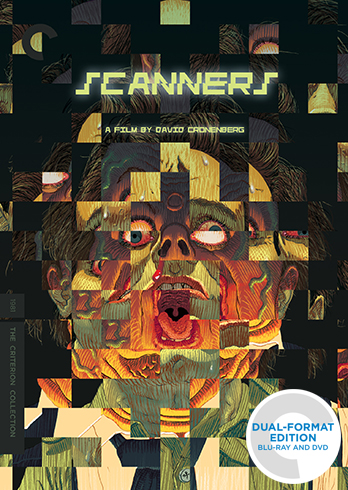
I first saw Scanners as a teenager. I cannot remember precisely where, but it was a cable stable in the 1980s-1990s, and it infamous for that exploding head scene. It was Cronenberg’s breakthrough film, which established what would be an interesting and diverse career for someone who cut his teeth making raw horror films. When I was younger, I embraced the novelty of the special effectives, especially that head that I have seen probably 1000 times via GIFs.
Sometimes time and experience can change perception. My memory was that Scanners was a cutting edge, state of the art, ground breaking horror film. It is some of those things, lots of those things, but I remembered it being a little better than what I saw yesterday. The plot is scattershot, and some of it hasn’t aged well (like having the protagonist scan into a monochrome computer system via a pay phone). Until the final scene, it lacks character conflict. We don’t really understand the motivations for each of the two scanning leads, and the clunky corporate exposition doesn’t help matters. Michael Ironside practically steals every scene he is in, and I found myself wanting more of him — one of my favorite scenes being the archived videotape where he explains drilling into his own head. His adversary, played by Stephen Lack is barely interesting and could have used some acting lessons.
The head explosion scene was absolutely fan-f’ing-tastic! I had forgotten when to expect it, and I love that it came 13 minutes in. It sets the tone for the violence and special effects to come. The Blu-Ray transfer didn’t make too much of a difference, but it probably would have if I had watched frame by frame.
I found much of the exposition to be plodding, and some of that makes sense now that I understand the production difficulties. And then comes the ending, which I will do my best not to spoil. Let me just say that these effects are most definitely dated, and I still cringed at what they did with the veins, which DID look a lot better in Blu-Ray.
Rating: 6/10
Special Features:
The 25-minute or so featurette about the visual effects was more engaging than the movie itself. I had no idea how they pulled off the exploding head, and I won’t say here, but it is worth watching just to see that. I will say that the way they did this would not happen in a studio production today. It also spoke to the issues with production, the daily re-writes, and what a mad, chaotic scramble the entire production was. Yet they managed to bring in some of the best in the business, which showed in the end product.
There were interviews with Michael Ironside and Stephen Lack, which were somewhat interesting, but I find myself less interested in Criterion interviews, especially when they are nearly half an hour a piece. There are exceptions, like Sterling Hayden’s interview for The Killing, but that’s a topic for another day. Ironside’s was somewhat more compelling because he’s since gained a lot of credibility by working in countless features. Lack was, well, lacking, and I probably am biased because I didn’t like him in the role.
The Cronenberg appearance on Canadian television was short, to the point, and my 2nd favorite feature. It was mostly a retrospective, as they showed trailers for his handful of prior films (Shivers, The Brood, etc.) and had him say a few words about them. It was mostly interesting to see Cronenberg in 1981, in his element, looking like one of the early Microsoft programmers. He said that he wasn’t really a horror fan, yet the genre found him. That speaks to his later work, where he would dabble in other areas, and has practically abandoned the horror film today.
Despite this not being a Criterion-caliber film, its position in pop and specifically horror culture makes it worth a look.
Criterion Rating: 7/10
2005 List
We’ve finished up the ‘4 years, and now we’re back to top, beginning with 2005. To be honest, 2005 was not a very dazzling year for film. There were some masterpieces that would make the list any year, but a lot of the later entries are relatively weak. This also happened to be a year where I disagreed with a lot of the consensus picks. I liked films such as The Squid and the Whale, Brokeback Mountain, A History of Violence, War of the Worlds, and others, but not nearly as much as most critics and friends.
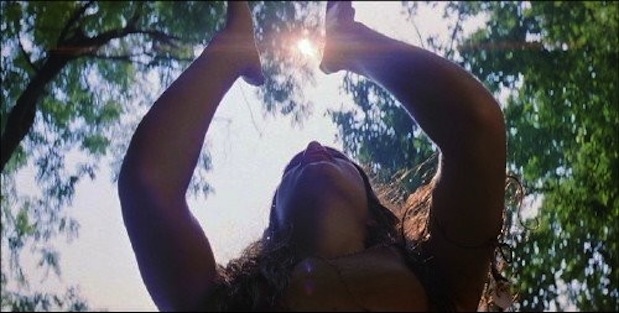
What’s interesting about a couple films on my list, including my top selection, is that I didn’t necessarily enjoy them during the first viewing. I remember leaving the theater after seeing The New World disappointed, mostly because I thought the last third of the film ruined the momentum that Malick had established. With another viewing, I finally ‘got’ what Malick was doing. The same was true for Caché / Hidden. I’ve now since seen the film twice more, and found myself more engaged in the mystery than ever. Filmmakers like Michael Haneke and Terrence Malick make challenging films that deserve a second chance. Yet, oddly enough, most of their filmographies I love after the first viewing, especially Tree of Life and The White Ribbon.
Documentaries seem to always find their way onto my lists. Scorsese doesn’t get his due for his music documentaries, save for maybe The Last Waltz, but No Direction Home is unquestionably my favorite of his. Admittedly, I am a Dylan fan, but I think even non-fans would enjoy how he captures the New York folk scene in the 1960s.
1. The New World
2. No Direction Home
3. Grizzly Man
4. Good Night, and Good Luck
5. Wallace and Gromit: The Curse of the Were-Rabbitt
6. Cache / Hidden
7. Brick
8. The Death of Mr. Lazarescu
9. Kingdom of Heaven (director’s cut)
10. Water
11. Syriana
12. Junebug
13. The Beat That My Heart Skipped
14. V for Vendetta
15. March of the Penguins
16. Tristram Shandy: A Cock and Bull Story
17. Enron: The Smartest Guys in the Room
18. The Constant Gardener
19. Pride and Prejudice
20. 40-Year Old Virgin
1934 List
In my opinion, the 1930s were dominated by French cinema. That’s one of the reason I chose that as my independent study (technically resistance films, but used the 1930s to establish the film language and influences of those later films). It is no surprise that I have seven movies in my top 20 that are either directly involved with France or have French connections. My number one is the under-seen adaptation of Les Misérables is the most faithful and highest quality that I’ve seen. In fact, the others, especially the recent musical, pale in comparison. I saw the Eclipse version, but I hear that a restoration has been touring and I hope to re-watch that version someday.
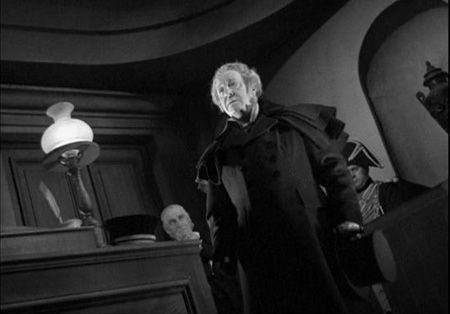
My final cut was, The Black Cat . I have a lot of problems with the film, but the final haunting 20 minutes make up for my reservations. These are dark scenes even by some modern standards, so I felt it almost deserved inclusion.
1. Les Misérables
2. L’Atalante
3. A Story of Floating Weeds
4. Merry Widow
5. Imitation of Life
6. Le Grand Jeu
7. Madame Bovary
8. The Thin Man
9. Man of Aran
10. Rapt
11. The Affairs of Cellini
12. Scarlet Empress
13. La Signora di Tutti
14. Twentieth Century
15. It Happened One Night
16. Marie Chapdelaine
17. The Lost Patrol
18. It’s a Gift
19. The Man Who Knew Too Much
20. The Scarlet Pimpernel
1944 List
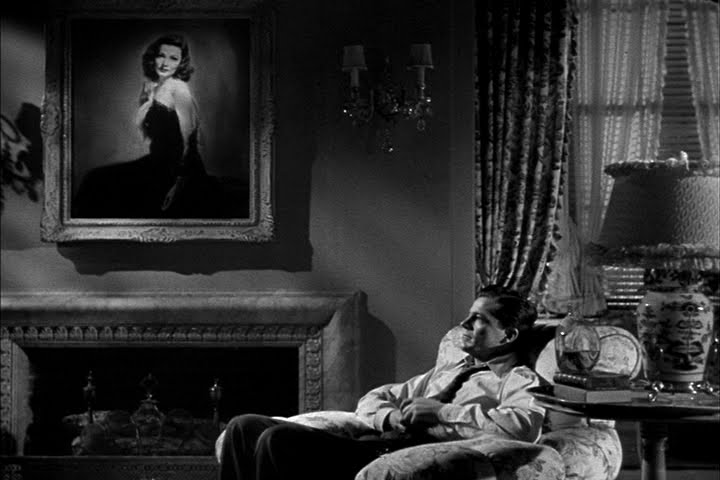
Pickings are slim thanks to the second world war. Compared to other years, European and Asian films are hard to find. Two German films made the list, both technicolor pieces with hints of propaganda, albeit a long ways from Riefenstahl. An early de Sica, early Bergman, and a late Eisenstein were the only other European selections, and there were none from Asia. This is probably one of the few years where a French film wouldn’t make my list. The Woman Who Dared would be somewhere in the 20s.
American and British films dominated the year, specifically noir. It was a dark period and that was reflected in the films. The two at the top are some of the best noir films ever made, in my opinion. Even the movies that aren’t strictly categorized as noir have some of dark elements, like Torment, The Uninvited and even the Sherlock Holmes addition, The Scarlet Claw. The remainder are upbeat wartime crowd pleasers like the two Sturges projects with Eddie Bracken as the lead. Even though there were a lot of them, none of the rah-rah war films made my list. Thirty Seconds Over Tokyo would probably be the closest. Others that I’ve seen acclaim for, like The Fighting Sullivans are not my cup of tea just because of their heavy-handedness, even if such strong messages were appropriate.
As a result, 1944 is not the deepest year for film. Numbers 15-20 would probably not make my list most years.
1. Laura
2. Double Indemnity
3. A Canterbury Tale
4. The Children Are Watching Us
5. Ivan the Terrible, Part 1
6. Lifeboat
7. Torment
8. Miracle of Morgan’s Creek
9. Gaslight
10. Ministry of Fear
11. The Uninvited
12. Great Freedom #7
13. Meet Me in St Louis
14. To Have and Have Not
15. Opfergang
16. Curse of the Cat People
17. Bon Voyage
18. The Scarlet Claw
19. Hail the Conquering Hero
20. Henry V


 Criterion Close-Up