Author Archives: aaronwest
Criterion Blogathon – Things to Come
Hello, fellow film buffs. We have been quiet for a little while, but with the #CriterionBlogathon just under a month away, we are about to roar!
Most importantly, we are imposing a deadline for topic choice submissions as of this Friday, October 23, 2015. We have updated the Blogathon roster here, and are currently at 170 topics. If you want to participate, this is the last call for you to secure a topic. After checking the roster, please complete this form to participate.
You may also be interested in the podcast that we recently recorded with Kristina over this past weekend. We discussed not only the blogosphere, blogathons, and online film community, but also this specific blogathon. Hopefully you will find it to be an interesting discussion. We certainly enjoyed it! Kristina blogged about her experience here.
The Blogathon will take place over six-days, from Monday, November 16th until Saturday, November 21st. We have divided the topics into sixths, which was not an easy task when you have films from all over the globe that span roughly a hundred years. We divided them by region of the world and time period. Kristina, Ruth, and I will each be hosting two days worth of posts.
The complete schedule is going to be unveiled next week! It will be revealed one day at a time. I hope you follow all three blogs, but if for whatever reason you do not, we will re-blog each post. You can treat these days as “deadlines.” It is not a strict deadline and we will still edit your contribution into the ‘thon if it is late, but there are some incentives for being on time or even early.
Incentives? Does this mean recognition? Does this mean things?
We are giving away awards for each day! The criteria will be:
Most Humorous
Most Original
Best Research
Best Portrait
Once the event is completed, we will give out a Best in Show prize for each category, which will be a yet-to-be-announced actual thing. That is, an actual thing that someone would want! Yes, something that would actually cost money! Out of the large number of entries, this will be a tough choice and we hope everyone will be a good sport about it. We also hope everyone will give it their all.
To recap: Deadline, Podcast, Schedule, Awards, Grand Prizes!
Keep your eyes peeled towards any of the three hosting blogs next week.
Episode 11: January 2016 Releases and the Classic Film Blogosphere

Aaron, Mark and Kristina Dijan talk about the just announced January 2016 Criterion Collection releases. We also delve into the film blogosphere. There is a huge blogging community that spans across multiple platforms, social or technological, and Kristina is at the heart of that community.
Or listen here to it here:
For other apps or mobile devices, try this link.
Or direct download/listen to the MP3.
Show notes:
Special Guest: Kristina Dijan from Speakeasy. You can find her on Twitter.
Outline:
0:00 – Intro, Welcome, Housekeeping
17:25 – News
27:30 – January 2016 Releases
52:15 – The Film Blogosphere
Intro
Criterion Blogathon – Deadline for submissions this Friday, 10/23.
Alambrista – first Criterion Short Cuts episode.
InSession Film: 99 Homes, The Third Man
New header image at Criterion Blues. Thanks, Aaron Bird.
Jean Grémillon During the Occupation – giveaway. Listen for details.
News
Criterion Current: Guy Maddin and Evan Johnson – The Graduate mention.
Cohen Media Acquires Merchant-Ivory.
Nerdist – More on new Wes Anderson project.
January 2016 Releases
The Complete Lady Snowblood
Bitter Rice
The American Friend
Inside Llewyn Davis
Gilda
The Film Blogosphere
Movie Musings and Podcastings – Mark’s new blog.
Reader Programs: WordPress, Feedly, Reeder
Classic Movie Hub’s Blogathon page.
Blogathon Info:
My The Blob contribution to the Great Villain ‘thon.
Classic Movie History Blogathon
Last year’s O Canada Blogathon.
Veteran Bloggers:
Classic Film & TV Cafe
Shroud of Thoughts
Greenbriar Picture Shows
Laura’s Misc Musings
Self-styled Siren
The Stop Button
Blogs Mentioned:
Mike’s Take on Movies
Blonde at the Film
Movies Silently
Now Voyaging
House of Self Indulgence
Wonders in the Dark
Interested in Sophisticated Fun
Criterion Reflections
Rupert Pupkin Speaks
Pre-Code.com
Outspoken and Freckled
Aurora’s Gin Joint
Cinematically Insane
Blogger Groups:
Classic Movie Blog Association – eBook here and here.
Classic Movie Hub
Where to Find Us:
Mark Hurne: Twitter | Letterboxd
Aaron West: Twitter | Blog | Letterboxd
Criterion Close-Up: Facebook | Twitter | Email
Top 20 of 1977

The timing of this list post is interesting. I often post these lists on Fridays. This is basically because the group that I assemble these with usually unveils the consensus results during the week. It is also partly because this is an easy type of post to write at the end of the week.
The 15th of the month is a special day for me because it is (usually) Criterion Announcement Day. This month the 15th fell on a Thursday, and usually I get caught up in the social media hubbub that I don’t feel like blogging anyway. So yesterday I was hitting refresh like I always do, but there were no releases to be announced. I hoped they would come this morning, but the hours passed and still nothing. It was weird because often Criterion will give a warning if there are delays. As the evening hour approached, they abruptly went up, and it turns out one of the releases, The American Friend, is on this list. What better day to post it? I’m a fan of Wenders, and he has topped one of my lists before. He is not on top this time, but pretty close. Needless to say, I’m thrilled about this announcement.
Back to the list. 1977 was firmly in the post-Jaws era of Hollywood. The gritty, American New Wave pictures were quickly becoming a thing of the past. Woody Allen was moving away from his earlier, “funny ones,” and becoming one of the top auteurs of the time. In my opinion, 1977 is a weaker year than most of the years in the 1970s. I’m not blaming Jaws or mainstream American film in general. I have a few of those on my list. It just seems like the industry was in a state of flux.
When I look at the list, it looks pretty diverse. There are seven foreign films (eight if you count Australia), three Hollywood summer films, five American “high brow” films, one mini series, and a documentary. That fits the year. There are worse years, but this one is all over the place.
One of the frustrating issues with compiling this 1977 list was the lack of availability of some key titles. I particularly wanted to see The Lacemaker, The Devil Probably, Soldiers of Orange, Hitler: A Film, and others, but they were not available. If these or others get a proper release, then my list could change.
1. Annie Hall
2. 3 Women
3. The American Friend
4. Suspiria
5. Man of Marble
6. Sorcerer
7. Roots
8. The Ascent
9. Providence
10. The Duellists
11. Eraserhead
12. Star Wars
13. Slap Shot
14. Close Encounters of the Third Kind
15. That Obscure Object of Desire
16. Stroszek
17. Looking for Mr. Goodbar
18. Alambrista!
19. The Last Wave
20. 21
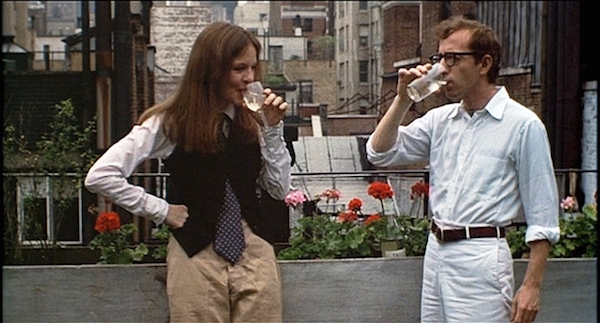
The Shining and the Family: Women at Work
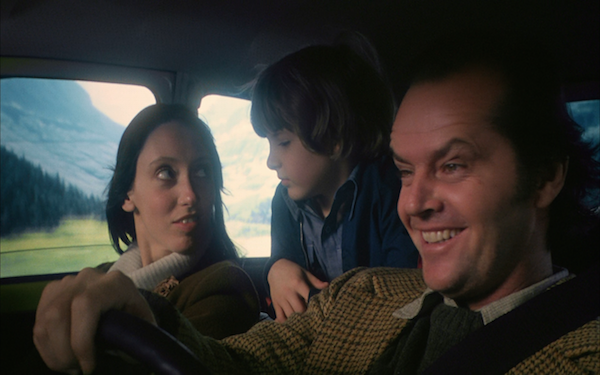
During the late 1970s and early 1980s, the topic of women’s liberation and the female role in the workplace was frequently and intensely debated. Like many political issues, the topic was divisive and controversial. The argument would manifest itself in pop culture and visual media. The Shining is an interesting piece of filmmaking because it constantly addresses social issues, and this is just one of them. It is most effective when negotiating the structure of the family and investigating the source of dysfunction. The movie comes out clearly against placing women in the workplace, claiming that in doing so, parents choose their own careers over responsibility for their children. Their absence from the child’s life, as is the case between Wendy and Danny, results in the child being exposed to dangerous influences that will disrupt their growth. The movie uses horror cinematic elements in order to make its case.
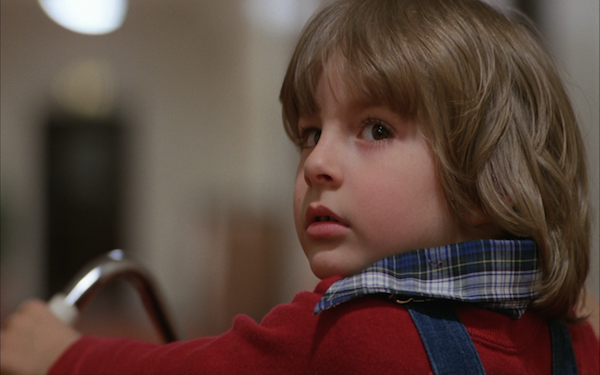
Many scenes in the film can be used to demonstrate this argument, but one that is particularly revelatory is when Danny Torrance interacts with the supernatural and enters the forbidden room number 237. The scene results in Danny being accosted by supernatural forces, injuring his neck. It comes at a significant point in the movie, taking place just after an uncomfortably awkward scene where Jack Torrance promises his son that he loves him and would never harm him. In the scene afterward, Wendy accuses Jack of violence towards their son. This sets in motion the course of events that will result in Jack attempting to murder his family.
The sequence takes place on a Wednesday, as shown by the title card, however we are not certain which Wednesday. It could have been a week or a month from the previous scene. All we know is that a period of time has elapsed, and judging from the intrusive editing and how the title card appears to be thrust onto the screen, the upcoming events are not going to be pleasant. This particular day of the week is significant in terms of the working mother argument because it is takes place in the middle of the business week, where the traditional father is away at work and the child is cared for by the mother. We will see shortly that things are different at the Overlook hotel.
Following the title card is an establishing shot that gives us an exterior view of the hotel. The camera is looking up from the bottom of a snow-covered hill, with trees bordering each end of the frame. The middle of the hotel is framed by two lone trees, a little ways apart from each other. To the left of this framing, we see a set of lights on. The light to the far left illuminates two windows. This is Jack’s work area where he is currently having a nightmare. Also on the left of the frame is another light, which is where Wendy is busy checking the boilers and making sure that everything in the hotel is functioning. She has taken on Jack’s role of caretaker, ignoring her child in the process. The only other light is on the other side of the hotel. This is where Danny is playing, hundreds of feet away, out of sight and earshot from his parents. The two trees in the middle of the frame are used here as a measuring device. They give us a visual representation of the physical distance between parents and child, and in a glimpse, how they are not able to prevent a horrific event from occurring.
We then cut to Danny playing with miniature cars and trucks on the hotel floor. The toy vehicles are colored either pink or blue. These colors represent gender roles, which in this case are his absent parents. There are five pink colored cars compared to three blue cars. The color of the cars here indicates the gender struggle in raising Danny, but by having pink being the dominant color, the movie is giving a visual cue that the female should be caring for the child. From out of nowhere comes a pink tennis ball. It interacts with Danny as he is playing with a toy car in each hand, one blue and one pink, hitched together. The tennis ball interacts with his play by slowly rolling into the center of the two cars, essentially dividing them.

The pink tennis ball is implying a gender interaction. It is breaking up the male-female balance with another feminine element, the origin of which is unknown at this point. It could be his mother or perhaps one of the specter twins that he has seen around. The music is frightening. Several instruments play a single, sustained note together, somewhat out of tune, which follows with silence and then repeats the same note again. We, the viewer are meant to expect that something sinister is happening. We would think that Danny, with his psychic abilities that have already warned him of evil forces throughout the hotel, would also suspect something dangerous lurking. At first, when he looks for whoever rolled the ball, he does appear to be a little frightened. The look on his face is inquisitive, showing that he detects something is amiss, and he takes a few labored, deep breaths.
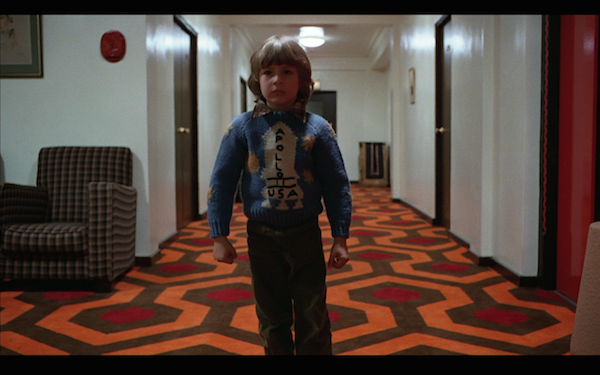
When Danny is taking his deep breaths, his body language shows aggression. He is poised with his arms by his sides. His posture looks imposing, as a martial artist or street fighter might look before engaging in a battle stance. We can also read ignorance from his demeanor. Again, the audience suspects that the tennis ball rolling could be a threatening gesture. Two ghost children have already asked him to play with them forever and ever, implying that he die and haunt the hotel with them. Therefore we associate this attempt of innocent play as something to be frightened of, but his actions are not falling in line. Had Danny’s mother been around, she undoubtedly would have led him away from the potential horror. The film is claiming that her irresponsibility is what put Danny here in the first place.
There are several reminders of how alone Danny is on this hotel room floor. In between close ups of Danny’s reaction, we see long shots of the hallway from in front and behind Danny. Behind Danny are just one or two rooms. In front of him are four rooms, but the way the hallway is photographed make these four rooms seem a mile away. Danny is out in the middle of nowhere, completely vulnerable – a little kid on the moon.
Danny’s fear lasts for only a moment before a destructive curiosity takes over. Who rolled this tennis ball? Danny indicates that he thinks it is his mother. He calls out for her as he stands there, still in his aggressive stance. Of course there is no answer. He slowly moves forward and calls again for his mother. His fright has left him. His breathing appears normal. He is now curious as he moves forward. His mother, if given a voice, would stop his advance right there and send him in a different direction. We get a visual reminder of his other options, as there are labeled exits just to the side and behind him, but Danny presses forward.
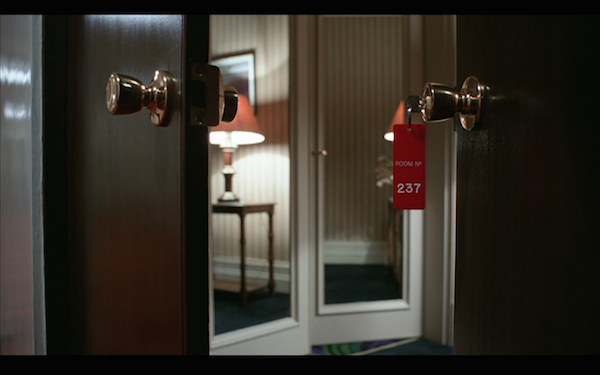
The camera changes to Danny’s point of view as he walks, moving from side to side and bobbing up and down. We see the open room door, the dangling room key and we head straight for it. The eerie music continues, constantly warning us that we are heading for something unpleasant. Danny continues until the room key becomes visible. This is the ill-fated room 237, the same room that Dick Hollorann warned him not to go near. The doorknob with the blood-red key ring is at eye level with Danny and the camera, still in first-person view. Danny stops for a moment in front of the room key and calls again for his mother, this time asking if she is in the room. By addressing her again, he reminds us that her absence is irresponsible.
Once Danny and the viewer get a glimpse of the inside of room 237, the scene dissolves to Wendy going about her work, checking the boilers and other machinery. The choice to dissolve here is interesting. This was not used for any of the other cuts. Kubrick is saying something here. The room has been developed to be an evil, ominous place. Once we get a look at it, we are placed back into Wendy’s workplace. On top of that, Danny is calling for her, expecting her to be inside the room. By using these techniques, we are being given the horror of room 237 and the idea of a woman working and neglecting her child on the same level. Adding this up, we understand that it is the fact that the mother works that is evil.
In case the audience is not sure of what is being said, it is immediately clear as Wendy’s scene unravels. As she is going about her work, she hears a scream. Having been with Danny for the past minute-and-a-half, we expect it to be his scream. We find out that it is Jack’s. Wendy runs for him and discovers that he has had a horrific dream, one in which he kills Wendy and Danny and chops them into pieces. Wendy takes on a motherly role with Jack, but not her son, who we know has undergone his own horror. His is real, whereas Jack’s is imaginary. We meet up with Danny shortly and find that he is injured. Since the mother was not there, she does not know how or why this occurred. She places blame on Jack, which completes his transformation that brings events to a climax.
With this short scene, Kubrick is making a statement about the role of parents in a child’s life. He feels that the mother should be the caretaker for her child, and she is solely responsible if anything goes wrong. He uses several cinematic elements and horror film conventions to drive his point home, including clever editing, scary music, symbolism within the mise-en-scène, and the cinematography. This same idea is corroborated by the plot and dialog of the movie, and is resolved scene after scene. In essence, the movie is about the dysfunctional Torrance family and who is to blame for their unraveling. Kubrick is arguing that if Wendy and Danny stuck together, they would have avoided, or at least minimized, the abuses inflicted by an unstable father.
Short Cuts Episode 1: Alambrista!

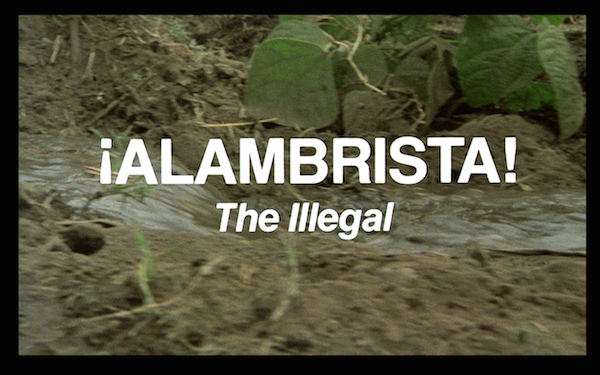
Aaron West starts out this new, shorter series with a solo cast about The Criterion Collection’s release of Robert M. Young’s Alambrista. In this short episode, he explores the low budget “guerrilla” filmmaking, the neo-realism, nature of the immigrant, and evaluates the film and Criterion release.
Or listen here to it here:
For other apps or mobile devices, try this link.
Or direct download/listen to the MP3.
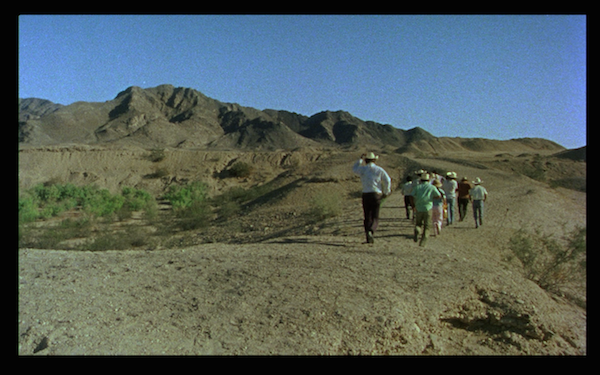
Crossing the border.
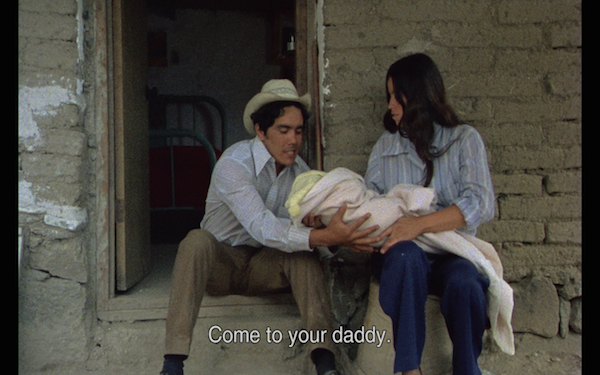
Family in Mexico.
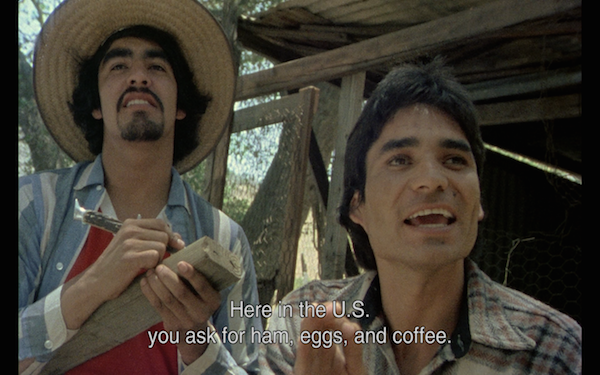
“American” lessons.
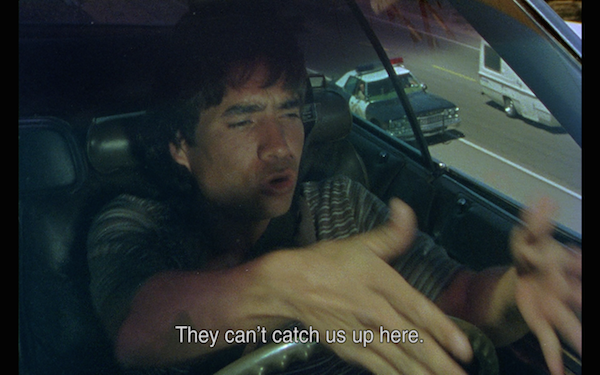
Joe and Roberto, above the law.
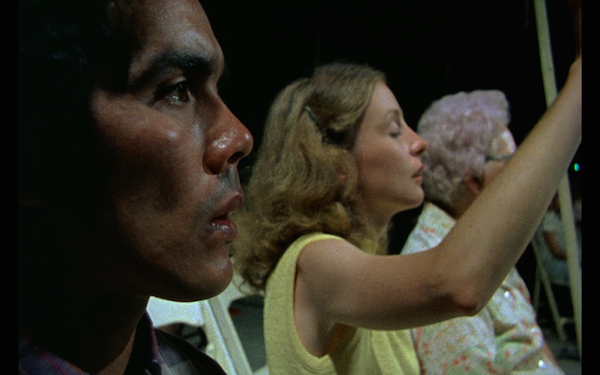
Roberto hearing the preacher.

Roberto
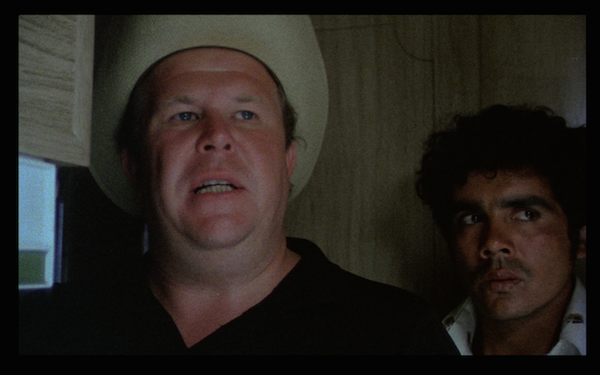
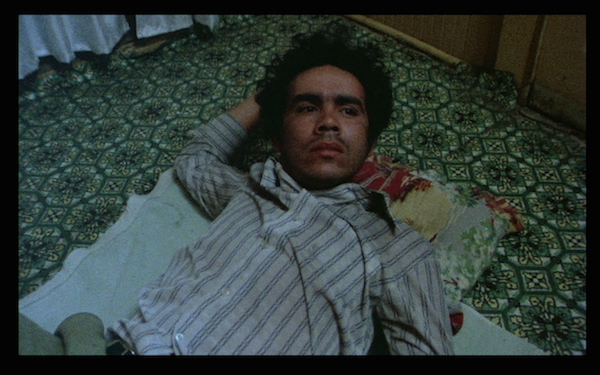
Roberto at waitress’ house.
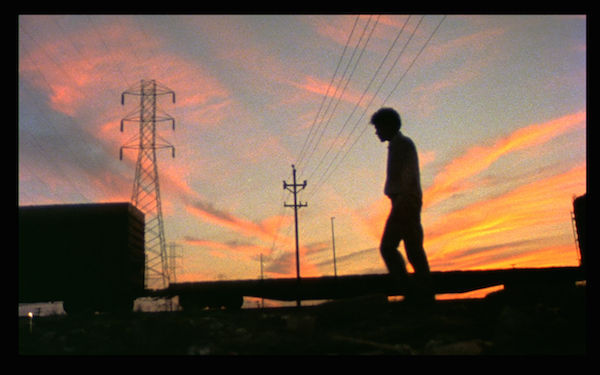
Roberto at sunset
Where to Find Us:
Mark Hurne: Twitter | Letterboxd
Aaron West: Twitter | Blog | Letterboxd
Criterion Close-Up: Facebook | Twitter | Email
Introducing Criterion Short Cuts
Why have one podcast when you can have two? We are announcing a second cast, Criterion Short Cuts. Okay, in reality it is still the same cast and will be on the same feed as Criterion Close-Up, which you can subscribe to at the links below. We will have a different numbering system, and these will be Short Cuts, literally. We will still watch the films, take notes, flesh out the themes and deconstruct the content, while also evaluating it as a piece of art and a Criterion release. The only difference with Short Cuts is we expect to do this within 20-30 minutes, focusing on one film at a time without a sub-topic. As we’ve found with our main cast, we will inevitably get caught up in a good conversation and go longer on occasion, but we will do our best to be concise.
Eventually we may have a separate page for Short Cuts, but for now we’ll list them over at the Podcast page, one-by-one as we record them.
Conveniently, (or maybe inconveniently) we had our first major technical glitch with the House & The Shining episode. I feel the episode still stands on its own, and I really appreciate Keith Silva and the conversation about The Shining. This new series might be a good excuse to have a “do over.” We’re going to try to lure Keith back with beer and other delights, and hopefully we can recapture that lightning. Short Cuts is a way to do that.
We will have guests. The constant will be me, Aaron, although occasionally Mark will join when he can. I already have guests lined up for other episodes. Fortunately our cast has had no shortage of people wanting to guest. There will be situations where I’ll have a title lined up and nobody is prepared, and on that occasion I will be prepared to go forward with a solo cast. That will be weird, but I think it is possible. I’m planning to do so for Alambrista!, which may or may not be the first episode.
We also are planning on doing Night and the City, A Master Builder, Videodrome, Monterey Pop maybe Godard’s Weekend, and plenty of other titles. For those who follow this blog and see my yearly lists, you may have noticed that I like to prepare for those lists by watching the respective Criterion releases. That will guide some of this project, as will trying to keep caught up on new releases. It also gives us flexibility to do an easy cast without having to do a big main episode.
More content is better, right? I am enthused about this new sub-project and I think it will be a worthy supplement to our main cast, which I feel is still improving as we go — provided we can keep the Gremlins away.
CCU 10: House/Hausu (1977) & The Shining

Aaron, Mark and Keith Silva talk about the Japanese cult, off-the-wall horror film House. This is a film that has to be seen and can hardly be described. We follow it up with a discussion of Stanley Kubrick’s The Shining, which we feel is the benchmark when it comes to haunted house films. Unfortunately we had some technical issues and lost a good bit of the House segment, but plan to re-record soon.
Or listen here to it here:
For other apps or mobile devices, try this link.
Or direct download/listen to the MP3.
Show notes:
Special Guest: Keith Silva from Interested in Sophisticated Fun and Psycho Drive-In. You can find him on Twitter.
Outline:
0:00 – Message from Aaron about Technical Difficulties
1:40 – Intro, Welcome to Keith
15:00 – Housekeeping, Show Announcements including new splinter show.
19:20 – News
35:05 – House (abbreviated, tech issues)
44:35 – The Shining
Intro
Shout out to Criterion Confessions.
Thanks to David for Moonrise Kingdom episode!
Tweet about Wes Anderson’s new project from Peter Putzel.
Housekeeping
Updated Facebook Page. Please like it!
New Mini-Episodes coming soon. Criterion Short Cuts!
News
Chantal Akerman Tributes:
Flixwise Episode about Jeanne Dielman.
Whit Stillman tweet about Barcelona.
Costco:
No more replacement title cases on the Criterion site.
House
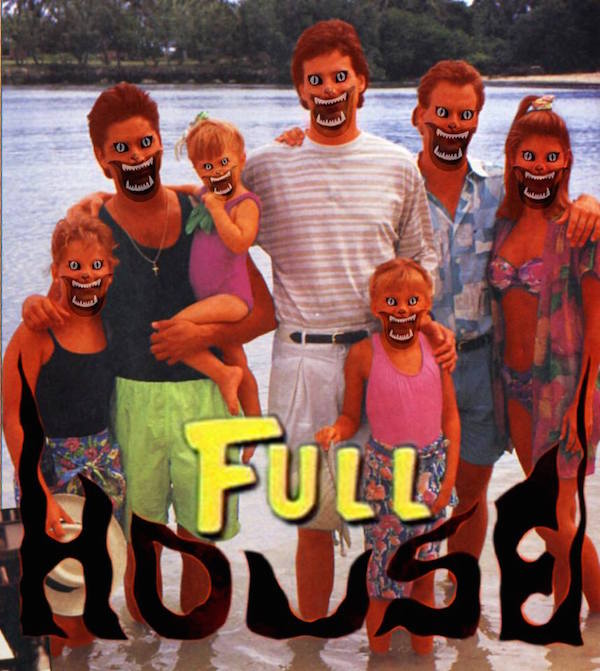
Full Hausu courtesy of Criterion
The Shining
Where to Find Us:
Mark Hurne: Twitter | Letterboxd
Aaron West: Twitter | Blog | Letterboxd
Criterion Close-Up: Facebook | Twitter | Email
Episode 9: Moonrise Kingdom & The Wes Anderson Debate

Aaron, Mark and David Blakeslee talk about Moonrise Kingdom, which ties closely to personal events in David’s life that he was generous to share with us. We also discuss the dichotomy of Wes Anderson. Why is he such a divisive director? What is it about him that attracts and repels people with such passion?
Or listen here to it here:
For other apps or mobile devices, try this link.
Or direct download/listen to the MP3.
Show notes:
Special Guest: David Blakeslee from Criterion Reflections, CriterionCast, and The Eclipse Viewer. You can find him on Twitter.
Outline:
0:00 – Intro, Welcome, Shout-Outs
17:50 – News
27:30 – Moonrise Kingdom
1:26:15 – The Wes Anderson Debate
Intro
David and Mark on Pierrot le fou
David and Mark on Red Beard
David and Aaron on Violence at Noon
David’s infamous Criterion shelf image that went viral.
News
Barnes and Noble Sale – potential confirmation
Welcome to Criterion’s Online Cinematheque
Moonrise Kingdom
David’s Moonrise Kingdom video for Brandon and Katie.

David’s Moonrise KIngdom swag.
Where to Find Us:
Mark Hurne: Twitter | Letterboxd
Aaron West: Twitter | Blog | Letterboxd
Criterion Close-Up: Twitter | Email
State of Siege, 1972, Costa-Gavras

Would it be safe to call Costa-Gavras an advocate filmmaker? That’s a tough question, which I am not sure whether I or even he could answer. He was unquestionably a political filmmaker, and he dabbled in subjects that were often controversial. If he was not angering the communists from The Confession (my review), he was angering the CIA by taking unveiling the blemishes of the Cold War. He certainly had his political views, and those did take shape in his films. We learn from the supplements of this disc specifically where he found the motivation to make this film, and it was not based on a positive impression of Americans.
The subject of State of Siege is the activities of CIA-like organizations that were being undertaken in various South American territories. The plot is about an American, Philip Michael Santore (Yves Montand) who worked for USAID as a “Communications Expert.” I used quotes for his job title because we’re not sure exactly what he did during his various travels. Was he a benefactor or was he a terrorist? That answer is not provided, although it is strongly hinted that he was at least aware of the latter activities, if not a direct participant.
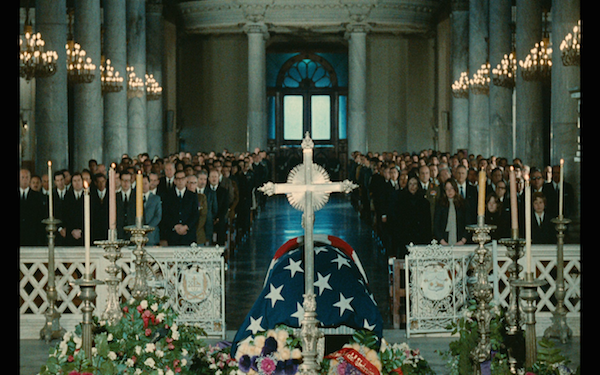
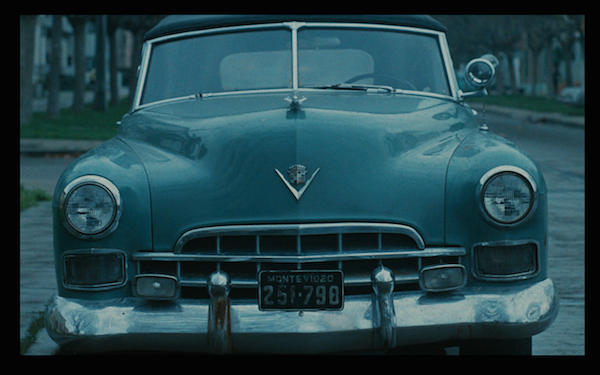
I am about to reveal a major plot point, but not to worry. It is not a spoiler, at least unless you consider the beginning of Sunset Blvd a spoiler. Our operative friend, Mr. Santore dies at the beginning of the film in Montevideo, Uruguay. The film begins with a shot of a shiny Cadillac followed by a series of roadblocks and an exhaustive search by the authorities. We do not know what they are searching for initially, but minutes later when they discover a carcass in a car, we know. Soon after the discovery, we see a highly ceremonial funeral, with an American flag draped over the casket. We get the impression that something is awry because the archbishop and academics are not present, yet the funeral is well attended, implying that this was the passing of an important, political person.

Is Mr. Santore a good person? That’s another tough question. He comes off sympathetically, some of which has to do with the ever-likeable performance by Yves Montand, who was also a popular political figure at the time. As the film flashes back to the kidnapping and interrogations, we wonder which is the truly righteous, Santore or his kidnappers? He is accused of, at the very least, knowing of torture, and at worst, guilty of perpetrating war crimes. Yet he is part of a system. If he was guilty, was he simply doing his job? That does not mean that he deserves to be kidnapped and killed. His captors also are sympathetic. We learn through Santore’s observations that they do not intend or want to kill him. They are merely fighting a battle with limited weapons. We are not spoon-fed who to like or root for. One could make an argument that the kidnappers and kidnapped are both right to some respect, and simply pawns in a chess game between people far more powerful. The real evil could be the state that infringes on the rights of the people, or those who choose to not compromise and therefore through inaction lead to the creation of a martyr.
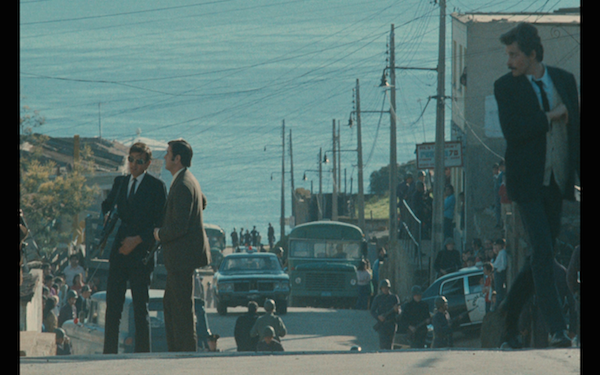
What is clear is that Costa-Gavras was aware of the goings on in Latin America and elsewhere. With the benefit of hindsight, even the citizens of the USA can agree that this was a dark period of history and we do not condone the actions of the government. Even then, the average Joe was not aware of what operatives were doing overseas, either to protect American commercial interest, or as a product of Cold War rhetoric. Costa-Gavras is unquestionably critical of these puppeteers, but he is also critical of those who infringe on the liberties of others. By using some excellent location shots, he shows how the police force is both ruthless and inept. In some instance they are bumbling, such as in a humorous scene where the police chase after radios that are broadcasting propaganda, only to find the sound coming from a different radio. This is one of the few moments of levity, and it comes at the expense of the “Keystone” cops.
State of Siege is sparse on action and aside from these large location shots, often uses minimalist filmmaking methods. Like with The Confession, the real drama comes from the conflict between the revolutionaries and their captor. There is no suspense as to what the outcome of this encounter will be, but what keeps us enthralled is through the character examination, and whether he is being honest about his innocence or whether he is a liar. The flashbacks and the pinpoint questioning lets us know that the captors know plenty more than they let on, but are they right about Santore or is he yet another innocent casualty in the continual Cold War? We aren’t told, and this is yet another reason why Costa-Gavras was considered the master of the political thriller. He makes scathing political statements, but he creates complicated characters and blurs the lines between good and evil.

State of Siege is not a perfect film. I had some quibbles. One that jumped out at me is that they used similar airport greeting scenes as a way of showing how Santore traveled the world, but the only difference between many of these stops is the country name on the staircase that rolls up to the plane. It is obvious that the same location was used, probably over a short period of time, and they simple changed the angle and the sign. There are other minor issues, but there is more here to like than dislike. Even if it is not the perfect film, it seems to capture the spirit of CIA activities in Latin America and elsewhere from the perspective of the people who experienced it. This makes it an important film, even if not a great one.
Film Rating: 7.0
Supplements
Costa-Gavras and Peter Cowie: 2015 conversation.
The idea originated with an American advisor that CG was aware of in Greece. This was a tough guy, probably the stereotypical CIA spy. He was the real deal and was killed in his car later.
Based on Dan A. Mitrione, who was part of AID, which was a sister or daughter program to CIA. Mostly the story of the subject was the same, but the name was changed.
You can tell he is a true student of politics and governments as he cites various countries and how they came undone by their violent nature. He is referring more to Nazi Germany or Stalinist Russia, but he is perhaps making a gesture towards America’s checkered past and present.
NBC News Broadcasts on Dan A. Mitrione:
This seven-minute montage of news footage shows the real story, but from the American perspective. The anchor talks about the kidnapping, the search, the ultimatum, and most of what we see in the film. Even though it is clearly biased towards Americans and wanting the citizen freed, it also states that the Tupamaros were seen as Robin Hoods that were not violent, but that impression was changing with this incident. Costa-Gavras seems to capture that as well, that they do not intend to be violent, but only resort to it out of necessity.
The supplements are slim and this fits better as a supplement to The Confession. Even though it isn’t the most stacked disc, it is well worth getting for the film and the transfer.
Criterion Rating: 7.5
Episode 8: Hiroshima Mon Amour & Romance Across Borders

Aaron, Mark and Martin go in-depth as they explore romance in Alain Resnais’ debut film, Hiroshima Mon Amour. We look at how the sensuality and romance speaks to the tragic events and horrors of the atomic age, while they explore each other’s cultures through a brief relationship.
Or listen here to it here:
For other apps or mobile devices, try this link.
Or direct download/listen to the MP3.
Show notes:
Special Guest: Martin Kessler from Flixwise. You can find him on IMDB, Twitter and Letterboxd.
Outline:
0:00 – Intro, Shout-Outs, Letterboxd Discussion.
9:55 – News
20:20 – Hiroshima Mon Amour Discussion
1:11:05 – Romance Across Borders
Intro:
Letterboxd lists:
The Criterion Collection (thanks Arik!)
The Eclipse Series (thanks Arik!)
1001 Movies to See Before You Die
AFI 100 Movies, 10th Anniversary
Oxford History of World Cinema
News:
Rome: Open City Coming to iTunes.
Paul Thomas Anderson’s newest will debut on @mubi after its New York Film Festival premiere.
Carlotta Films Box Set for Rivette’s OUT1.
The Sonic Landscapes of The Man Who Fell to Earth.
Hiroshima Mon Amour:
Hiroshima Mon Amour
Where to Find Us:
Mark Hurne: Twitter | Letterboxd
Aaron West: Twitter | Blog | Letterboxd
Criterion Close-Up: Twitter | Email


 Criterion Close-Up