Author Archives: aaronwest
Top 20 of 1987

The series continues. As we head toward the late-eighties, there seems to be a lull. There are some international titles that made the cut, and a lot of the American titles range from somewhat artsy (Raising Arizona, to mainstream Princess Bride, to guilty pleasure (Spaceballs). Okay, maybe two guilty pleasures with Eddie Murphy Raw, but I still say that is one of the best standup comedy films ever.
There are only two that I would call American indies, Matewan and Housekeeping. Okay, three if you count Les Blank’s Gap-Teethed Women, but he almost defies categorization. There will be more of those to come as the indie revolution was soon underway. As I scoured my list, I found a lot of John Hughes wannabe films at the bottom of the pile. That cycle was beginning to run its course and American cinema was in a transitional period.
Even though I consider this to be a weaker year than most, the top five can stand next to any year. It is no surprise that none of them are American films. There are a handful of international films that I have yet to see, and really want to. Pialat’s Under the Sun of Satan is supposed to get a release sometime soon, but not in time for this poll. I had one Rohmer film on the poll, but I have a feeling it would be two if I had seen Four Adventures of Reinette and Mirabelle. Either way, I think it is safe to say that 1987 was a decent year for international film.
1. Au Revoir Les Enfants
2. The Last Emperor
3. Withnail & I
4. Where is My Friend’s Home?
5. Wings of Desire
6. Eddie Murphy Raw
7. The Man Who Planted Trees
8. Boyfriends and Girlfriends
9. Princess Bride
10. Spaceballs
11. Broadcast News
12. Matewan
13. Raising Arizona
14. Red Sorghum
15. Less than Zero
16. Wall Street
17. Full Metal Jacket
18. Gap-Toothed Women
19. Radio Days
20. Housekeeping
My last cuts were many this year. It was tough to find a film for the last spot. I considered all of these:
Angel Heart
The Believers
Maurice
House of Games
The Untouchables
Planes, Trains & Automobiles
Cobra Verde
The Dead
Dear America
Maybe the year wasn’t so bad after all.

Episode 7: December Releases & The Cult of Collecting
Or listen here to it here:
For other apps or mobile devices, try this link.
Or direct download/listen to the MP3.
Aaron, Mark and Keith give a tribute to William Becker, discuss the December releases, and get in-depth as to the Collection aspect of the Criterion Collection. We look at collecting in general, whether it is beer cans, baseball cards, or laser disc, and we discuss how the Collection curates a library that is worth collecting.
Show notes:
Special Guest: Keith Enright. He has a blog called The Criterion Completion that focuses on collection and history of The Criterion Collection You can follow him on Twitter
Outline:
0:00 – Welcome, Thanks, Housekeeping
12:30 – News
14:00 – William Becker Tribute
23:05 – News Continued
29:10 – December Releases
37:55 – The Cult of Criterion Collecting
NEWS
DVD Beaver
Blu-Ray.com Criterion page
Crowd Source Studios – Jonathan Turell Interview
November Releases




The Cult of Collecting


Where to Find Us:
Mark Hurne: Twitter | Letterboxd
Aaron West: Twitter | Blog | Letterboxd
Criterion Close-Up: Twitter | Email
My Beautiful Laundrette, 1985, Stephen Frears

There have been numerous post-colonial portraits of the United Kingdom, most of which deal with the new class system and how they adapt to this transformed society. Generally when portrayed from the lower class perspective, the story is about having to deal with past and continued oppression, and that they try to subsist when others are born in a more privileged position. In My Beautiful Laundrette, this type of story is turned on its head. The lower class immigrants have come so far since colonialism that they have not only assimilated into this society, but they have essentially become a version of this new, upper class. Rather than be exploited, they find the opportunity to be the exploiter.
Another major factor was Thatcherism (Margaret Thatcher for those not aware). Thatcher ‘s policies benefited and encouraged the upper classes, while neglecting the lower classes. Frears was clearly not a Thatcher fan, and he used minorities obtaining a privileged position as a way of being critical. He stopped short of being racist. In fact, I think the opposite was true, and he presented a balanced and perhaps realistic perspective of the situation. Under Thatcherism, minorities were able to get the upper hand on lower class whites. However, they were still not entrenched as the upper classes. One of the less scrupulous rich minorities at one point says, “we are nothing in England without money.” Through Thatcher’s capitalist policies, it is greed that defines position.
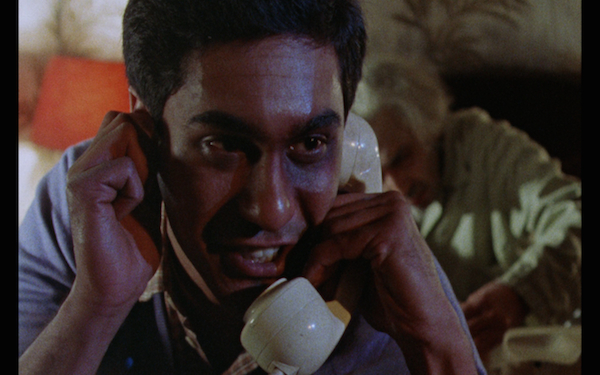
Omar (Gordon Warnecke) is the protagonist, and he sees both sides. He lives both in the white lower-class world through his interactions with Johnny (Daniel Day-Lewis) and with the privileged minority status of his rich uncles. He is also exposed to a staunchly anti-Thatcher father, whose political views resemble socialism more than any other. All of these forces tug at Omar, which makes him a captivating and well-developed main character.

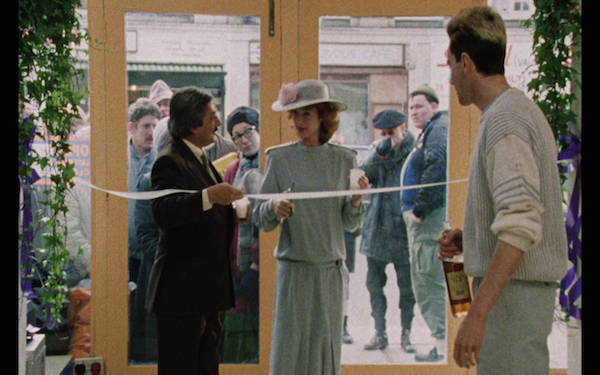
Omar finds a Laundromat as a means to his success, and like his rich uncles, he embraces the thirst for money through a strong work ethic and a relentless desire to succeed. Once given the opportunity to manage the Laundromat, he pours everything into this project. What complicates the class-conflict dynamic is that he recruits Johnny as an employee. Johnny is a reformed skinhead and is decidedly anti-Thatcher. He is not racist, but his former “blokes” are. It is telling that the original Laundromat name was “Churchill’s Laundrette,” which Omar and his uncles later change.
One of the rich uncles says that, under Thatcherism, “in this country you can get anything you want. It is all spread out and available. That is why I believe in England. But you need to know how to squeeze the tits of the system.” This is a strange sort of loyalty to a country. It speaks little to their nationalistic pride. To the contrary, they still maintain some of their ethnic identity. It is more a statement that they will use the system to enhance their position, and that includes exploiting the lower class whites like Johnny. They are even proud of that exploitation. Even Omar succumbs to that sensation at one point, finding himself in a socially juxtaposed than what existed 30-40 years prior, and feeling a form of euphoria. It is intoxicating, and that is exactly the type of lure that his father warns against.

Omar and Johnny have a homosexual tryst, which was controversial back in 1985, although is more accepted nowadays. The fact that the two would pair says something about this dynamic. We have a strong main character in Omar who has been raised under two opposing ideologies, and Johnny, who relates more to the leftist of those influences and literally hates the right-wing element. Out of friendship and perhaps his desire for Omar, he does a good job helping develop the Laundromat, and in turn becomes an exploited worker. This conflict would come back into play to great effect in later, climactic scenes.
Writing this today, Daniel Day-Lewis is one of the top global movie stars, and many would argue that he is the best actor of his generation. He was stunning in Laundrette. One thing to keep in mind while watching his performance is that the person is far from lower class, yet he embodies the character with chameleonesque ability, a trait that would seem natural to him in the years and decades to come. The performances are all solid, especially Gordon Warnecke as Omar. Day-Lewis still manages to steal every scene he is in, and it is no surprise that this role would be a breakthrough and lead to plenty of success, although with his talent. It would have happened anyway. Johnny also represents an opposed ideology from Omar. Even though he does fine with the Laundromat, work ethic is not a means to success. He has different ideas about how to achieve wealth, which is crystal clear when he says, “This city is chalk full of money. When I used to want money, I’d steal it.”

Mirror shot.
This was my second viewing of the film, and the first in many years. I’ve seen other Frears’ projects and respect him as a director, although I would not go so far as to call him an auteur. I was pleasantly surprised by some of the shot selection and direction in this film. He makes good use of camera angles and even has a lot of mirror shots, all of which are important because many of the characters have multi-faceted experiences and perspectives, and I did not even touch on an adulterous Pakistani-English adulterous relationship that speaks more about the relationship between the two cultures as anything else in this film. I was also surprised to see such a rich and textured perspective of class dynamics, which is easier to pick up on in hindsight than it was in the 1980s. Not only is My Beautiful Laundrette a superb film, but it is a document of its time.
Film Rating: 8/10
Supplements
Stephen Frears: 2015 conversation with producer Colin MacCabe
He was a middle-aged, working TV director while Thatcher was in power. Lindsay Anderson, Jack Clayton, Ken Loach, inspired the change in UK film (we discussed some of this here), and he worked at the BBC in the 1970s.
Thatcher changed the world for everyone, including for them in TV production. Channel 4 came around, which was mandated by Thatcher. Laundrette was intended to be a TV movie. Hanif Kureishi showed up at his office and explained the script.
He mentions the names of the actors that he considered, all of which are famous now, such as Branaugh, Oldman, etc. Nobody thought Day-Lewis would become a star, but it really happened by him playing this working class character and following it with A Room With a View. Of course Frears says he was very good.
He denies auterism. “How can I be an auteur if making a film about a culture I don’t understand?”
Hanif Kureishi: 2015 interview.
The story is about a boy and a father spending too much time with each other, which reflects Kureishi’s life. This was a traditional story with an uncle leading a youngster out into the world, and he becomes sexualized by this experience.
Kureishi wanted to show the abuses of racism, which he had experienced before, but he also wanted to find his own voice. He called A Passage to India and the Merchant-Ivory films as boring, while Thatcher was destroying the working class.
He was influenced by Derek Jarman, Peter Greenaway, and also Paris, Texas, especially the mirror.
Tim Bevan and Sarah Radclyffe: First feature production of theirs and they founded Working Title. 2015 interviews.
This came at an interesting point in cinema. Channel 4 had started, so independent film began. Music videos were getting popular, which got young people into the industry. Thatcherism also got rid of the unions.
They started as music video company, and to get to know directors, they asked these directors to do music videos.
They talk about how Hans Zimmer did good work and was recognized in Hollywood from this and another movie they did, A World Apart and was hired to do Rain Main, which basically launched his Hollywood career.
They went from film to film, and were focused on that more than running a company. They were basically unorganized and insolvent. They were not paying any bills, just flying by the seat of their pants. They found funding and that established the company as it is today.
Oliver Stapleton: 2015 Criterion interview.
This was cinematographer Stapleton’s first collaboration with Frears and they would go on to make seven more films.
His shooting style at the time was very early eighties, wide lenses, vibrant colors, and very much like music videos. That was in frame of mind when starting his career. He had worked with Julien Temple as well.
When he sees it today, he sees it as very stylized, more than what he did ten years later. He no longer uses the type of extravagant colors that he did then, for example. He was following his instincts, which Stephen was doing as well. They didn’t storyboard, but let the action dictate wheat they would do.
Criterion Rating: 8.5

Episode 6: 12 Angry Men (1957) and Single Location Films

Or listen here to it here:
For other apps or mobile devices, try this link.
Or direct download/listen to the MP3.
Aaron, Mark and Doug explore innocent, guilt, and civic duty by discussing Sidney Lumet’s 12 Angry Men. We also discuss other films that are shot primarily at one location, why these films are often good, and what ingredients are required for a quality film in a single location.
Show Outline:
0:00 – Intro, Welcome, Thanks.
22:00 – Preview of December Releases
31:50 – 12 Angry Men Discussion
1:15:25 – Single Shot Discussion
Show notes:
Special Guest: Doug from Good Times, Great Movies. Twitter | iTunes.
NEWS
Monkees’ Complete TV Series, ‘Head’ Coming to Blu-ray
DVD Beaver Dressed to Kill review.
Toronto International Film Festival
Steve Jobs
Michael Fassbender article.
12 ANGRY MEN
Where to Find Us:
Mark Hurne: Twitter | Letterboxd
Aaron West: Twitter | Blog | Letterboxd
Criterion Close-Up: Twitter | Email
A Star is Born, William A. Wellman, 1937
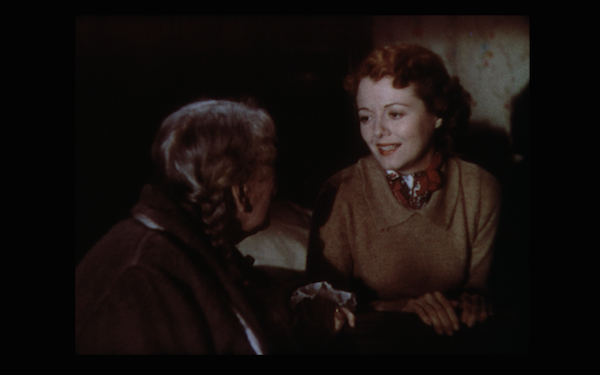
I am writing this essay about the 1937 version of A Star is Born for Now Voyaging’s William Wellman blogathon. This is actually the first non-Criterion review I’ve written for the site, but it is a great subject and I want to support her event.

Even today, countless people dream of becoming movie stars in the mythical land of Hollywood. However, stardom today is not the same as it was during the 1930s when the star system was at its height. Stars such as Garbo were goddesses. Virtually everyone went to the movie palaces to see their images fill the screen. They were larger than life. During one of the worst economic periods, people dreamed of escaping their meager lives and being both rich and adored.
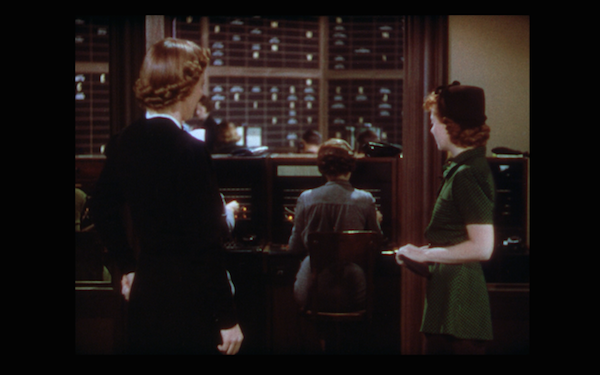
Operators turning down aspiring stars.
The Hollywood myth became like a Horatio Alger novel — rags to riches. Certainly some people did get a lucky break and achieved stardom, but they were few and far between. In the film, as Esther Blodgett (Janet Gaynor) tries to get a job as an extra at a studio, she is shown a group of operators whose only job was turning down those looking for work. In the real world, Blodgett wouldn’t even get in the door. She was told that the chances of becoming a star was 100,000 to one. I would wager that even then, it was closer to a million to one. Even if the protagonist is a budding star, the film shatters the illusion, and subsequently the glamour of becoming a star. It is unlikely, and if it happens, it is not all that it is cracked up to be.

A couple weeks ago in our podcast on Truffaut’s Day for Night, we explored the concept of Hollywood turning the camera on itself. This practice is called ‘self reflexive’ by academics, and A Star is Born is one of the early examples (also What Price Hollywood? but that’s another story.) Often the portrayals of Hollywood are not altogether positive, and that is clearly the case with Wellman’s film. Blodgett, or as she would be referred to in Hollywood, Vicki Lester, would find that the life of a star is far from perfect.

Meeting Norman Maine
She gets her break out of luck, and that speaks to Hollywood then and now. Just showing up with a suitcase is not enough to get in front of the camera. You often need to have a connection. Blodgett finds her connection with someone in the industry, and through him, she eventually meets the star actor, Norman Maine (Fredric March). Maine takes to the youngster, and pulls a few strings to get her work in the studio. She becomes Vicki Lester, and you could say that meeting is the titular instance where the star was born. She had the capability and the look. She just needed the opportunity.
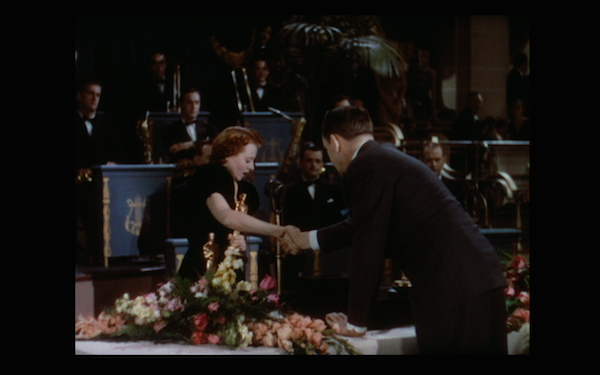
Lester and Maine at the Oscars.
Lester and Maine develop a relationship, which leads to marriage. They star in a film together, and where Lester is terrific and fawned upon, Maine is disparaged. Struggling with alcohol and his own ego, despite his devotion to Lester as her star is rising, Maine’s star is falling. He tries to be a good husband, but at the core, he resents the fact that his wife is gaining acclaim while his career is going down the tubes. He crashes the Oscars when Lester is receiving an award, decrying Hollywood for leaving him behind, and bashing himself for giving what he dubs a Worst Acting award. His tale is tragic and cautionary. The fact that Lester is dedicated and loving to him speaks to her character. While she is becoming a star in the film, she also endears herself to the audience by showing consideration for those around her, especially her husband.
Major spoilers follow this image.
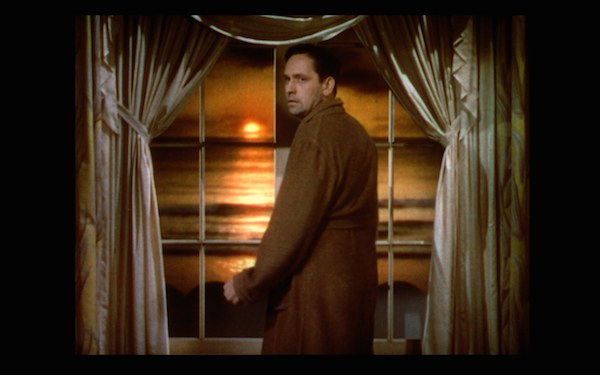
Seeing Maine’s struggles, Lester decides to sacrifice her career. The love and devotion she feels towards her husband is worth plenty more than acclaim and adulation. Maine overhears her when she decides to sacrifice herself for him, and he instead makes a sacrifice for her. Here is where I find the film fascinating. Back in the 1930s, Hollywood was especially in the happy ending business. This ending has a tragedy, although I wouldn’t entirely call it a sad ending. It is more of a bittersweet ending, because Maine recognized that he was holding Lester back, and his sacrifice for her was heroic in a strange sense (even if cowardly).
A Star is Born was not only a well-produced film, but it was also brave. It turned the cameras inward and exposed Hollywood, warts and all, and did not turn away from a challenging ending. There is a reason that this story has been re-made twice, including the 1954 George Cukor version with Judy Garland and James Mason, which was ultimately more successful and probably remembered better today. Even though I really like the performances in Cukor’s performance, and prefer Mason to March, the original is my favorite. This is mostly a credit to the work of people like Wellman.
Yi Yi, 2000, Edward Yang

This was originally posted at Wonders in the Dark as part of their Adolescence and Childhood Countdown.
The term “family epic” is not often used to describe a film, not even an art film (at least not post-Ozu). There are plenty of lengthy films about families, but few that are grandiose to share a descriptor with the likes of Lawrence of Arabia. Yi Yi is indeed a family epic film. This is not just because it has a three-hour running time, but rather because it successfully captures the scale of a multi-generation family. Instead of telling a lengthy narrative through the generations, it reveals enough about the characters in the present, by exploring them through a single, binding experience, that it is just as effective.
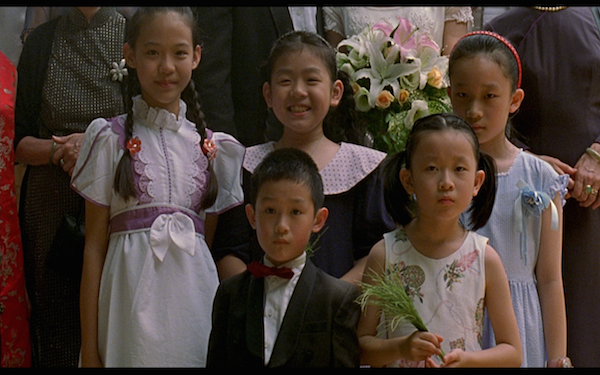
I chose Yi Yi as my top film for the Wonders of the Dark Childhood and Adolescence poll. This choice may seem peculiar because the film features so many characters from the family, most of whom are adults, that the children are not given the most screen time. In fact, if you were to pick a protagonist, it would probably be NJ, the father figure. However, the children’s experiences mirror and elucidate the actions of the adults, and they flesh out the characters. The children, through their innocence and naivety, also interpreted the events with a perspective that the adults are incapable of, and sometimes their silly inquiries are prescient.
Yang-Yang asks his father, “Daddy, can we only know half the truth? I can only see what’s in front and not what’s behind.” This may seem like a simple, naive question, but it speaks to how humans tend to only look forwards and not backwards. The adults in the film are reticent to look backward, yet the children experience things that the adults have also experienced. In other words that Yang-Yang might understand, if the adults could see what is in front of the children, they might see what is behind their own view.

NJ is completely blind to the fact that his daughter, Ting-Ting, is struggling through her own relationship problems, trying to win the affections of someone she has a crush on. The outcome of that relationship (which I will not spoil in this review) is similar to what happened with NJ and a girl that he dated when he was much younger. We see through Ting-Ting what NJ’s childhood girlfriend felt, and when she enters his life again later, NJ is again blinded by the past.
Yang-Yang takes his idea of being half blind further. He takes photographs of the back of people’s heads, thinking that he is helping them by showing them the whole truth. When he encounters one lady that he can tell is sad, he stares at her. When questioned, he says, “I wanted to know why she’s unhappy. I couldn’t see from behind.” To the viewer, Yang-Yang’s curiosity is a part of his cuteness. He is an adorable little boy, and this is one of those funny fixations that children can get. It is humorous to see what length children will go to understand the world they are growing into.
While it is easy for Yang-Yang to be curious, it is difficult for the adults to look back and come to terms with mistakes they have made, much less try to rectify them. One character takes a journey to try to make up for his actions decades ago, the same issues that his daughter is experiencing at that very moment, but this is an exercise in futility. This is yet another example of how he can only see half the truth, and if he goes trying to find the real truth, it is not something he can change or undo. It truly is behind him. The only thing he can change is what he can see.
Edward Yang was quite the filmmaker, and he made a deep and beautiful film. There are many other characters, motifs, and elements that I could explore – such as the nature of business, luck, integrity – but at the heart of it all is family. Yang takes these experiences, personality quirks, and cuts them together so that we can see the correlations. While there are similarities within the families, everyone is different and must make their own decisions. The question is whether they will learn from or regret those decisions.

Yang does a good job at taking his time and pausing when needed. Some of my favorite scenes are when no action takes place, but instead there is quiet contemplation, usually with some music and gorgeous scenery. While there are some somber moments, he also shows the good times. Life is full of highs and lows, and we meet people we are compatible with, whether in a romantic relationship or business friendships, but things do not always turn out the way we want.
Yi Yi, simply put, is about the cycle of life. We are curious when young, but will make mistakes as we get older. Hopefully we will learn to live with these mistakes, have some good times along the way, and achieve a sense of peace. Yi Yi is life.
Film Rating: 10/10
Supplements
Commentary: Edward Yang and Tony Rayns in conversation.
Wu, who plays NJ, was a screenwriter that worked with Yang and had not acted, but Yang recognized his talent as an actor. He is a very celebrated and busy writer.
They used the coma was a device to get into each character, but it is scientifically proven that speaking to someone in a coma does achieve some results although the grandmother had one of the deepest and most dangerous comas.
There were a lot of informational tidbits about modern society. For example, they used a subway system news item to date the film; trains were used for nostalgic reasons; the government was well known to be involved with criminals and it was intentional to come out in the film, and the American presence is very obvious in Taiwan. I didn’t write down as many tidbits while watching because it is long, and because I got carried away in the film and the commentary. It was an enjoyable conversation with Rayns asking Yang questions about the film.
Tony Rayns: He talks about the history of Taiwanese film. Started in 1950s because it had been Japanese colony. The nationalist government settled there and used film as propaganda tool. It was used by Chinese to inject their cultural identity.
Even though there were young filmmakers, there was nothing like a New Wave in Taiwan. Hou Hsiao-hsien and Edward Yang collaborated with Taipai Story, and the pair generally led the film movement. Much of their work was intentionally higher quality in opposition of some of the poorly constructed older genre films.
Yang is more intellectual and has complicated plots. His many characters add up to a broader picture. Surprisingly, Yi Yi has not been screened in Taiwan. Most of these minds split up for whatever reason and film business in Taiwan is “effectively dead.” They cannot compete with American films.
Criterion Rating: 8/10
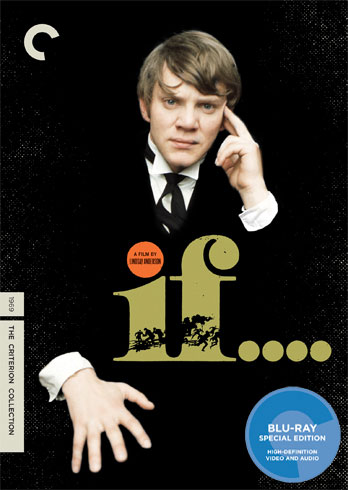
Episode 5: If …. & Angry Young Men
Or listen here to it here:
For other apps or mobile devices, try this link.
Or direct download/listen to the MP3.
SHOW NOTES
OUTLINE:
0:00 – Introduction, Corrections, News.
25:05 – If…. (Lindsay Anderson, 1968)
1:04:33 – Angry Young Men
THANK YOU
CORRECTION
NEWS
The Bergman film that influenced Wes Craven
IFC Films Acquires Wim Wenders’ 3D Drama ‘Every Thing Will Be Fine’
Blu-Ray.com Dressed to Kill review
IF ….
Where to find us:
Mark Hurne: Twitter
Aaron West: Twitter | Blog
Criterion Close-Up: Twitter | Email
This and That, Part One

Look Back in Anger, 1959, Tony Richardson
Usually this would be a day of recording and editing a podcast, but thanks to having a holiday and a little free time on my hands, I have time to talk about some other stuff. It is rare that I post a “miscellaneous” topic, but why not? This is the first part of a series that I’ll post whenever I feel like it, or rather, when I have a good amount of stuff to talk about.
This week has been one spent immersed in the world of the British New Wave, or the “Angry Young Men” period, as it is often called. This is for our upcoming Podcast episode about Lindsay Anderson’s If…., which is sort of a postscript for that movement. This is a blind spot for me, as I had not watched or studied many of these films. That’s one great thing about this Criterion project and the Podcast, that I get to learn about interesting cultural movements. More on that once we record and release the podcast.

The best news of the week has nothing to do with movies, podcasts, or really anything about what I talk about here. I bought a car. I casually asked someone whether I should mention it on my blog, and they responded that there’s no point in having a blog if you don’t talk about a “sweet ride” like the one I just bought.
It is a Lexus ES300h. Yes, it is a Lexus and a hybrid. This is something I never would have expected to own. Even two weeks ago, I never would have imagined being a Lexus owner. It is a long story of how I got here, but basically I had some unforeseen mechanical problems with the car I owned, which are still not fully identified and corrected. The Lexus dealership was glad to take some of that risk, give me a reasonable offer on the car, and give me an opportunity to upgrade it. So I took the plunge.
The best part was seeing this on my dash:

Those who have followed me here and on Twitter know that I buy a lot of physical media. My wife playfully calls them “rocks,” based on Hank’s deliveries on Breaking Bad. Along with the Criterion Collection, I buy a lot of other labels and Region B titles.
Here is my latest delivery from the Masters of Cinema sale, but there have been many more that I haven’t blogged or tweeted about. One day I’ll share the entire collection.

With the new car, the “rocks” will have to slow down. I’ve canceled a number of pre-orders, but I’ll still keep an eye out for sales and indulge when the price is right. And I will always buy the Criterions. Those are a priority.

The #CriterionBlogathon planning is still in progress. We now have a whopping 154 entries, most of which are already posted at HQ. The difficult part is organizing those into a 6-day posting schedule. So far we have a rudimentary schedule that looks like this:
11/16: English part one
11/17: European (France, Denmark, Germany, Italy, Spain, Czech)
11/18: English part two
11/19: Asian (Hong Kong, India, Iran, Japan, Russia, Taiwain)
11/20: English part three
11/21: Essays and box sets.
It could change. Soon enough we’ll have specific categories and will notify participants on when we will recap their sections. Thanks again for all of your enthusiasm and excitement.

For the upcoming week I have a busy writing queue. I’m planning to write a piece on Yi Yi for Wonders in the Dark. I’m also going to write about William Wellman’s A Star is Born for Now Voyaging’s first blogathon. In addition, I have a post on My Beautiful Laundrette in the works for right here.
So it’ll be a busy week in the blogging and podcasting world, but this is my passion and I’ll enjoy it.
Episode 4: Day for Night and François Truffaut 1968-1975

Or listen here to it here:
For other apps or mobile devices, try this link.
Or direct download/listen to the MP3.
Show Notes
Episode Outline:
0:00 – Welcome, Introduction, Corrections.
12:15 – News
34:25 – Day for Night
1:19:05 – François Truffaut 1968-1975
My Life as a Dog review
My Life as a Troll – My take on the trolling
On Spoilers and Trolls – MoviesSilently came to my defense.
Corrections
How I Won the War
Badlands
Black Girl and A Touch of Zen at NYFF
The Last Temptation of Christ – Pop Culture Pundit
News
Latest Wacky Drawing – Gilda? Red Beard? Hedwig?
Documentary Now: Kunuk Uncovered
Zatoichi – one day sale at Amazon. The sale was last week, and is now back to regular price.
Day for Night
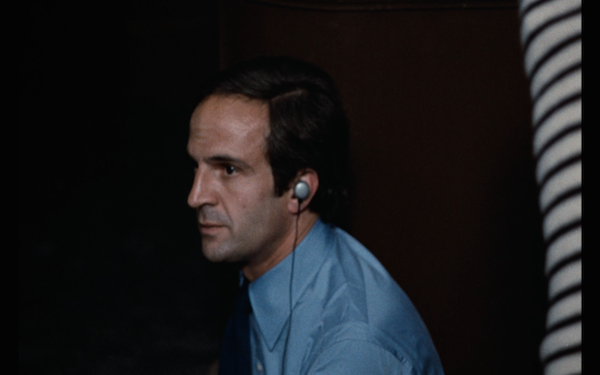
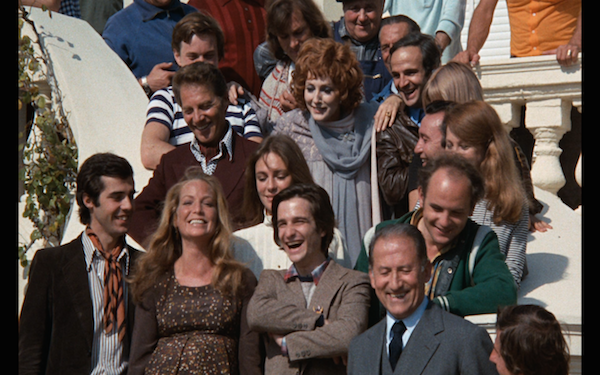
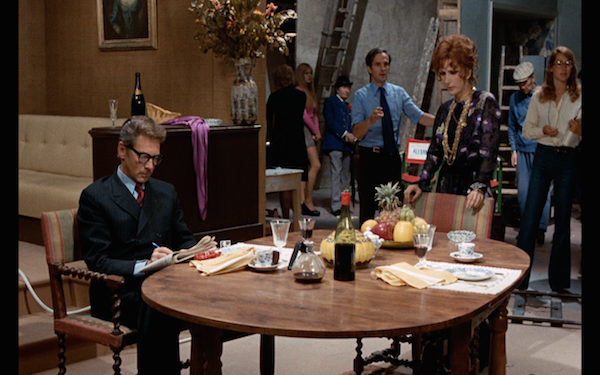
François Truffaut – 1968-1975
Where to find us:
Mark Hurne: Twitter
Aaron West: Twitter | Blog
Criterion Close-Up: Twitter | Email
Stromboli, 1950, Roberto Rosselini


It is fitting that I am writing this post to celebrate Ingrid Bergman’s 100th birthday for the Wonderful World of Cinema’s Ingrid Bergman Blogathon. I haven’t counted the Ingrid Bergman films I’ve seen. Perhaps it is a dozen, perhaps two, but few portray her anywhere close to the strong, resilient female character as she is in Stromboli. There are many other co-stars, including two prominent male characters, but this is undoubtedly Ingrid’s film. Not only does she represent a strong woman, but she comes to representing all strong women and the battles they must fight in a male-dominated world. In this regard, I see Stromboli as a staunchly feminist statement, which is ironic given that it is the first collaboration between her and future husband, Roberto Rosselini.
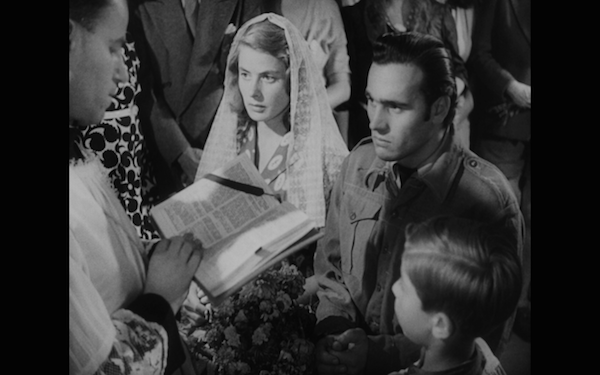
Bergman plays Karen, who we initially meet in a prisoner camp. One of the first actions she takes is to marry an Italian in order to escape the camp. Was this a marriage borne of love? Quite the contrary. It was a marriage for self-preservation and survival. In the wedding scene, the sense of apprehension is clear. Even in the above image, we can see the husband looking stern, and the wife looking distracted by her thoughts, looking off to the side. She is not marrying out of love and is nervous of this new direction in her life, but it is something that has to be done in order for her to persevere.
Her husband, Antonio (Mario Vitale), comes from the island of Stromboli off the coast of Sicily. He promises her paradise in exchange for her hand in marriage. What she finds upon her arrival is anything but. She is subjected to a barren, empty life. She finds that many of those who live in island have left for America or elsewhere, but many have come back. When asked why she returned from America, Antonio’s mother answers, “this is my home.” Karen’s home is in Lithuania, far from the Sicilian shores. This place is unquestionably not her home, nor does she want it to be.
Much of the film consists of Karen walking around the island, exploring not only her surroundings, but also herself. Bergman, always a fantastic actress, does a tremendous job at emoting even when she is not speaking. Her face betrays her anguish and inner torment as she quickly finds herself in despair, practically alone in this island. The only instance that lifts her spirits is when she encounters another man, who is almost the opposite of her husband. She beams and smiles in his presence. It is not clear whether she has romantic intentions with this stranger, but this man is a far better match than her husband. Regardless of whether her intentions are pure, the locals indict and reject her, as does her husband.
Please be warned that after these two images that contrast Karen’t anguish and happiness, there are minor spoilers and I will discuss the ending.

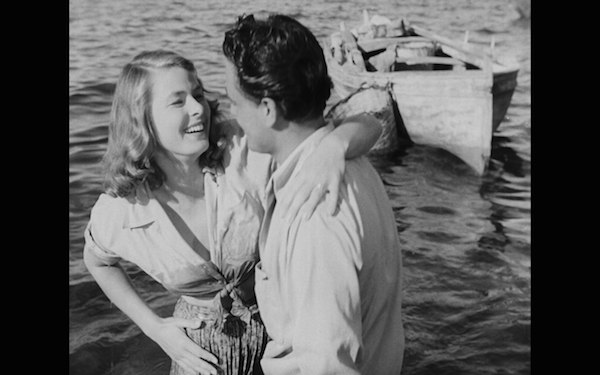
The violent nature of the island and its inhabitants is communicated through the way people interact with the elements. The locals see the local animals as their prey, and they treat them with cruelty. There is one difficult scene for animal lovers with a rabbit, which horrifies Karen. The men have to fish to live, and in fact, Antonio and Karen’s livelihood depends on his being successful with his fishing ventures. What follows, which Karen witnesses, is a violent slaughter of tuna. Both of these are among the most jarring scenes of the film, yet they are also the most effective. This violence also signifies a moment of final realization for Karen. If at first she was just wary and uncomfortable, she is now horrified. These are not her people in any respect.
The volcano is the most violent aspect of the island, and it also parallels the story and Karen’s journey. As she reaches the island and finds herself not fitting in, you could say that she is disturbed and rumbling. After she sees the slaughter of the fish and rabbit, the rumbling becomes an eruption of the volcano, but it is also Karen’t eruption. She does not act up, and she does not need to. The volcano scares the locals, who try to escape it by evacuating on boats.

Karen is not stirred by the volcano, but instead magnetically drawn to it. In a memorable final sequence, she decides to finally rid herself of this horrendous place by bravely climbing to the top of the volcano. It is in this sense that I see Stromboli as a feminist journey. She was oppressed by the world of man twice. The first time was in a actual prison while the second might as well have been a prison. Rather than succumb and subjugate herself to this tyranny, she frees herself by conquering an erupting volcano. This volcano that she defeats represents the world of man. The final sequence with Karen on top of the mountain is magnificence. It represents hope, salvation, not just for Karen, but for women in general.
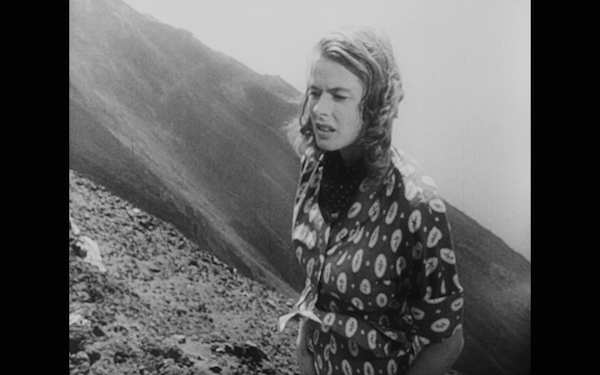
Film Rating: 9.5
Supplements
Introduction by Roberto Rosselini:
This is a short two-minute introduction. He says it is about someone who survived the war and learned survival instincts, yet finds herself trapped.
Adriano Aprà: 2011 Criterion interview with film critic.
This project was scandalous because Bergman was married and Rosselini had a mate (Anna Magnani). A love affair began and they were invaded by tabloids and journalists. It was also a scandal that he “stole” an American star to make an art film. The film stands apart from the gossip that surrounded it.
What’ I found interesting is that she didn’t care for the films she did with Rosselini, and only liked one of her collaborations (Joan of Arc at the Stake). We find out later from her memoirs that she was surprised when they were re-discovered.
Rosselini Under the Volcano: 1998 documentary.
These are the types of features that I adore. They revisit the island all these years later to see what is left. They show the volcano erupting. Back when the film was shot, the volcano erupted continuously, every seven minutes on the dot.

They interview the little boy that Bergman speaks to, of course now fully grown and having aged a bit. The two male leads meet. Mario talks about having to have the English words written for him phonetically because he did not speak a word.
A sad story from the production is that one person passed away during the production. A general helped lead them to the top of the mountain, but inhaled some poisonous gas along the way and had to be taken down to the base. He later died.
Criterion Rating: 8.5/10


 Criterion Close-Up